 Bug FAQ
Eurasian Drone Fly
Eristalis arbustorum · Order: Diptera · Family: Syrphidae
Also called: European Drone Fly, Hover Fly
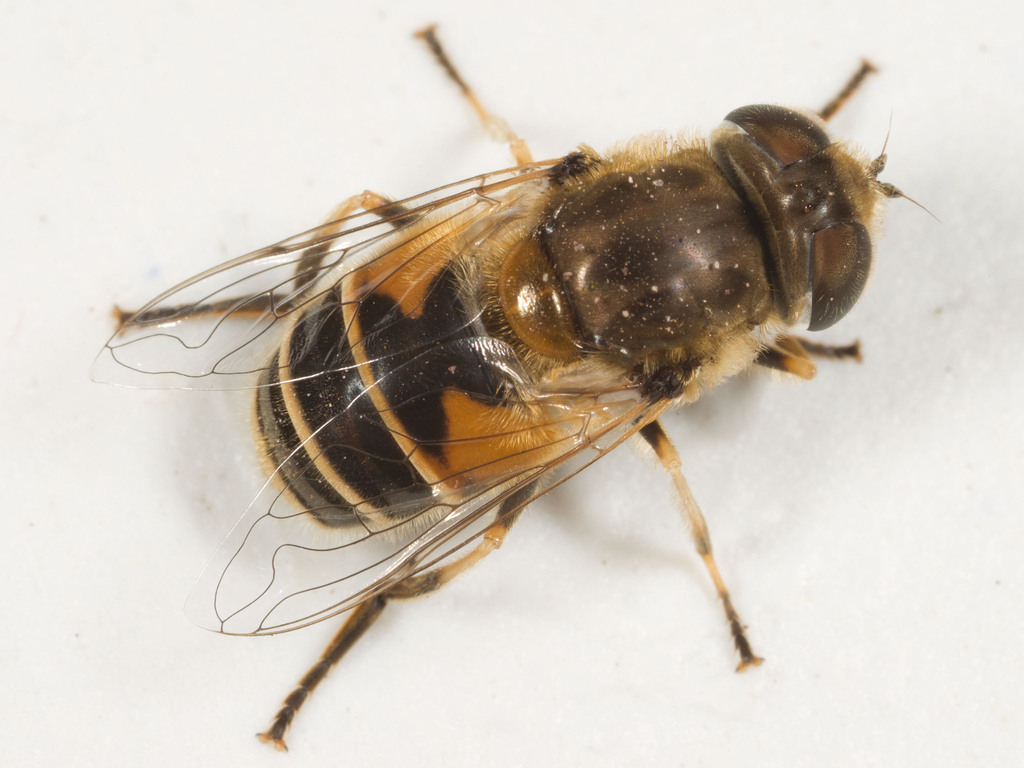
The Eurasian Drone Fly has wings 7 to 10 mm long and shows pale dusting on the face with a black stripe in rubbed specimens. It lives in many wet habitats, its larvae develop in shallow nutrient-rich water or dung, and adults feed on flower nectar and pollen.
Source: Wikipedia
How to recognize it
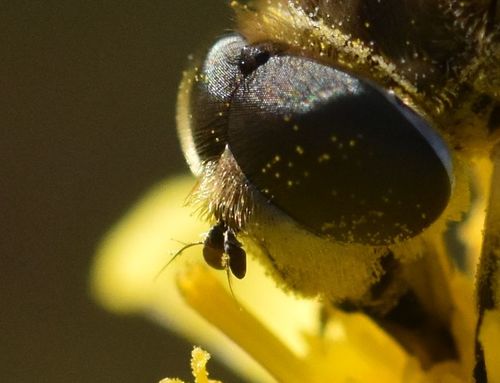
The face is pale dusted with a shiny black median stripe when rubbed; hind femora are pale only at the tips; the upper quarter of the second tibia is black.
Source: Wikipedia
Size
Wings measure between 7 and 10 mm in length.
Source: Wikipedia
Where it lives
Found in wetlands, forests, farmland, parks and gardens; larvae live in shallow nutrient-rich water, cow-dung, silage pits and compost.
Source: Wikipedia
What it eats
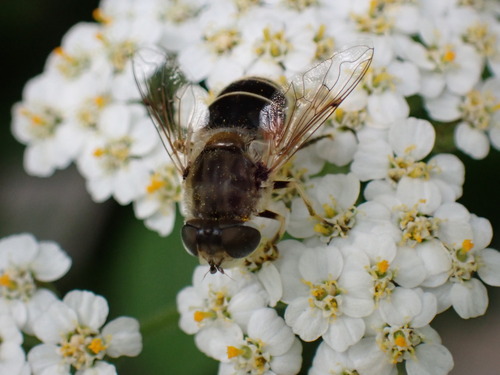
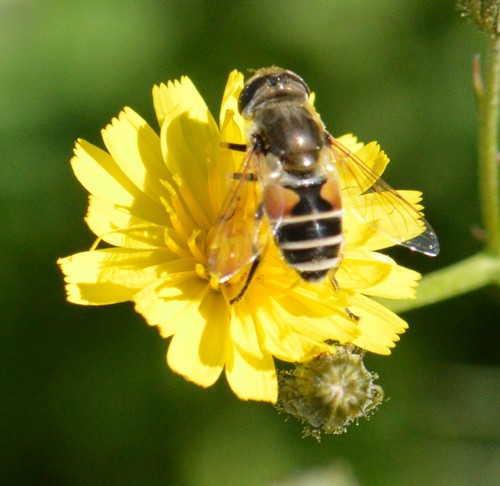
Adults visit flowers for nectar and pollen; larvae are aquatic filter-feeders.
Source: Wikipedia
Life cycle
The species is migratory in Europe.
Source: Wikipedia
Where it comes from
Occurs throughout the Palaearctic region, including North Africa and North India.
Source: Wikipedia
Where it is found in the US
Recorded in 44 of 51 states and DC. Most records: New York, California, Oregon, Colorado, Washington, Illinois, Pennsylvania, Ohio.
Darker = more records. Counts are museum and citizen-science records, not population size.
Source: GBIF
Status: introduced in North America; introduced in Canada; introduced in United States. Source: iNaturalist
Months it is reported in the US
Source: GBIF
More photos
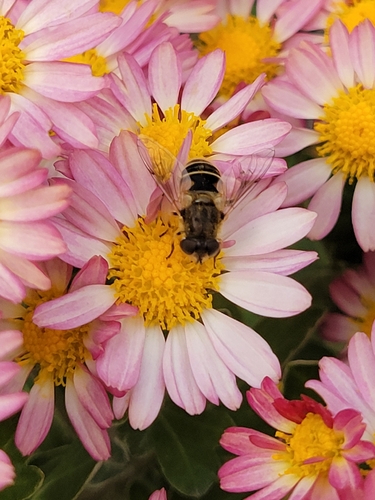
Same family (Syrphidae)






Sources
- Wikipedia: https://en.wikipedia.org/wiki/Eristalis_arbustorum
Look it up elsewhere: GBIF · iNaturalist · BugGuide · ITIS · Wikipedia
Text written 2026-10-22 from the sources above and checked sentence by sentence against them. Data fetched 2026-10-22.