 Bug FAQ
Sod webworm
Eudonia sabulosella · Order: Lepidoptera · Family: Crambidae
Source: Wikipedia
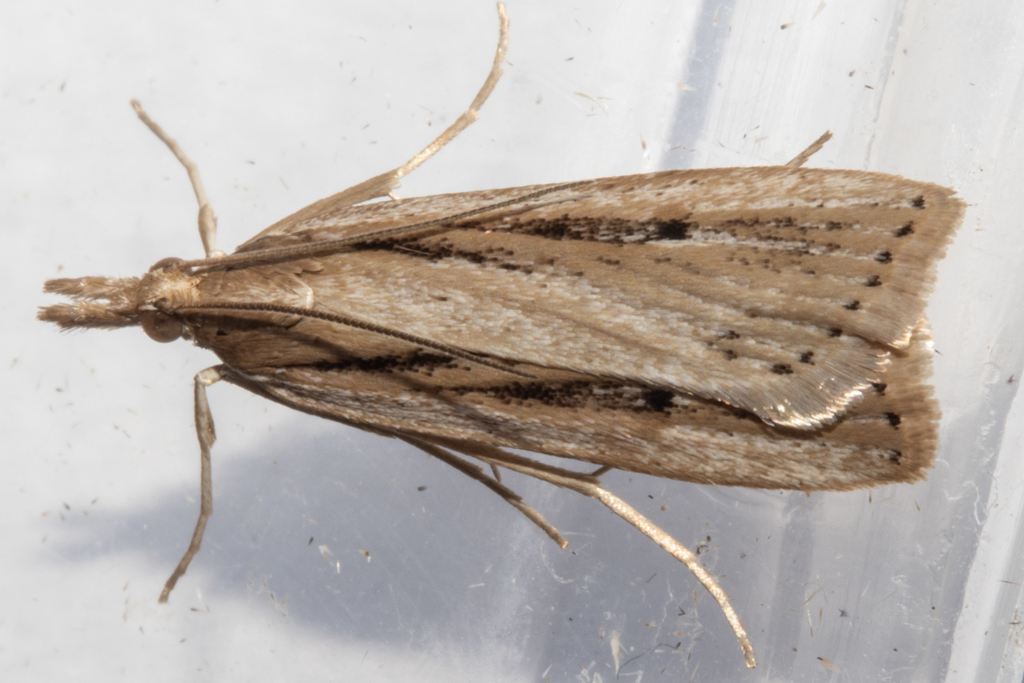
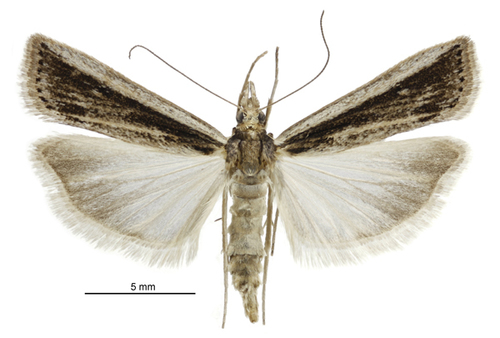
Adults have pale ochreous forewings with two blackish dots and are seen in December and January. The species is endemic to New Zealand and its larvae feed on lichens, bryophytes and grasses, damaging pasture.
Source: Wikipedia
How to recognize it
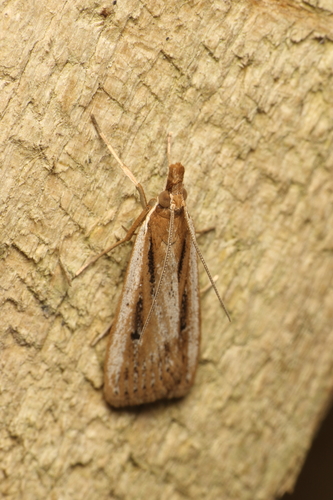
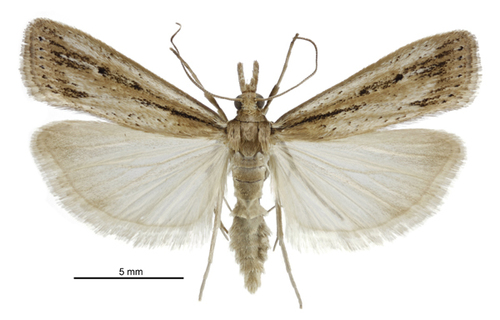
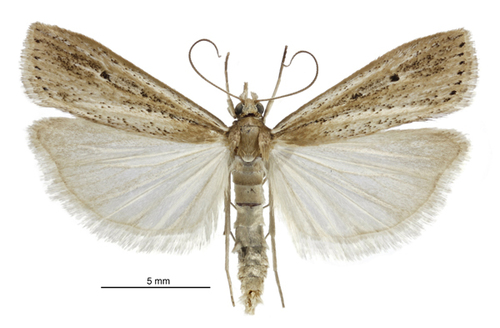
Females are cinereous fawn-coloured; forewings are narrow, pale ochreous with two distinct blackish dots and black marginal points; hindwings are pale cinereous. The species is variable in darkness but always has the pale ochreous ground colour and two blackish dots.
Source: Wikipedia
Size
Body length is about 4½ lines and wing length about 10 lines.
Source: Wikipedia
Is it a pest in the house?
The species is regarded as an economically damaging pest. Its larvae can cause considerable damage to pasture.
Source: Wikipedia
Where it lives
It is found throughout New Zealand, including the Chatham Islands, Stewart Island and the Auckland Islands.
Source: Wikipedia
What it eats
Larvae feed on lichens, bryophytes and grasses.
Source: Wikipedia
Life cycle
Eudonia sabulosella belongs to the moth family Crambidae.
Source: Wikipedia
When you see it
Adults are normally present in December and January.
Source: Wikipedia
Where it comes from
The moth is endemic to New Zealand.
Source: Wikipedia
Lookalikes
It can be distinguished from similar species by its pale ochreous forewing ground colour and two distinct blackish dots.
Source: Wikipedia
More photos
Questions people ask
What plants do the larvae damage?
The larvae feed on lichens, bryophytes and grasses and can cause considerable damage to pasture.
Source: Wikipedia
When are the adult moths active?
Adults are normally present during December and January.
Source: Wikipedia
How can I identify this moth?
Look for a pale ochreous forewing with two blackish dots and black marginal points; hindwings are pale cinereous.
Source: Wikipedia
Where is this species found?
It is endemic to New Zealand and occurs throughout the main islands, the Chatham Islands, Stewart Island and the Auckland Islands.
Source: Wikipedia
Same family (Crambidae)
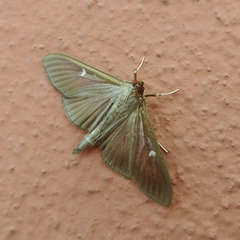 Box Tree MothCydalima perspectalisDamages trees, gardens or crops
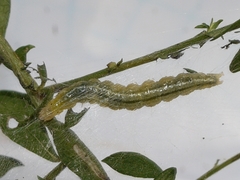 Celery Leaftier MothUdea rubigalisDamages trees, gardens or crops
 Elegant Grass-veneerMicrocrambus elegans
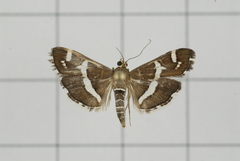 Hawaiian Beet Webworm MothSpoladea recurvalisDamages trees, gardens or crops
 Garden Grass-veneerChrysoteuchia culmellaDamages trees, gardens or crops
 Bluegrass Webworm MothParapediasia teterrellusDamages trees, gardens or crops
Sources
- Wikipedia: https://en.wikipedia.org/wiki/Eudonia_sabulosella
Look it up elsewhere: GBIF · iNaturalist · BugGuide · Wikipedia
Text written 2026-10-23 from the sources above and checked sentence by sentence against them. Data fetched 2026-10-22.