 Bug FAQ
Eretes sticticus
Eretes sticticus · Order: Coleoptera · Family: Dytiscidae

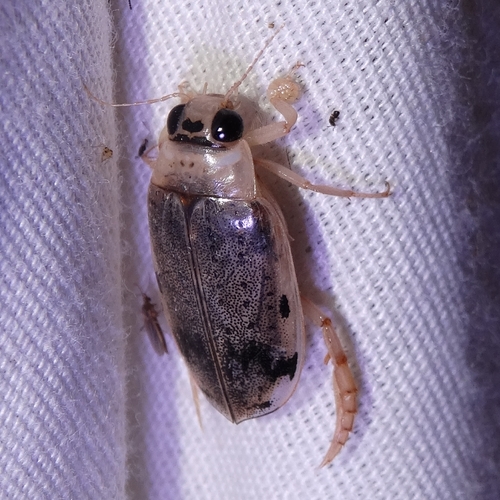
Eretes sticticus, called the western erete, is a predaceous diving beetle in the family Dytiscidae. A single beetle can consume all the mosquito larvae in a water body, depending on its size and how many larvae are present.
Source: Wikipedia
Where it lives
It is found in ponds and pools where mosquito larvae are present.
Source: Wikipedia
What it eats
It preys specifically on mosquito larvae in aquatic habitats. Depending on its size and the density of prey, it can kill all instar mosquito larvae in a pond.
Source: Wikipedia
Where it is found in the US
Recorded in 8 of 51 states and DC. Most records: New Mexico, Kansas, Texas, Arizona, California, Nevada, Colorado, Oklahoma.
Darker = more records. Counts are museum and citizen-science records, not population size.
Source: GBIF
Months it is reported in the US
Source: GBIF
More photos
Questions people ask
What does the western erete eat?
It feeds on mosquito larvae that live in ponds and pools.
Source: Wikipedia
Where can I find Eretes sticticus?
It occurs in Africa, the Middle East, and from the southern United States down through Peru, especially in water bodies with mosquito larvae.
Source: Wikipedia
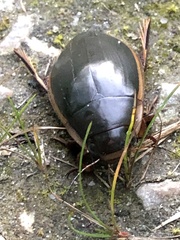
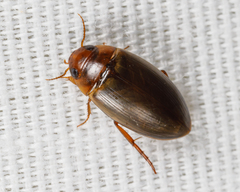
Same family (Dytiscidae)


Sources
- Wikipedia: https://en.wikipedia.org/wiki/Eretes_sticticus
Look it up elsewhere: GBIF · iNaturalist · BugGuide · ITIS · Wikipedia
Text written 2026-10-27 from the sources above and checked sentence by sentence against them. Data fetched 2026-10-27.