 Bug FAQ
Fringed Diving Beetle
Cybister fimbriolatus · Order: Coleoptera · Family: Dytiscidae
Also called: predaceous diving beetle
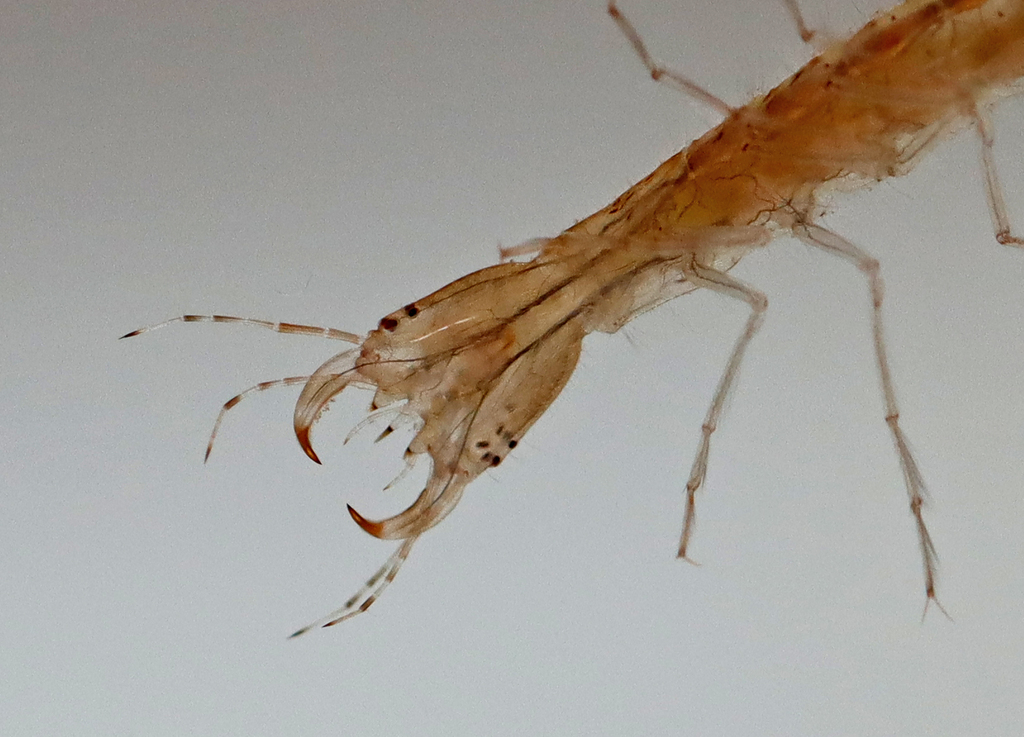
Males have enlarged front feet they use to hold onto females during mating. They live in ponds and ditches, are active at night and in summer, and eat other aquatic arthropods.
Source: Wikipedia
How to recognize it
Males have expanded front feet that help them grasp a female for mating.
Source: Wikipedia
What it eats
In summer they feed on other aquatic arthropods.
Source: Wikipedia
Life cycle
During mating, males use their enlarged front feet to hold females.
Source: Wikipedia
When you see it
Adults are active in the summer months.
Source: Wikipedia
Where it comes from
They occur in North America and the Neotropical region.
Source: Wikipedia
Lookalikes
Synonyms include Dytiscus dissimilis, Dytiscus fimbriolatus, Cybister flavocinctus, Cybister dissimilis, Cybister ellipticus, Cybister cavicollis, and Cybister crotchi.
Source: Wikipedia
Where it is found in the US
Recorded in 39 of 51 states and DC. Most records: Texas, Florida, Louisiana, Illinois, South Carolina, Virginia, North Carolina, Alabama.
Darker = more records. Counts are museum and citizen-science records, not population size.
Source: GBIF
Status: native in North America; native in Canada. Source: iNaturalist
Months it is reported in the US
Source: GBIF
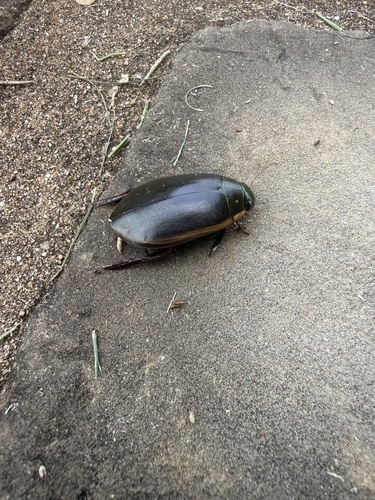
More photos
Questions people ask
How can I tell a male from a female?
Males have noticeably larger front feet used for holding females during mating.
Source: Wikipedia
Where are these beetles usually found?
They live in ponds and ditches and are most active at night, though they can be seen during the day.
Source: Wikipedia
Same family (Dytiscidae)

Sources
- Wikipedia: https://en.wikipedia.org/wiki/Cybister_fimbriolatus
Look it up elsewhere: GBIF · iNaturalist · BugGuide · ITIS · Wikipedia
Text written 2026-10-23 from the sources above and checked sentence by sentence against them. Data fetched 2026-10-23.