 Bug FAQ
Entephria polata
Entephria polata · Order: Lepidoptera · Family: Geometridae
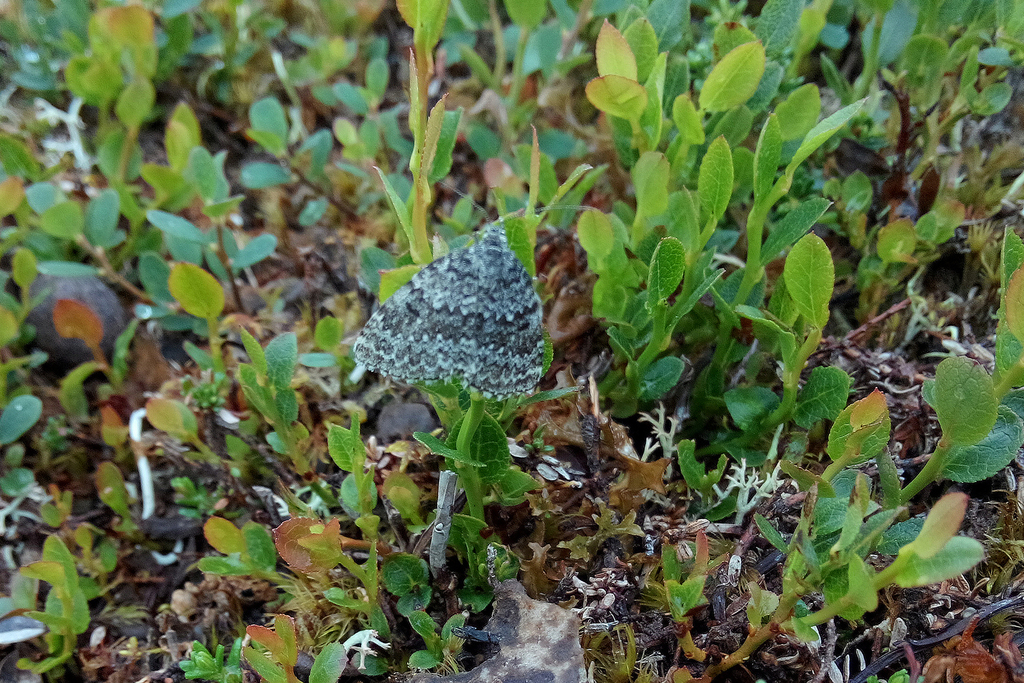
Entephria polata is a geometrid moth first described in 1830. Its wingspan ranges from about 23 to 32 mm. Adults fly in July and the larvae feed on the dwarf shrub Empetrum nigrum subsp. hermaphroditum.
Source: Wikipedia
How to recognize it
The species belongs to the Geometridae family and was first named by Duponchel in 1830.
Source: Wikipedia
Size
Its wings measure roughly 23 to 32 mm across.
Source: Wikipedia
Where it lives
It lives across northern Europe and Siberia and also occurs in northern parts of North America.
Source: Wikipedia
What it eats
Larvae have been recorded feeding on the plant Empetrum nigrum subsp. hermaphroditum.
Source: Wikipedia
Life cycle
Pupae are found in webs built under rocks.
Source: Wikipedia
When you see it
Adults are on the wing in July.
Source: Wikipedia
Where it comes from
The moth’s range includes Fennoscandia, north-eastern Siberia, and northern North America.
Source: Wikipedia
Where it is found in the US
Recorded in 2 of 51 states and DC. Most records: Colorado, Alaska.
Darker = more records. Counts are museum and citizen-science records, not population size.
Source: GBIF
Status: native in North America; native in Canada. Source: iNaturalist
Months it is reported in the US
Source: GBIF
Questions people ask
What do the caterpillars eat?
The larvae feed on the dwarf shrub Empetrum nigrum subsp. hermaphroditum.
Source: Wikipedia
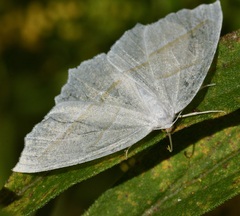
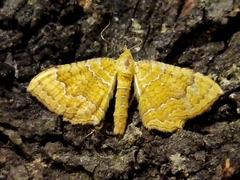
Same family (Geometridae)




Sources
- Wikipedia: https://en.wikipedia.org/wiki/Entephria_polata
Look it up elsewhere: GBIF · iNaturalist · BugGuide · ITIS · Wikipedia
Text written 2026-10-29 from the sources above and checked sentence by sentence against them. Data fetched 2026-10-29.