 Bug FAQ
Eleodes gigantea
Eleodes gigantea · Order: Coleoptera · Family: Tenebrionidae
Source: Wikipedia
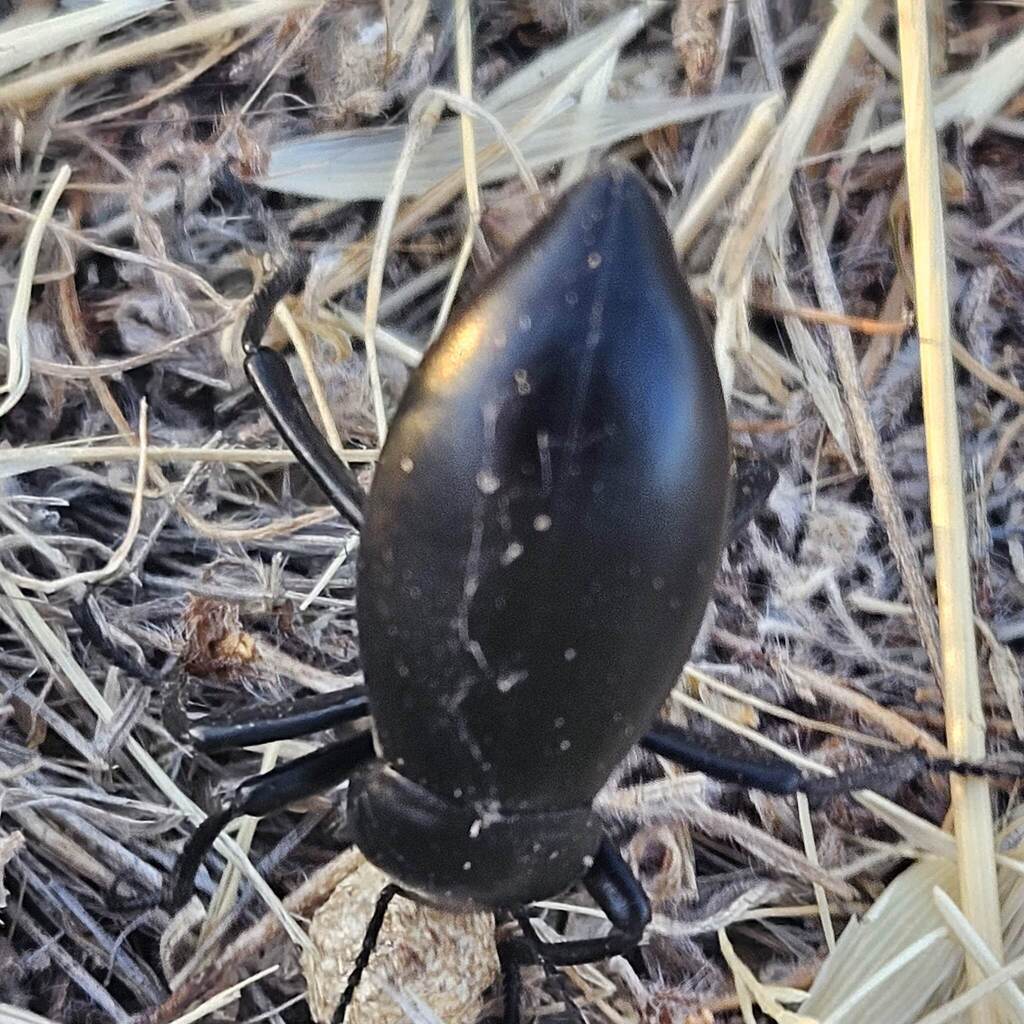
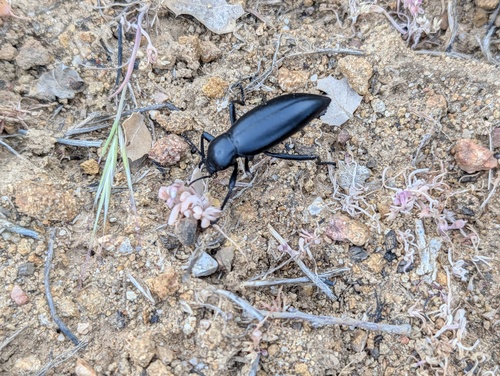
Eleodes gigantea has smooth black wing covers and, when frightened, sprays an orange benzoquinone that makes eyes water. It lives along the coast from San Francisco down to San Diego, especially in the lower half of California. The beetles are most active at sundown.
Source: Wikipedia
How to recognize it
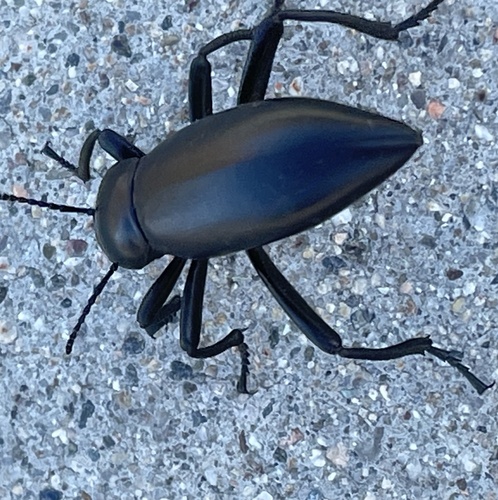
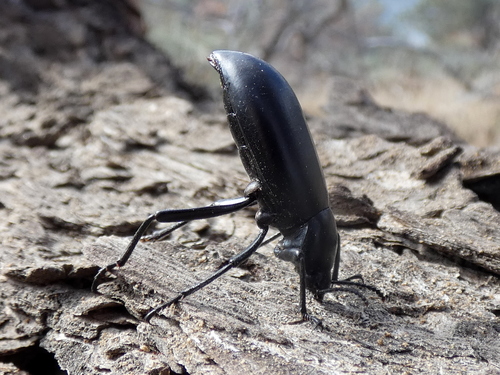
The beetle’s elytra are smooth and black. When threatened it lifts its body and sprays an orange benzoquinone that has a strong odor and makes eyes water.
Source: Wikipedia
When you see it
Adults are most active during sundown.
Source: Wikipedia
Where it comes from
Its native range extends from San Francisco, California, to Tijuana, Mexico, especially the southern California coast.
Source: Wikipedia
Where it is found in the US
Recorded in 4 of 51 states and DC. Most records: California, Arizona, Kansas, Utah.
Darker = more records. Counts are museum and citizen-science records, not population size.
Source: GBIF
Status: native in North America; native in United States. Source: iNaturalist
Months it is reported in the US
Source: GBIF
More photos
Questions people ask
What does the beetle’s spray do?
When frightened it sprays an orange benzoquinone that irritates eyes and causes them to water.
Source: Wikipedia
Where can I find Eleodes gigantea?
They occur from San Francisco down to San Diego, especially along the southern California coast.
Source: Wikipedia
Same family (Tenebrionidae)


Sources
- Wikipedia: https://en.wikipedia.org/wiki/Eleodes_gigantea
Look it up elsewhere: GBIF · iNaturalist · BugGuide · Wikipedia
Text written 2026-10-24 from the sources above and checked sentence by sentence against them. Data fetched 2026-10-24.