 Bug FAQ
Elegant Thorn
Tetracis cervinaria · Order: Lepidoptera · Family: Geometridae

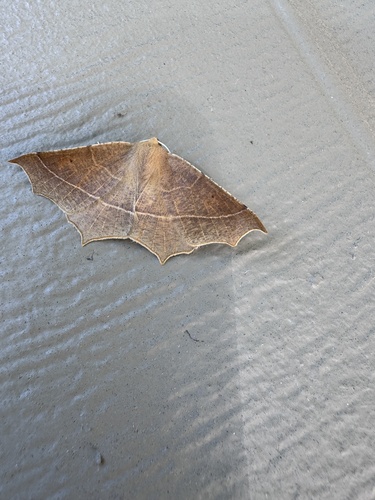
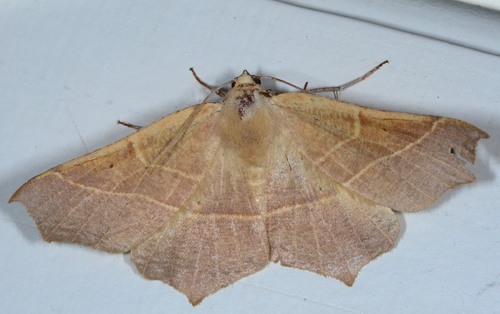
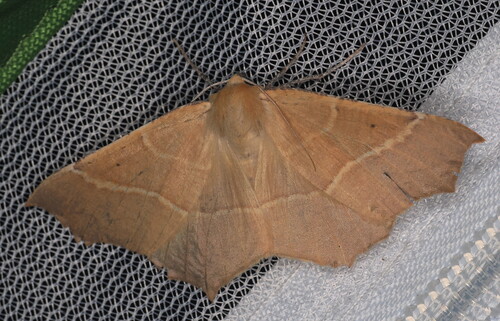
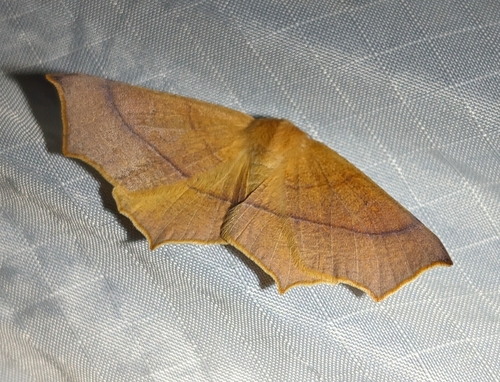
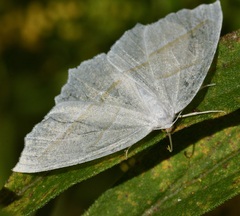
The adult moth has forewings that measure about 19 to 23 mm in length. Adults are seen flying from February through June. It lives in western North America, from British Columbia down to California and east to parts of Montana, Idaho, Wyoming and Colorado, usually between 790 and 2,375 m elevation.
Source: Wikipedia
Size
Forewing length ranges from 19 to 23 mm.
Source: Wikipedia
Where it lives
Found in western North America from British Columbia to California and east to Montana, Idaho, Wyoming and Colorado. Occurs at elevations between 790 and 2,375 m.
Source: Wikipedia
What it eats
Larvae feed on the plants Prunus emarginata and Prunus virginiana.
Source: Wikipedia
When you see it
Adults are on the wing from February through June.
Source: Wikipedia
Where it comes from
Native to North America, specifically the regions listed for its habitat.
Source: Wikipedia
Where it is found in the US
Recorded in 9 of 51 states and DC. Most records: California, Oregon, Montana, Washington, Colorado, Nevada, Idaho, Utah.
Darker = more records. Counts are museum and citizen-science records, not population size.
Source: GBIF
Status: native in North America; native in Canada; native in United States. Source: iNaturalist
Months it is reported in the US
Source: GBIF
More photos
Questions people ask
What do the larvae eat?
The caterpillars feed on Prunus emarginata and Prunus virginiana.
Source: Wikipedia
Same family (Geometridae)




Sources
- Wikipedia: https://en.wikipedia.org/wiki/Tetracis_cervinaria
Look it up elsewhere: GBIF · iNaturalist · BugGuide · ITIS · Wikipedia
Text written 2026-10-25 from the sources above and checked sentence by sentence against them. Data fetched 2026-10-25.