 Bug FAQ
Eight-spotted Forester Moth
Alypia octomaculata · Order: Lepidoptera · Family: Noctuidae
Also called: Eight-spotted Forester, Eightspotted Forester
Source: Wikipedia
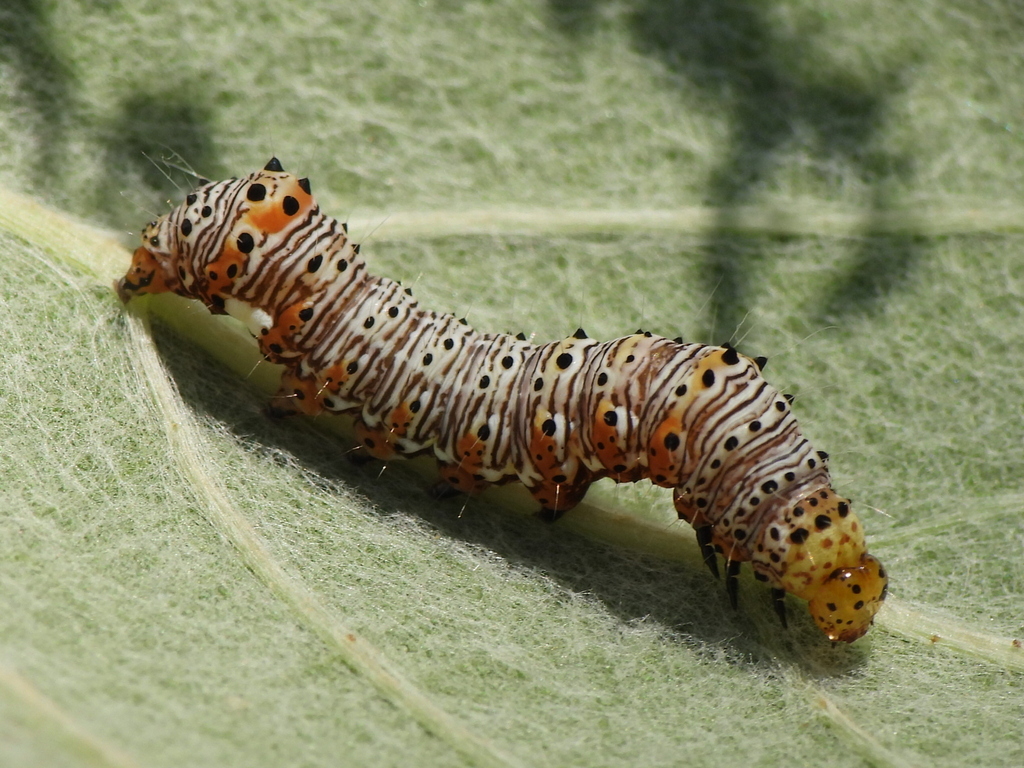
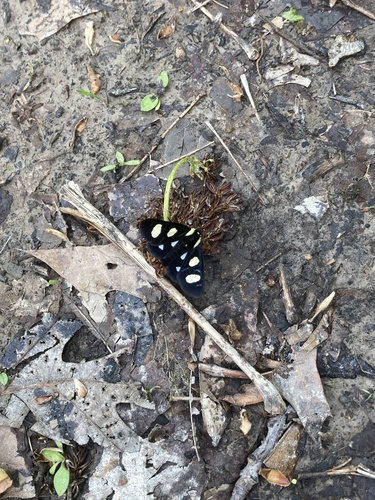
Adults are black with eight white or yellow spots on their wings and have a wingspan of about 30 to 37 mm. Larvae grow to 25 to 38 mm, feed on grapevine, peppervine and Virginia creeper leaves, and can be a problem in vineyards. They live where woods meet fields, pupate in decaying material, and fly in late spring, sometimes remaining dormant for years.
Source: Wikipedia
How to recognize it
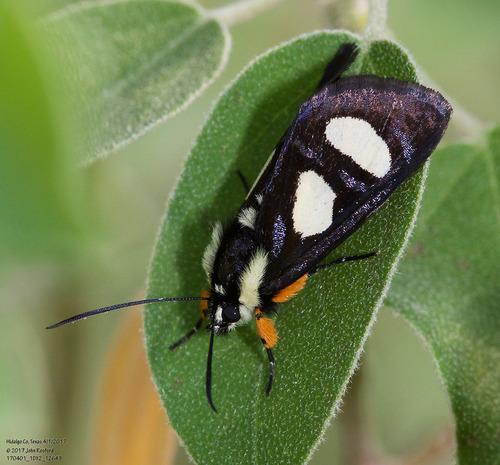
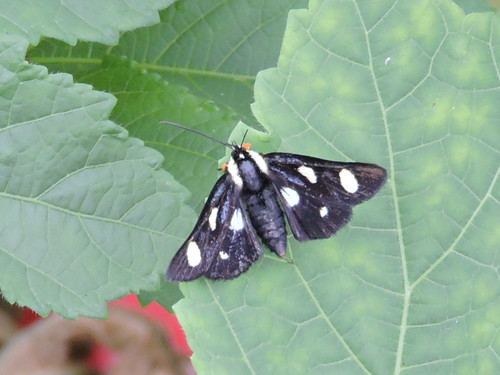
The moth is black with two white, cream or yellow spots on each wing, making eight spots total.
Source: Wikipedia
Size
Full-grown larvae are 25 to 38 mm long. The adult’s wingspan ranges from about 30 to 37 mm.
Source: Wikipedia
Is it a pest in the house?
Larvae are considered a pest in commercial and decorative vineyards.
Source: Wikipedia
How to get rid of it
When threatened they vomit an orange-tinged liquid and drop off their perch while still attached by a silk thread.
Source: Wikipedia
Where it lives
They prefer edges where forest meets open fields. In fall, larvae spin soft cocoons in decaying wood, soil or even trash.
Source: Wikipedia
What it eats
Adults sip nectar from herbaceous flowers.
Source: Wikipedia
Life cycle
In the north they have one generation per year, flying from April to June. They can stay in a dormant diapause for up to four years.
Source: Wikipedia
Where it comes from
Native to Canada, they are now found across northern North America from Nova Scotia to Florida and from South Dakota to Texas.
Source: Wikipedia
Lookalikes
They are active day and night and are often mistaken for butterflies.
Source: Wikipedia
Where it is found in the US
Recorded in 45 of 51 states and DC. Most records: Texas, Ohio, Tennessee, Pennsylvania, Virginia, North Carolina, New York, Missouri.
Darker = more records. Counts are museum and citizen-science records, not population size.
Source: GBIF
Status: native in North America; native in Canada; native in United States. Source: iNaturalist
Months it is reported in the US
Source: GBIF
More photos
Questions people ask
Are they a problem for my garden?
The larvae can feed on grapevines, peppervines and Virginia creeper, so they may damage those plants in a garden.
Source: Wikipedia
How can I get rid of them?
If disturbed they will vomit a foul orange liquid and drop off; removing decaying material where they pupate can reduce numbers.
Source: Wikipedia
Same family (Noctuidae)
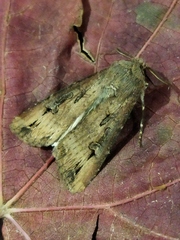 Ipsilon Dart MothAgrotis ipsilonDamages trees, gardens or crops
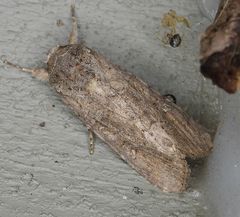 Fall Armyworm MothSpodoptera frugiperdaDamages trees, gardens or crops
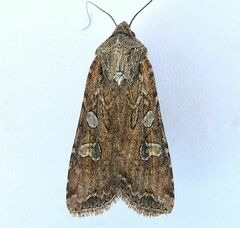 Army Cutworm MothEuxoa auxiliarisDamages trees, gardens or crops
 Large Yellow UnderwingNoctua pronubaDamages trees, gardens or crops
 Silver ΥAutographa gamma
 American DaggerAcronicta americanaCan irritate skin
Sources
- Wikipedia: https://en.wikipedia.org/wiki/Alypia_octomaculata
Look it up elsewhere: GBIF · iNaturalist · BugGuide · ITIS · Wikipedia
Text written 2026-10-22 from the sources above and checked sentence by sentence against them. Data fetched 2026-10-22.