 Bug FAQ
Eight-spot Moth
Amyna stricta · Order: Lepidoptera · Family: Noctuidae
Source: Wikipedia
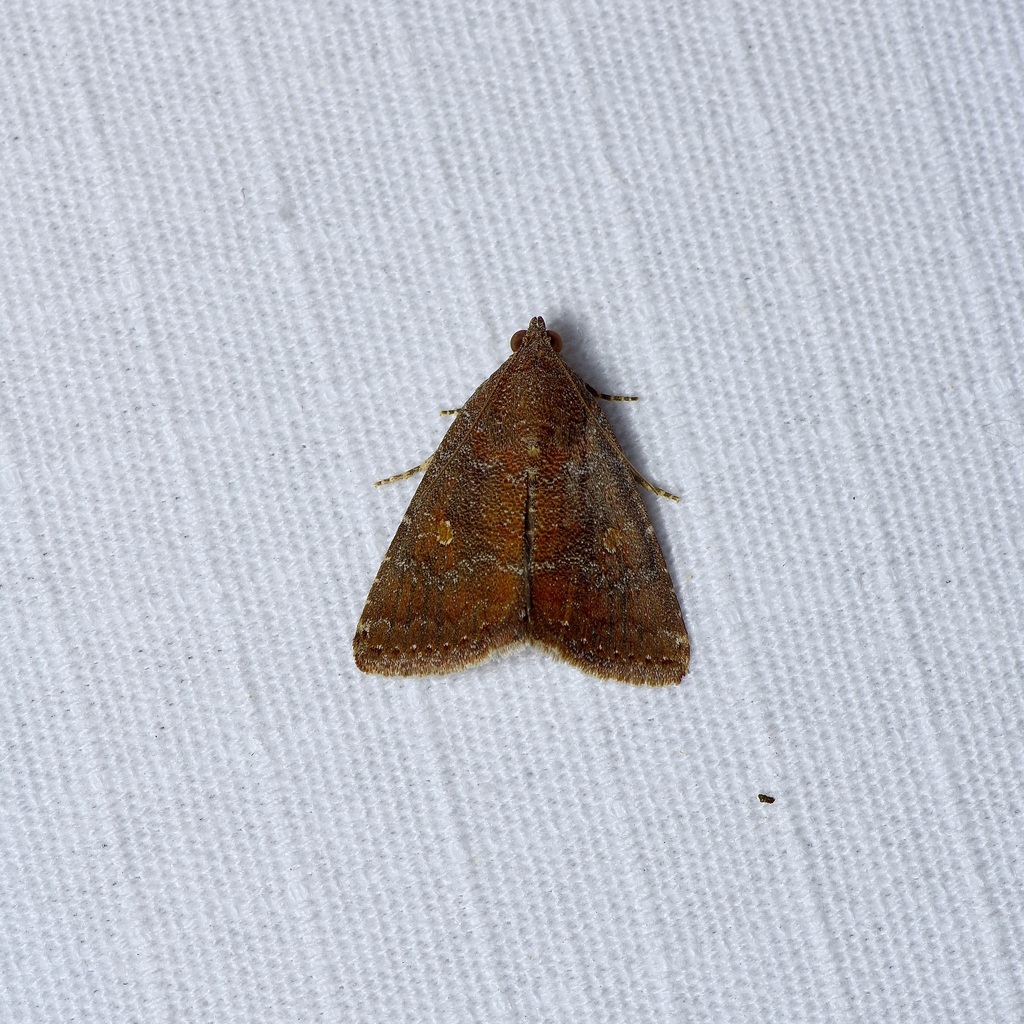
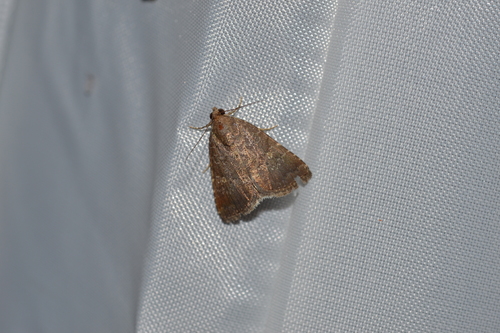
Adult eight-spot moths are chocolate-brown above with a wingspan of about 2 cm and show faint grey-white lines and a subtle figure-of-eight mark on the forewings. The caterpillars feed on many cultivated plants such as mung beans, soybeans, lucerne and a variety of leafy vegetables, acting as an irregular minor crop pest.
Source: Wikipedia
How to recognize it
The forewings display faint grey-white lines and a vague figure-of-eight marking. The hindwings are lighter in colour with even fainter markings.
Source: Wikipedia
Size
Adults have a wingspan of roughly 20 to 25 mm (about 0.8 to 1 inch).
Source: Wikipedia
Is it a pest in the house?
The species is considered an irregular minor pest of several legume crops such as mung beans, black-eyed peas, lucerne and soybeans.
Source: Wikipedia
Where it lives
This moth occurs throughout North, Central and South America.
Source: Wikipedia
What it eats
Larvae feed on many plant families, including amaranth, croton, celosia, sunflower, spinach, sweet potato, castor, peanuts, clover, beans, hibiscus, and several others. They are known to cause occasional damage to mung beans, black-eyed peas, lucerne and soybeans.
Source: Wikipedia
Life cycle
Pupation takes place in a silken cocoon built just below or at the soil surface.
Source: Wikipedia
When you see it
Adults are typically on the wing from August through October.
Source: Wikipedia
Where it comes from
It is native to the Americas, ranging from the United States down through Central and South America.
Source: Wikipedia
Lookalikes
It is smaller than the related Amyna punctum moth.
Source: Wikipedia
Where it is found in the US
Recorded in 24 of 51 states and DC. Most records: Texas, Oklahoma, Florida, Indiana, Illinois, Louisiana, Missouri, Ohio.
Darker = more records. Counts are museum and citizen-science records, not population size.
Source: GBIF
Status: native in North America; native in United States. Source: iNaturalist
Months it is reported in the US
Source: GBIF
More photos
Questions people ask
What crops can the eight-spot moth damage?
Its larvae feed on many crops, especially mung beans, black-eyed peas, lucerne and soybeans, causing occasional minor damage.
Source: Wikipedia
When are adult eight-spot moths active?
Adults are usually seen flying from August to October.
Source: Wikipedia
How can I recognize an eight-spot moth?
Look for a small chocolate-brown moth about 2 cm across with faint grey-white lines and a subtle figure-of-eight mark on the forewings; the hindwings are lighter.
Source: Wikipedia
Where is the eight-spot moth found?
It occurs throughout North, Central and South America, including the United States.
Source: Wikipedia
Same family (Noctuidae)
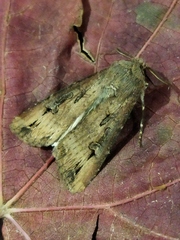 Ipsilon Dart MothAgrotis ipsilonDamages trees, gardens or crops
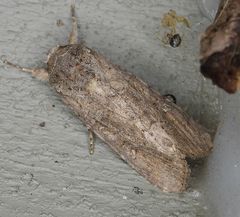 Fall Armyworm MothSpodoptera frugiperdaDamages trees, gardens or crops
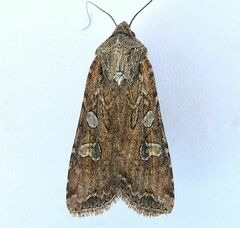 Army Cutworm MothEuxoa auxiliarisDamages trees, gardens or crops
 Large Yellow UnderwingNoctua pronubaDamages trees, gardens or crops
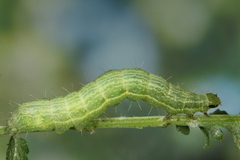 Silver ΥAutographa gamma
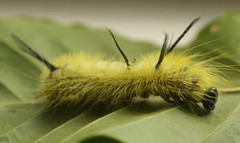 American DaggerAcronicta americanaCan irritate skin
Sources
- Wikipedia: https://en.wikipedia.org/wiki/Amyna_stricta
Look it up elsewhere: GBIF · iNaturalist · BugGuide · Wikipedia
Text written 2026-10-23 from the sources above and checked sentence by sentence against them. Data fetched 2026-10-23.