 Bug FAQ
Eastern Swiftwing
Volucella evecta · Order: Diptera · Family: Syrphidae
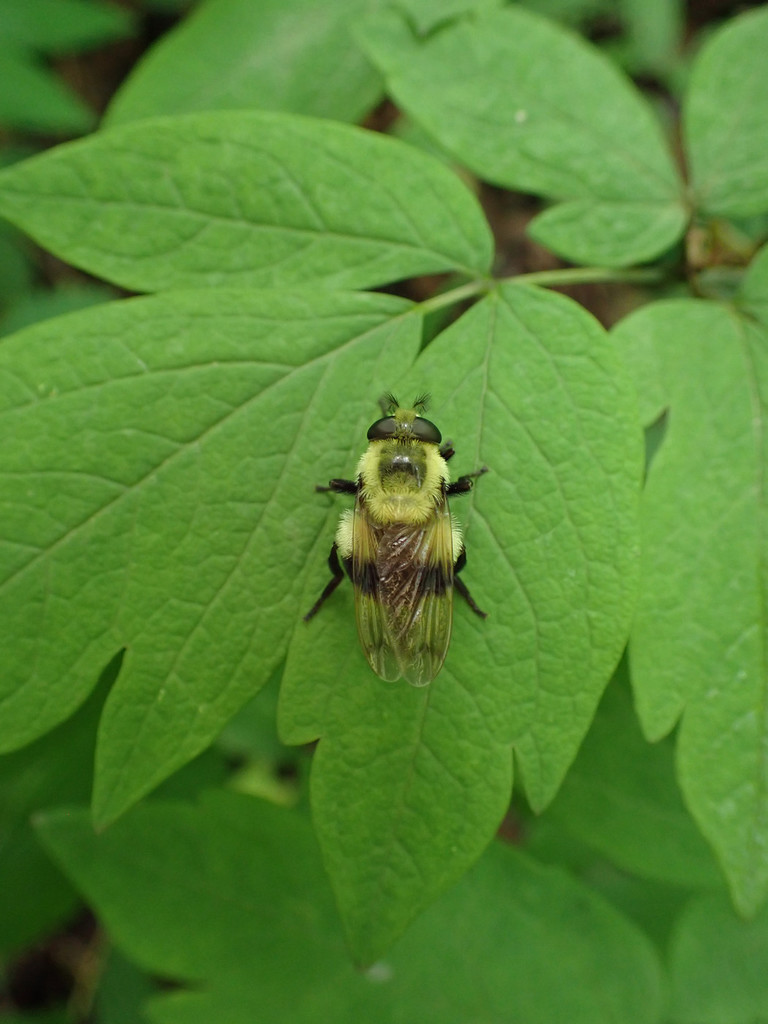
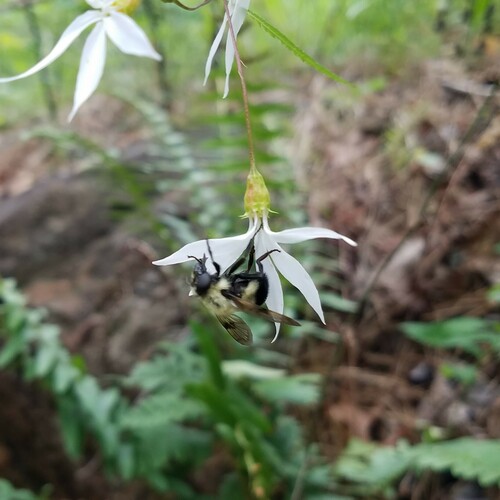
The Eastern Swiftwing is a 13 to 18 mm fly that mimics bumblebees. Adults feed on the flowers of Geum, Viburnum, Rubus and other plants, while larvae of its genus live in bee and wasp nests eating debris and other larvae. It is found across eastern North America, from Georgia up to New Brunswick.
Source: Wikipedia
How to recognize it
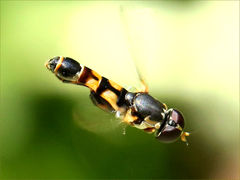
The face and frons are black with yellow hair, the scutum is black covered in yellow hair, the scutellum is yellow with yellow hair, and the abdomen is mostly black with black hair except the second segment, which has yellow hair.
Source: Wikipedia
Size
Adults measure between 13 and 18 mm in length.
Source: Wikipedia
Where it lives
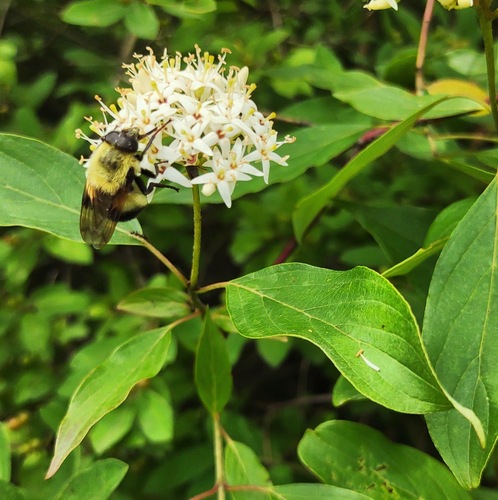
It is a bumblebee mimic that visits flowering plants such as Geum, Viburnum and Rubus.
Source: Wikipedia
What it eats
Adults feed on nectar and pollen from various flowering plants. Larvae of the genus live in bee and wasp nests, consuming nest debris and other larvae.
Source: Wikipedia
Life cycle
Specific larval details for this species are not known, but its genus’s larvae develop in bee and wasp nests feeding on debris and other larvae.
Source: Wikipedia
Where it comes from
Its range spans eastern United States and eastern Canada, from Georgia to New Brunswick.
Source: Wikipedia
Lookalikes
It can be confused with several bumblebee species, including Bombus pensylvanicus, B. affinis, B. bimaculatus, and the bee Habropoda laboriosa.
Source: Wikipedia
Where it is found in the US
Recorded in 23 of 51 states and DC. Most records: Wisconsin, Minnesota, Virginia, Illinois, Michigan, Tennessee, North Carolina, Iowa.
Darker = more records. Counts are museum and citizen-science records, not population size.
Source: GBIF
Status: native in North America; native in Canada. Source: iNaturalist
Months it is reported in the US
Source: GBIF
More photos
Questions people ask
Where is the Eastern Swiftwing found?
It occurs from Georgia up through New Brunswick in eastern North America.
Source: Wikipedia
What does the larva of this fly eat?
Larvae in its genus eat debris and other larvae inside bee and wasp nests.
Source: Wikipedia
Which bees does it look like?
It resembles several bumblebee species such as Bombus pensylvanicus, B. affinis, B. bimaculatus, and also Habropoda laboriosa.
Source: Wikipedia
Same family (Syrphidae)


Sources
- Wikipedia: https://en.wikipedia.org/wiki/Volucella_evecta
Look it up elsewhere: GBIF · iNaturalist · BugGuide · ITIS · Wikipedia
Text written 2026-10-26 from the sources above and checked sentence by sentence against them. Data fetched 2026-10-26.