 Bug FAQ
Eastern Hornet Fly
Spilomyia longicornis · Order: Diptera · Family: Syrphidae
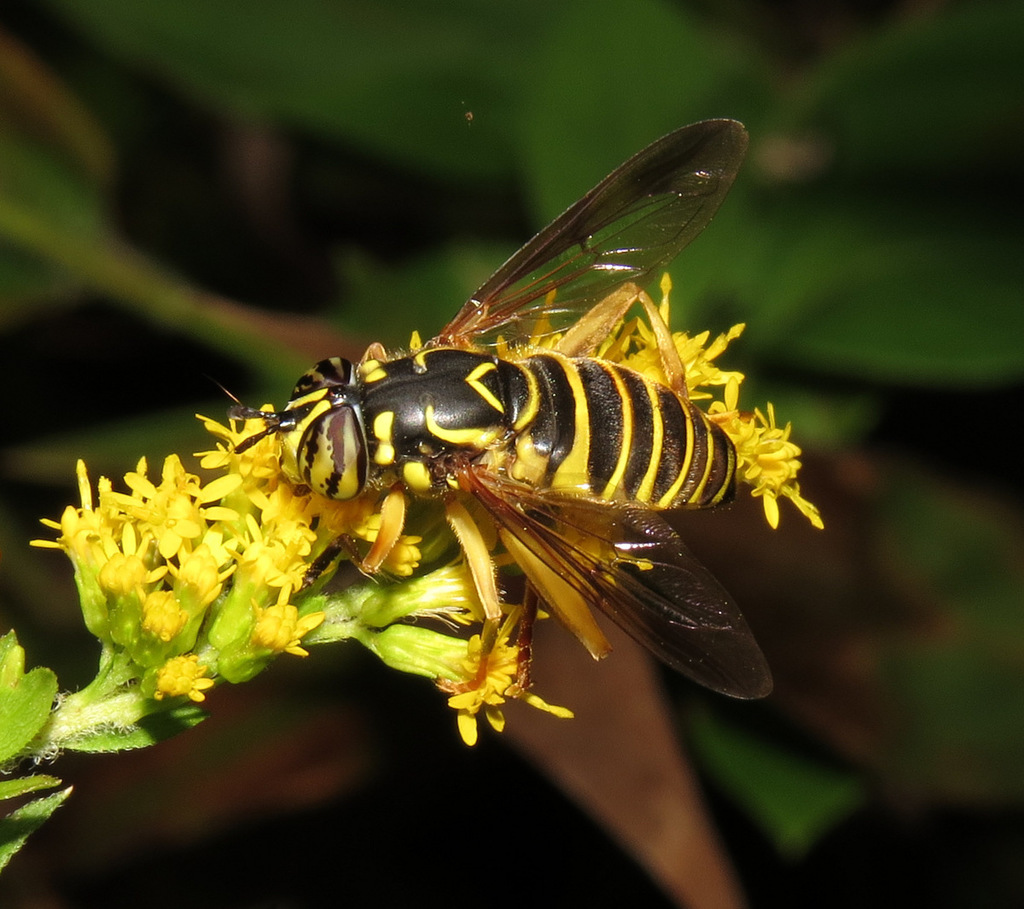
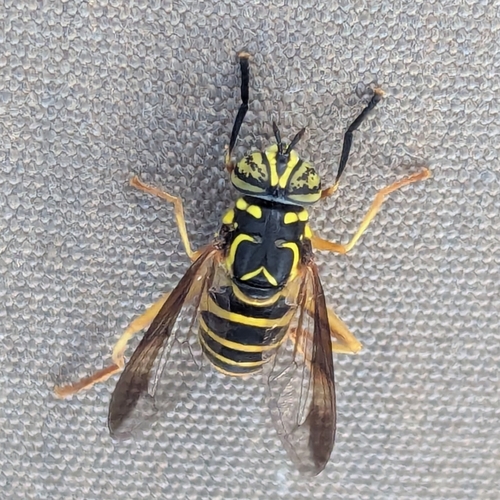
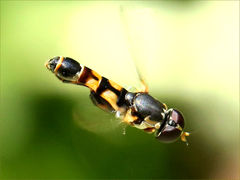
The Eastern Hornet Fly is about 1.1 to 1.5 cm long and has a black body with yellow stripes. It lives near flowers and rotting trees, feeding on pollen and nectar, while its larvae develop in rot holes of dead trees.
Source: Wikipedia
Size
Adults are typically 11 to 15 mm long.
Source: Wikipedia
Does it bite or sting?
Despite looking like a wasp, this species cannot sting.
Source: Wikipedia
Where it lives
They are found around flowers that provide pollen and nectar. Rotting trees are an important part of their habitat.
Source: Wikipedia
What it eats
Adult flies eat pollen and nectar from flowers for energy and hovering.
Source: Wikipedia
Life cycle
Larvae develop in rot holes of rotting trees. Adults spend most of their time around flowers for food and mating.
Source: Wikipedia
Where it comes from
They occur in eastern North America, east of the Rocky Mountains.
Source: Wikipedia
Lookalikes
Like many syrphid flies, it mimics vespid wasps, including introduced species such as Vespula vulgaris.
Source: Wikipedia
Where it is found in the US
Recorded in 37 of 51 states and DC. Most records: Massachusetts, New York, Ohio, Virginia, North Carolina, Texas, Maryland, Pennsylvania.
Darker = more records. Counts are museum and citizen-science records, not population size.
Source: GBIF
Status: native in North America; native in Canada. Source: iNaturalist
Months it is reported in the US
Source: GBIF
More photos
Questions people ask
Where can I find Eastern Hornet Flies?
They are common around flowers and in areas with rotting trees in eastern North America.
Source: Wikipedia
What do adult Eastern Hornet Flies eat?
Adults feed on pollen and nectar from flowers.
Source: Wikipedia
Same family (Syrphidae)


Sources
- Wikipedia: https://en.wikipedia.org/wiki/Spilomyia_longicornis
Look it up elsewhere: GBIF · iNaturalist · BugGuide · ITIS · Wikipedia
Text written 2026-10-22 from the sources above and checked sentence by sentence against them. Data fetched 2026-10-22.