 Bug FAQ
Eastern Bath White
Pontia edusa · Order: Lepidoptera · Family: Pieridae
Also called: Bath White
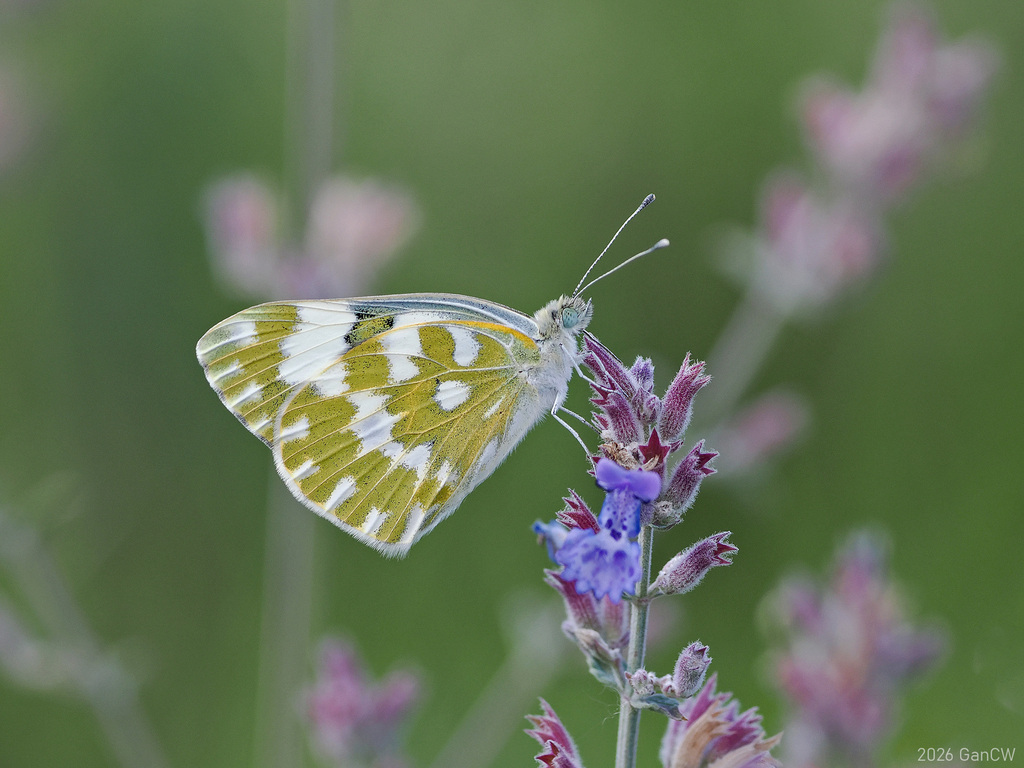
The Eastern Bath White is a small to medium butterfly with a wingspan around 45 mm; its upper wings are white with black spots and the underside of the hindwing shows greenish-grey markings. It lives in open grassy or flowery areas, rocky places and roadsides up to about 2 300 m altitude, especially where its host plants grow. Adults are on the wing from March to October, producing two to four generations depending on latitude, and they overwinter as chrysalises.
Source: Wikipedia
How to recognize it
The butterfly’s upper side is white with black stains on both forewing and hindwing, while the underside of the hindwing has greenish-grey spots.
Source: Wikipedia
Size
Wingspan reaches about 45 mm, classifying it as small to medium sized.
Source: Wikipedia
Where it lives
Found in open grassy, flowery, stony or rocky habitats and along roadsides, up to 1 500 m and sometimes higher. Especially present where host plants grow, from sea level up to 2 300 m.
Source: Wikipedia
What it eats
Caterpillars feed on plants in the Resedaceae family.
Source: Wikipedia
Life cycle
Adults fly from March to October, producing two to four generations depending on latitude. The species overwinters in the chrysalis stage.
Source: Wikipedia
When you see it
Flight period spans March through October, with multiple generations per year.
Source: Wikipedia
Where it comes from
Its range extends from southeastern Europe (southern France, Italy, Corsica, Sardinia) through central Europe to the Middle East, including Iran and Iraq.
Source: Wikipedia
Lookalikes
It looks almost identical to Pontia daplidice, making its western range hard to determine.
Source: Wikipedia
Same family (Pieridae)


Sources
- Wikipedia: https://en.wikipedia.org/wiki/Pontia_edusa
Look it up elsewhere: GBIF · iNaturalist · BugGuide · Wikipedia
Text written 2026-10-22 from the sources above and checked sentence by sentence against them. Data fetched 2026-10-22.