 Bug FAQ
Early Thorn
Selenia dentaria · Order: Lepidoptera · Family: Geometridae
Source: Wikipedia
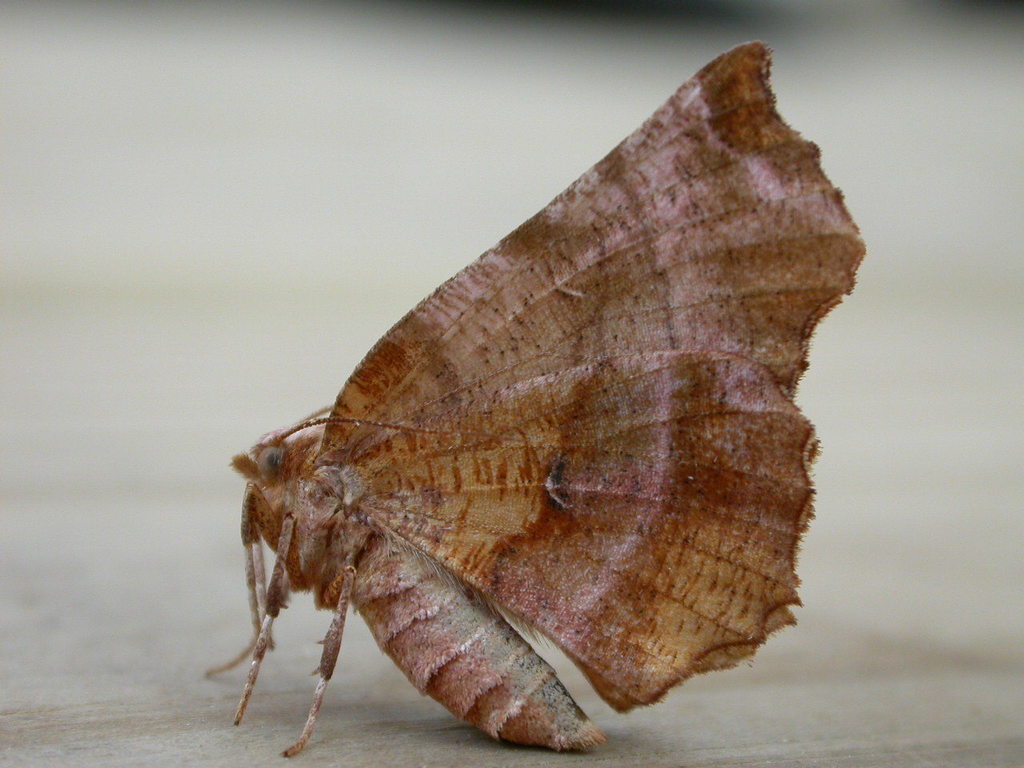
Adults have a wingspan of about 28 to 40 mm and show a lot of colour variation, with scalloped wings, three crosslines and a dark spot near the tip of the forewing. They live across northern Europe and much of the Palearctic region, flying in two generations from April through August.
Source: Wikipedia
How to recognize it
The forewings have three transverse lines, a dark apical stain, and the wing edges are scalloped. Colour is highly variable, but the hindwing shows a shallow notch between the radial veins and the costal spots are enlarged where the lines start.
Source: Wikipedia
Size
Wingspan ranges from 28 mm to 40 mm.
Source: Wikipedia
What it eats
Larvae feed on a variety of deciduous trees, especially birch and alder.
Source: Wikipedia
Life cycle
The species produces two generations of adults each year.
Source: Wikipedia
When you see it
Adults are on the wing from April to August.
Source: Wikipedia
Where it comes from
Its native distribution matches the habitat range listed above.
Source: Wikipedia
Lookalikes
The summer form ab. illunaria is smaller and less speckled, while ab. minima is a dwarf form often sharply marked and common in Arctic Norway.
Source: Wikipedia
Questions people ask
What do the caterpillars eat?
They feed on leaves of deciduous trees such as birch and alder.
Source: Wikipedia
When are the adult moths active?
Adults fly in two generations between April and August.
Source: Wikipedia
How can I tell this moth apart from similar species?
Look for three crosslines, a dark spot at the forewing tip, scalloped wing edges, and enlarged costal spots where the lines begin; the hindwing has a shallow notch between the radials.
Source: Wikipedia
Same family (Geometridae)
 Willow BeautyPeribatodes rhomboidaria
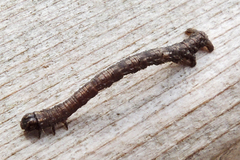 Pale BeautyCampaea perlataDamages trees, gardens or crops
 Large Lace-border MothScopula limboundataDamages trees, gardens or crops
 Riband WaveIdaea aversata
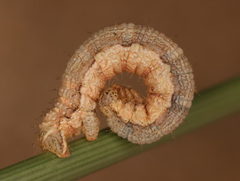 Yellow Shell MothCamptogramma bilineata
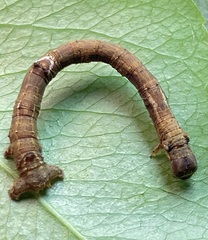 Large Maple Spanworm MothProchoerodes lineolaDamages trees, gardens or crops
Sources
- Wikipedia: https://en.wikipedia.org/wiki/Selenia_dentaria
Look it up elsewhere: GBIF · iNaturalist · BugGuide · Wikipedia
Text written 2026-10-22 from the sources above and checked sentence by sentence against them. Data fetched 2026-10-22.