 Bug FAQ
Dusky Drone Fly
Eristalis obscura · Order: Diptera · Family: Syrphidae
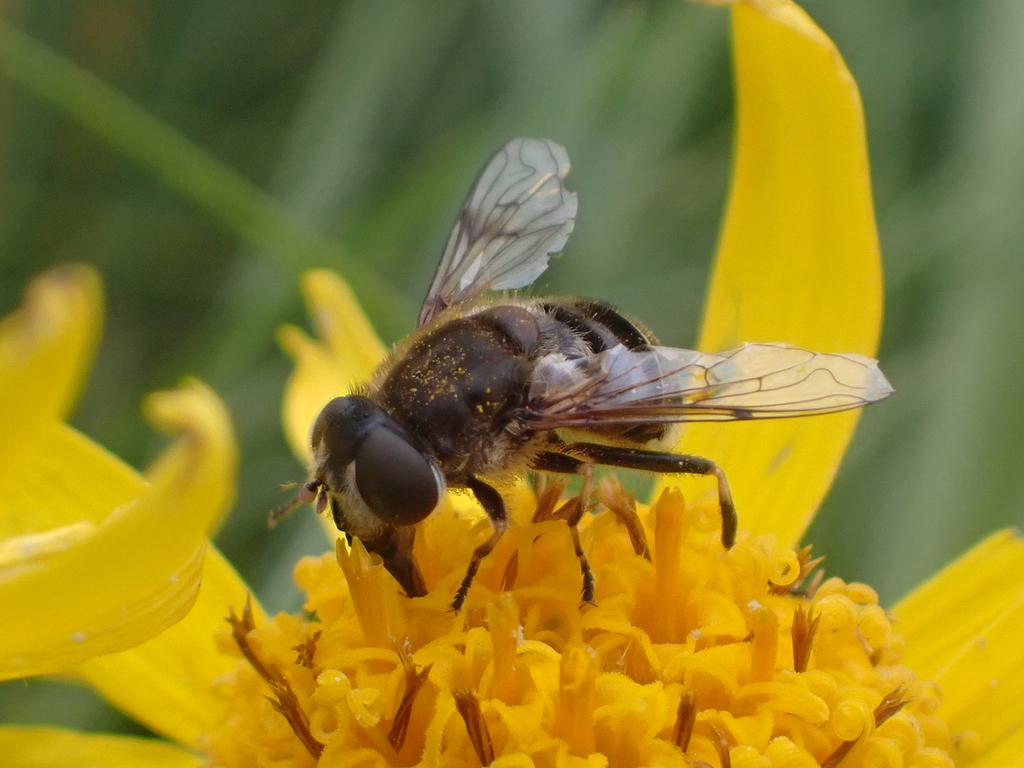
The dusky drone fly is a common syrphid species. It is native to the northern United States and Canada and also occurs across Europe and into Siberia. Its larvae live in water and filter-feed using a rat-tailed breathing tube.
Source: Wikipedia
How to recognize it
The dusky drone fly is a common syrphid species.
Source: Wikipedia
Where it lives
It inhabits northern parts of North America and Europe, extending eastward to Siberia.
Source: Wikipedia
What it eats
The larvae are aquatic filter-feeders with a rat-tailed breathing tube.
Source: Wikipedia
Life cycle
Eristalis obscura was first officially described by Loew in 1866.
Source: Wikipedia
Where it comes from
Its native range includes the northern United States and Canada, as well as Europe and Siberia.
Source: Wikipedia
Where it is found in the US
Recorded in 14 of 51 states and DC. Most records: Alaska, Maine, Minnesota, Vermont, New Hampshire, Colorado, Massachusetts, South Dakota.
Darker = more records. Counts are museum and citizen-science records, not population size.
Source: GBIF
Status: native in North America; native in Canada. Source: iNaturalist
Months it is reported in the US
Source: GBIF
More photos
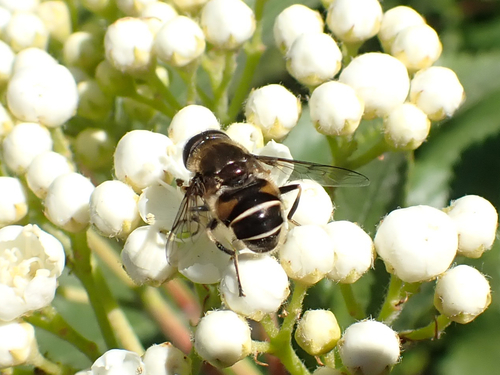
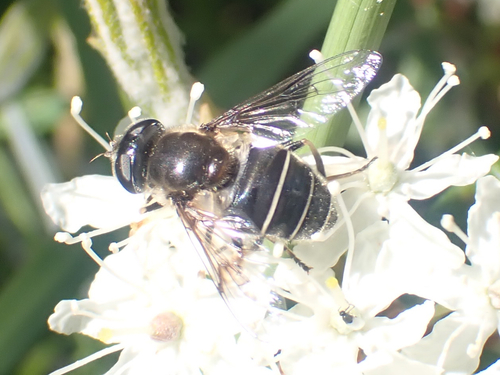
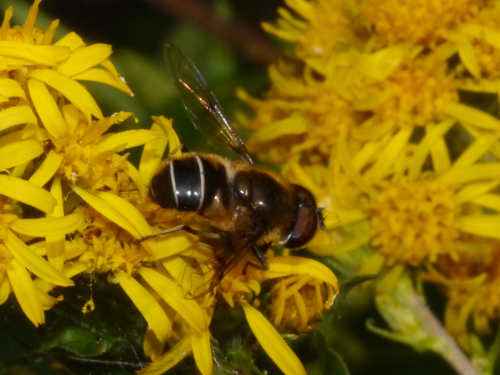
Same family (Syrphidae)






Sources
- Wikipedia: https://en.wikipedia.org/wiki/Eristalis_obscura
Look it up elsewhere: GBIF · iNaturalist · BugGuide · ITIS · Wikipedia
Text written 2026-10-27 from the sources above and checked sentence by sentence against them. Data fetched 2026-10-27.