 Bug FAQ
Dusky Ant
Formica fusca · Order: Hymenoptera · Family: Formicidae
Also called: Negro Ant, silky ant
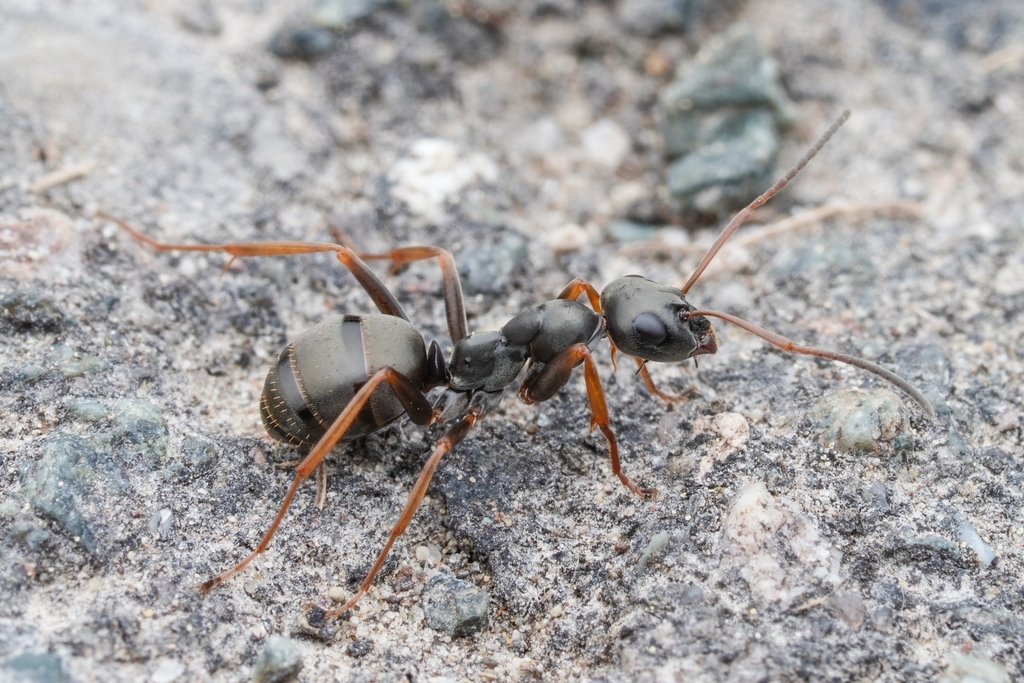
Formica fusca workers are relatively large ants, about 8 to 10 mm long. They are black and live across Europe, parts of southern Asia and Africa, often in rotten wood, under stones, or in urban areas where they feed on aphid honeydew. Colonies produce winged ants in early summer and have a few queens that share the nest.
Source: Wikipedia
How to recognize it
Formica fusca is a black-colored ant found throughout Europe, southern Asia and Africa.
Source: Wikipedia
Size
Workers measure 8 to 10 mm (0.3 to 0.4 in) in length.
Source: Wikipedia
Where it lives
Nests are typically in rotten tree stumps, under stones in clear-cut areas, woodland borders and hedgerows. The species also occurs in urban settings, feeding on honeydew from aphids on weeds.
Source: Wikipedia
What it eats
It eats small insects, aphid honeydew and nectar from extrafloral nectaries.
Source: Wikipedia
Life cycle
Winged alates appear in June to July and take nuptial flights in July to August. Colonies are weakly polygynous, usually with about three queens sharing the nest.
Source: Wikipedia
When you see it
Alate production occurs in June/July with nuptial flights in July/August.
Source: Wikipedia
Where it comes from
Its Palearctic range extends from Portugal to Japan and from Italy north to Fennoscandia.
Source: Wikipedia
Lookalikes
North American populations formerly considered F. fusca are now a separate species, Formica subaenescens.
Source: Wikipedia
Where it is found in the US
Recorded in 39 of 51 states and DC. Most records: Colorado, Illinois, Minnesota, New Mexico, Arizona, New York, California, Wyoming.
Darker = more records. Counts are museum and citizen-science records, not population size.
Source: GBIF
Status: native in Canada. Source: iNaturalist
Months it is reported in the US
Source: GBIF
More photos

Same family (Formicidae)
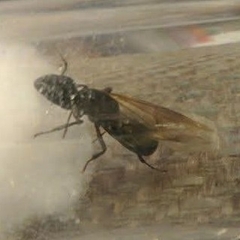 Eastern Black Carpenter AntCamponotus pennsylvanicusCan damage your home
 Red Imported Fire AntSolenopsis invictaCan sting
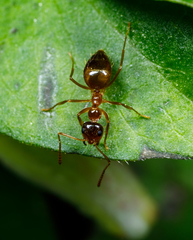 American Winter AntPrenolepis imparis
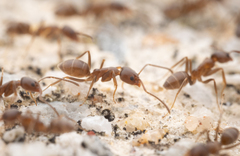 Argentine AntLinepithema humileNuisance, not dangerous
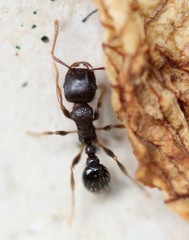 Immigrant Pavement AntTetramorium immigransCan sting
 Odorous House AntTapinoma sessileCan damage your home
Sources
- Wikipedia: https://en.wikipedia.org/wiki/Formica_fusca
Look it up elsewhere: GBIF · iNaturalist · BugGuide · ITIS · Wikipedia
Text written 2026-10-22 from the sources above and checked sentence by sentence against them. Data fetched 2026-10-22.