 Bug FAQ
Dun-bar
Cosmia trapezina · Order: Lepidoptera · Family: Noctuidae
Source: Wikipedia
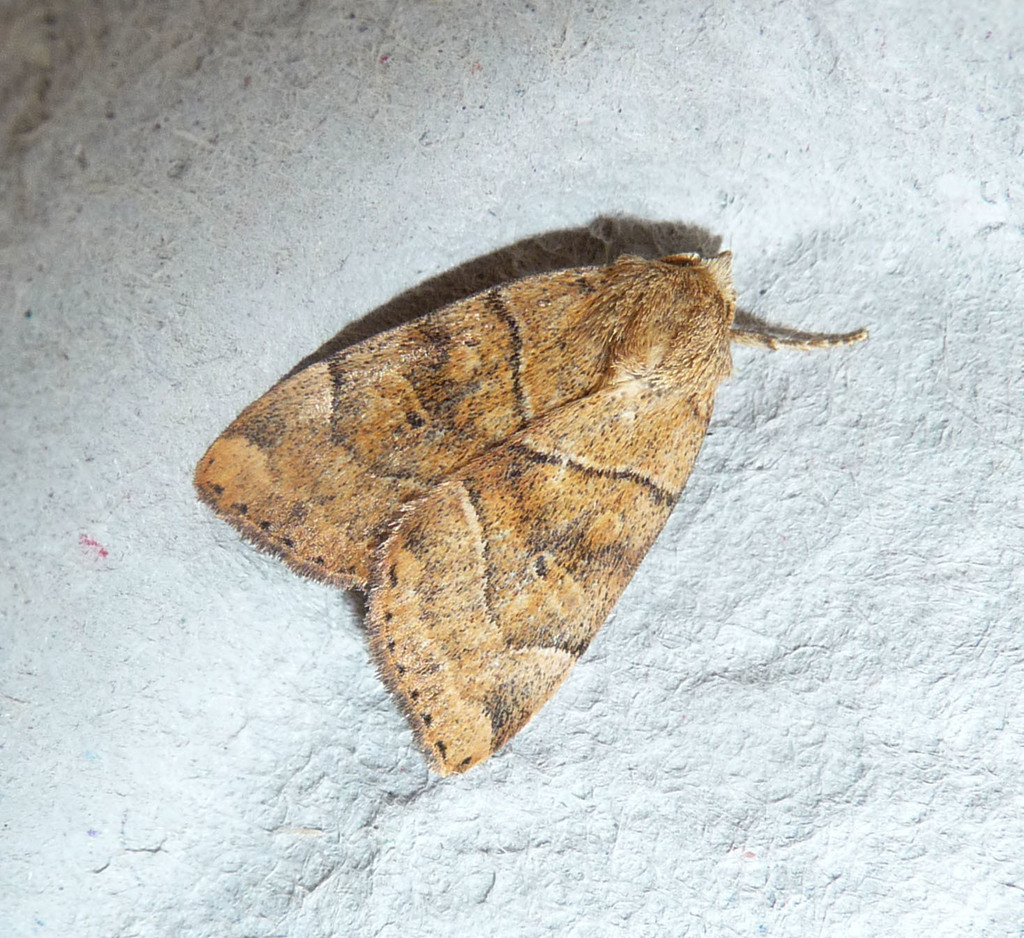
The Dun-bar moth has a wingspan of about 28 to 38 mm and shows a lot of colour variation. Adults fly at night from July to September and are attracted to light, sugar and nectar-rich flowers. The green larvae with yellow lines eat a wide range of trees, shrubs and other plants, and can also eat other caterpillars.
Source: Wikipedia
How to recognize it
Hindwings vary from pale cream to a dingy brown colour.
Source: Wikipedia
Size
Wingspan is variable, typically between 28 and 38 mm.
Source: Wikipedia
Where it lives
Adults are nocturnal, flying from July through September and are drawn to lights, sugary baits and nectar-rich flowers.
Source: Wikipedia
What it eats
Larvae are green with yellow lines and black-white spots. They feed on many plants, especially trees and shrubs, and may also eat other lepidopteran larvae, even their own kind.
Source: Wikipedia
Life cycle
The species overwinters in the egg stage.
Source: Wikipedia
When you see it
Adults are on the wing from July to September.
Source: Wikipedia
Where it comes from
It is a common species across the Palearctic region. It occurs throughout almost the whole of Europe.
Source: Wikipedia
More photos

Questions people ask
Can they damage garden plants?
Yes, the caterpillars feed on a wide range of trees, shrubs and other garden plants, which can cause damage.
Source: Wikipedia
Where are they found?
They are common throughout most of Europe and the wider Palearctic region.
Source: Wikipedia
Same family (Noctuidae)
 Ipsilon Dart MothAgrotis ipsilonDamages trees, gardens or crops
 Fall Armyworm MothSpodoptera frugiperdaDamages trees, gardens or crops
 Army Cutworm MothEuxoa auxiliarisDamages trees, gardens or crops
 Large Yellow UnderwingNoctua pronubaDamages trees, gardens or crops
 Silver ΥAutographa gamma
 American DaggerAcronicta americanaCan irritate skin
Sources
- Wikipedia: https://en.wikipedia.org/wiki/Dun-bar
Look it up elsewhere: GBIF · iNaturalist · BugGuide · Wikipedia
Text written 2026-10-22 from the sources above and checked sentence by sentence against them. Data fetched 2026-10-22.