 Bug FAQ
Dull brown looper
Asaphodes aegrota · Order: Lepidoptera · Family: Geometridae
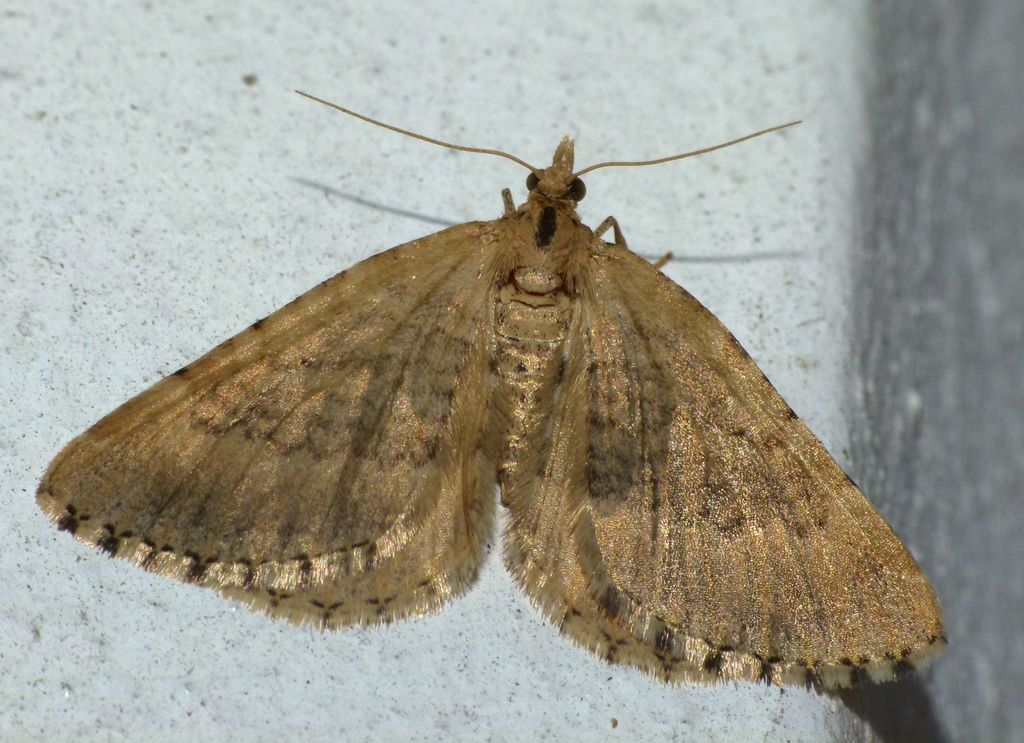
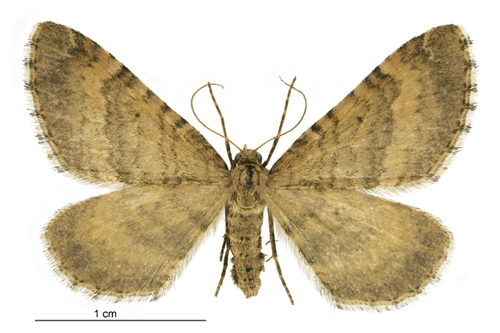
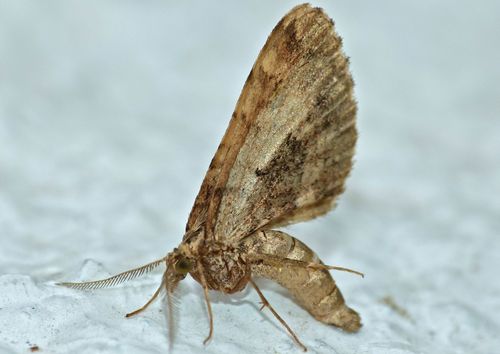
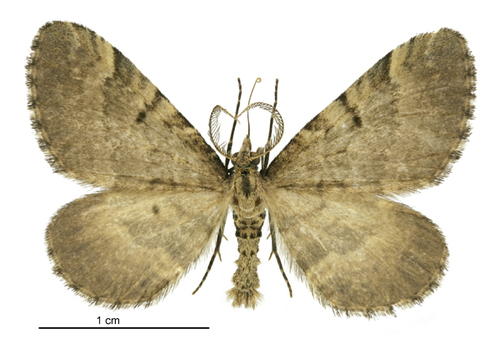
Adults show variable wing markings, but they lack dark colour at the outer edge of the forewings, which helps tell them apart from the similar Asaphodes abrogata. They live in open areas of lowland native forest, tussock grassland and scrub across New Zealand’s North, South and Stewart Islands, and the caterpillars feed on native herbs and sometimes on introduced lawn daisy. Adults are on the wing from November through March, and they may have one or two generations per year.
Source: Wikipedia
How to recognize it
The moth’s wing patterns vary in intensity, and it can be recognized by the absence of dark colour on the outer edge of its forewings.
Source: Wikipedia
Life cycle
It may produce two broods a year, or possibly just one with adults that hibernate.
Source: Wikipedia
When you see it
Adults fly from November until March.
Source: Wikipedia
Where it comes from
It is endemic to New Zealand and occurs on the North, South and Stewart Islands.
Source: Wikipedia
Lookalikes
It differs from the similar Asaphodes abrogata by lacking dark colour at the outer edge of the forewings.
Source: Wikipedia
More photos
Questions people ask
When can I see adult Asaphodes aegrota?
Adults are active from November through March.
Source: Wikipedia
What do the caterpillars eat?
They feed on native herbs and sometimes on the introduced lawn daisy.
Source: Wikipedia
How can I tell Asaphodes aegrota apart from Asaphodes abrogata?
A. aegrota lacks the dark colouration on the outer edge of the forewings that A. abrogata has.
Source: Wikipedia
Same family (Geometridae)
 Willow BeautyPeribatodes rhomboidaria
 Pale BeautyCampaea perlataDamages trees, gardens or crops
 Large Lace-border MothScopula limboundataDamages trees, gardens or crops
 Riband WaveIdaea aversata
 Yellow Shell MothCamptogramma bilineata
 Large Maple Spanworm MothProchoerodes lineolaDamages trees, gardens or crops
Sources
- Wikipedia: https://en.wikipedia.org/wiki/Asaphodes_aegrota
Look it up elsewhere: GBIF · iNaturalist · BugGuide · Wikipedia
Text written 2026-10-23 from the sources above and checked sentence by sentence against them. Data fetched 2026-10-23.