 Bug FAQ
Drab Brown Wave
Lobocleta ossularia · Order: Lepidoptera · Family: Geometridae
Also called: Drab Brown Wave Moth
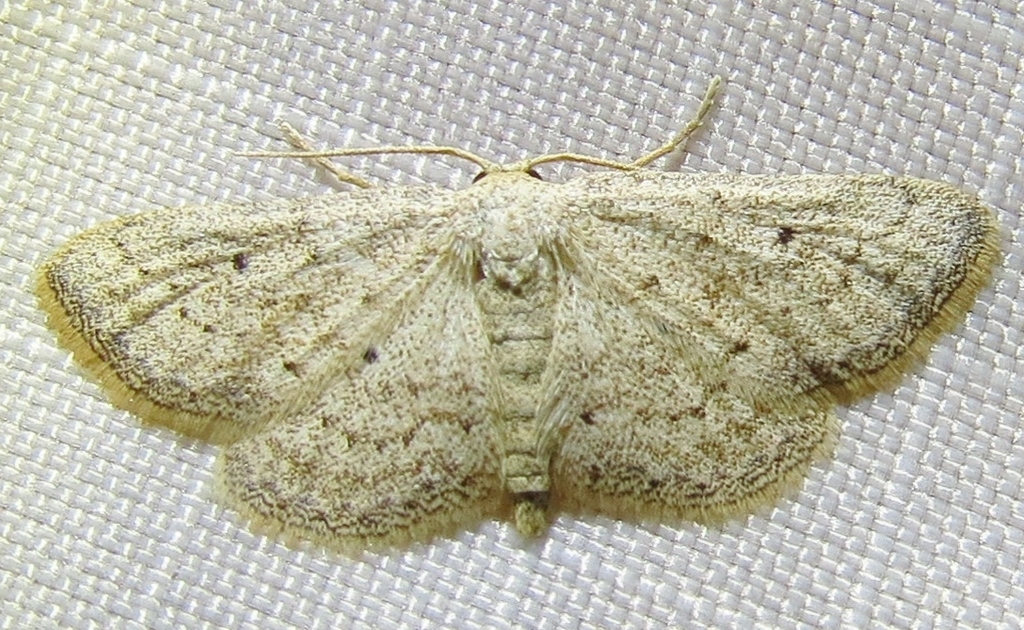
The drab brown wave moth, scientific name Lobocreta ossularia, has a wingspan of about 13 to 19 mm. It lives across North America, from California to Florida and north to New York and Illinois, and its larvae eat plants such as chickweed, bedstraw and wild strawberry. Adults are active from June through September in California.
Source: Wikipedia
How to recognize it
This moth is called the drab brown wave, scientific name Lobocreta ossularia.
Source: Wikipedia
Size
Its wingspan ranges from 13 to 19 mm.
Source: Wikipedia
Where it lives
It is found in North America.
Source: Wikipedia
What it eats
The caterpillars feed on chickweed, bedstraw species and wild strawberry.
Source: Wikipedia
Life cycle
Adults are on the wing from June to September in California.
Source: Wikipedia
When you see it
In California, adults appear between June and September.
Source: Wikipedia
Where it comes from
Records show it occurs from California east to Florida and north to New York and Illinois.
Source: Wikipedia
Where it is found in the US
Recorded in 36 of 51 states and DC. Most records: Texas, Oklahoma, Alabama, New Jersey, North Carolina, Missouri, Maryland, Louisiana.
Darker = more records. Counts are museum and citizen-science records, not population size.
Source: GBIF
Status: native in North America; native in Canada; native in United States. Source: iNaturalist
Months it is reported in the US
Source: GBIF
More photos
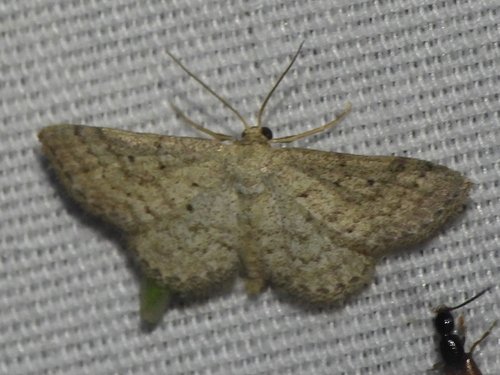
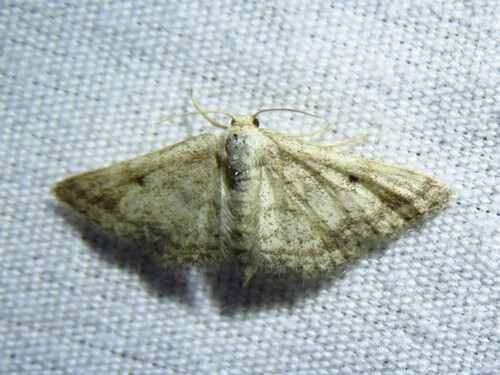
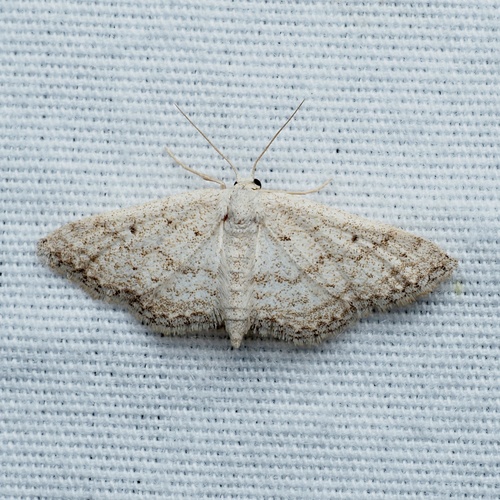
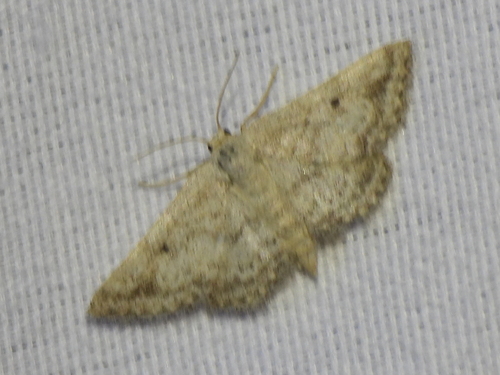
Questions people ask
Are they a problem for gardens?
The larvae feed on a few garden plants, but there is no source saying they cause serious damage.
Source: Wikipedia
Same family (Geometridae)
 Willow BeautyPeribatodes rhomboidaria
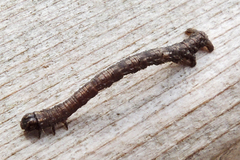 Pale BeautyCampaea perlataDamages trees, gardens or crops
 Large Lace-border MothScopula limboundataDamages trees, gardens or crops
 Riband WaveIdaea aversata
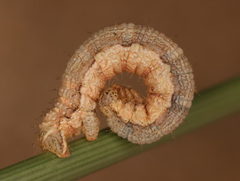 Yellow Shell MothCamptogramma bilineata
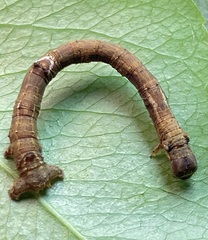 Large Maple Spanworm MothProchoerodes lineolaDamages trees, gardens or crops
Sources
- Wikipedia: https://en.wikipedia.org/wiki/Lobocleta_ossularia
Look it up elsewhere: GBIF · iNaturalist · BugGuide · ITIS · Wikipedia
Text written 2026-10-22 from the sources above and checked sentence by sentence against them. Data fetched 2026-10-22.