 Bug FAQ
Double-lobed Moth
Lateroligia ophiogramma · Order: Lepidoptera · Family: Noctuidae
Also called: Double Lobed
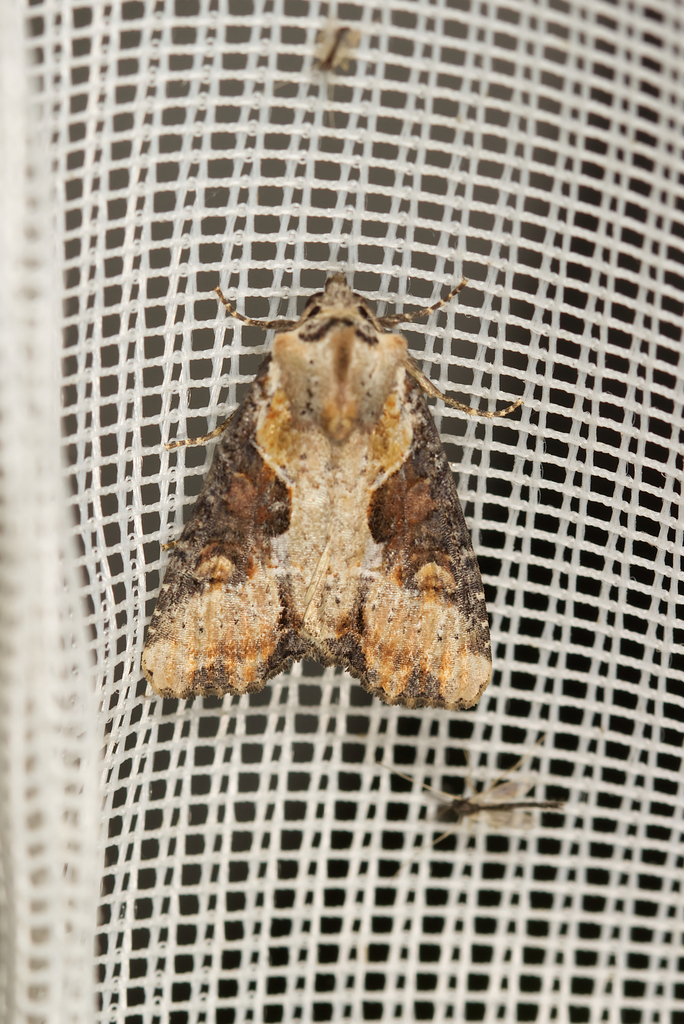
The double-lobed moth has a wingspan of about 32 to 35 mm and forewings 13 to 16 mm long. It lives near water bodies, coastal areas, moors and wet meadows, up to 2000 m in the Alps. Its larvae feed on reed canary-grass and two species of Glyceria, overwintering on these plants.
Source: Wikipedia
How to recognize it
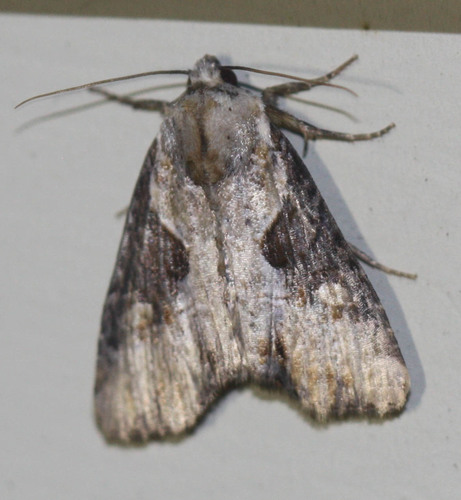
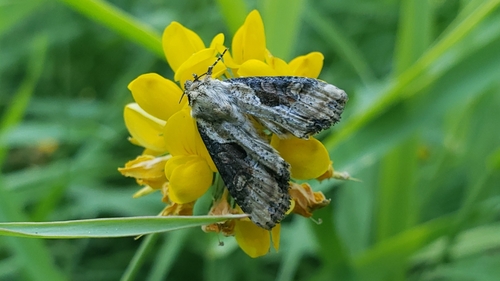
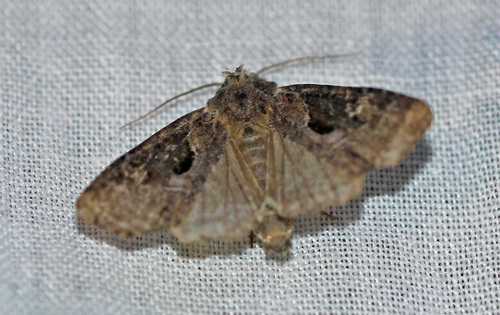
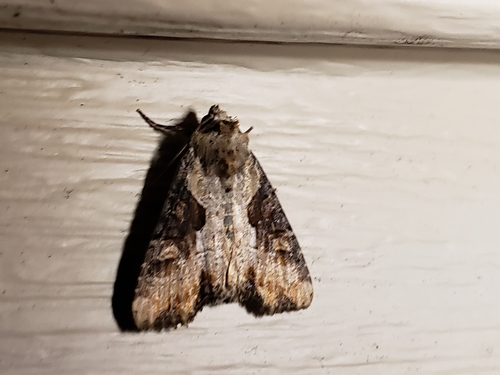
The forewings are pale ochreous with olive-grey shading along the inner margin and at the edge, and have pale brownish tones. Brown inner and outer lines are lunulate-dentate, and the median area shows a red-brown or black-brown blotch split into two lobes, the lower lobe formed by a dark claviform stigma.
Source: Wikipedia
Size
Wingspan ranges from 32 to 35 mm. Each forewing measures 13 to 16 mm in length.
Source: Wikipedia
Where it lives
It prefers river and lake banks, coastal zones, moors, floodplains and wet meadows. In the Alps it can be found up to about 2000 m altitude.
Source: Wikipedia
Life cycle
Caterpillars are pinkish-ochreous with a pale side line, black tubercles, a yellow-brown head, and black-brown thoracic and anal plates.
Source: Wikipedia
When you see it
Adults fly from June through August in the British Isles.
Source: Wikipedia
Lookalikes
It is sometimes placed in its own monotypic genus, Lateroligia, which can cause confusion with related moths.
Source: Wikipedia
Where it is found in the US
Recorded in 32 of 51 states and DC. Most records: Vermont, Wisconsin, Michigan, Montana, Massachusetts, Illinois, New York, Washington.
Darker = more records. Counts are museum and citizen-science records, not population size.
Source: GBIF
Status: introduced in Canada; introduced in United States. Source: iNaturalist
Months it is reported in the US
Source: GBIF
More photos
Questions people ask
When can I see the double-lobed moth?
Adults are on the wing from June to August in the British Isles.
Source: Wikipedia
What do the caterpillars eat?
The larvae feed on reed canary-grass and two species of Glyceria, staying on these plants through winter.
Source: Wikipedia
How can I recognise this moth?
Look for pale ochreous forewings with olive-grey shading, brown lunulate-dentate lines, and a distinctive two-lobed red-brown or black-brown blotch in the centre.
Source: Wikipedia
Where does this moth live?
It inhabits river and lake banks, coastal areas, moors, floodplains and wet meadows, up to 2000 m in the Alps.
Source: Wikipedia
Same family (Noctuidae)
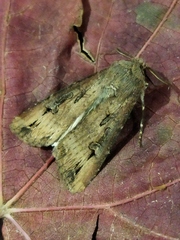 Ipsilon Dart MothAgrotis ipsilonDamages trees, gardens or crops
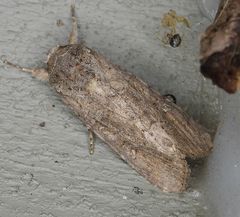 Fall Armyworm MothSpodoptera frugiperdaDamages trees, gardens or crops
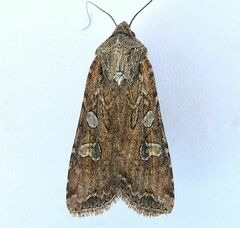 Army Cutworm MothEuxoa auxiliarisDamages trees, gardens or crops
 Large Yellow UnderwingNoctua pronubaDamages trees, gardens or crops
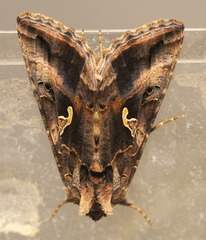 Silver ΥAutographa gamma
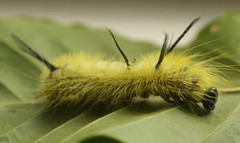 American DaggerAcronicta americanaCan irritate skin
Sources
- Wikipedia: https://en.wikipedia.org/wiki/Apamea_ophiogramma
Look it up elsewhere: GBIF · iNaturalist · BugGuide · ITIS · Wikipedia
Text written 2026-10-24 from the sources above and checked sentence by sentence against them. Data fetched 2026-10-24.