 Bug FAQ
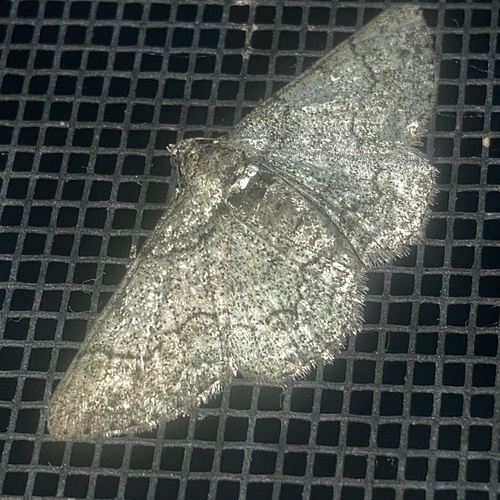
Double-lined Gray
Cleora sublunaria · Order: Lepidoptera · Family: Geometridae
Also called: Double-lined Gray Moth
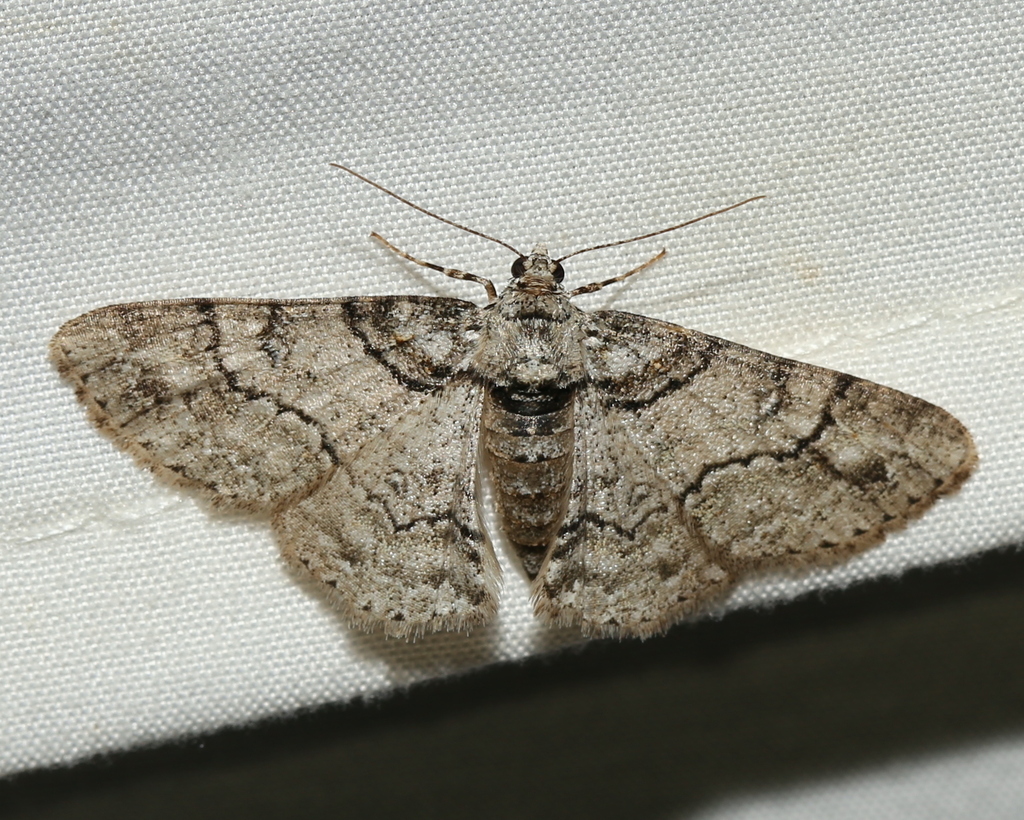
The double-lined gray moth has forewings 13 to 17 mm long in males and 14 to 17 mm in females. Adults fly from February through June, while the caterpillars appear in June and July. Its larvae eat oak (Quercus) and sweet-fern (Comptonia) leaves.
Source: Wikipedia
How to recognize it
Cleora sublunaria, called the double-lined gray moth, belongs to the Geometridae family.
Source: Wikipedia
Size
Forewing length ranges from 13 to 17 mm in males and 14 to 17 mm in females.
Source: Wikipedia
Where it lives
It lives in the southeastern United States extending west to Texas.
Source: Wikipedia
What it eats
Caterpillars feed on oak (Quercus) and sweet-fern (Comptonia) species.
Source: Wikipedia
Life cycle
Adults are on the wing mainly from February to June, producing one generation each year. Larvae are present from June to July.
Source: Wikipedia
When you see it
The flight period for adults spans February through June.
Source: Wikipedia
Where it comes from
The species is native to North America, recorded from the southeastern U.S. to Texas.
Source: Wikipedia
Where it is found in the US
Recorded in 31 of 51 states and DC. Most records: Texas, New Jersey, Pennsylvania, Alabama, North Carolina, Ohio, South Carolina, Connecticut.
Darker = more records. Counts are museum and citizen-science records, not population size.
Source: GBIF
Status: native in North America; native in United States; native in Canada. Source: iNaturalist
Months it is reported in the US
Source: GBIF
More photos
Questions people ask
When can I see adult double-lined gray moths?
Adults are typically active from February through June.
Source: Wikipedia
Where is this moth found?
It occurs in the southeastern United States and west to Texas.
Source: Wikipedia
Same family (Geometridae)
 Willow BeautyPeribatodes rhomboidaria
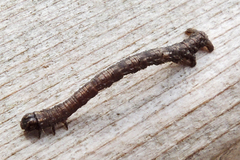 Pale BeautyCampaea perlataDamages trees, gardens or crops
 Large Lace-border MothScopula limboundataDamages trees, gardens or crops
 Riband WaveIdaea aversata
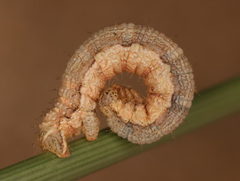 Yellow Shell MothCamptogramma bilineata
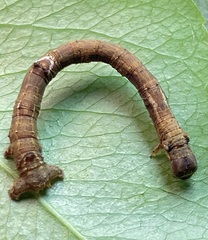 Large Maple Spanworm MothProchoerodes lineolaDamages trees, gardens or crops
Sources
- Wikipedia: https://en.wikipedia.org/wiki/Cleora_sublunaria
Look it up elsewhere: GBIF · iNaturalist · BugGuide · ITIS · Wikipedia
Text written 2026-10-23 from the sources above and checked sentence by sentence against them. Data fetched 2026-10-23.