 Bug FAQ
Dingy Cutworm Moth
Feltia jaculifera · Order: Lepidoptera · Family: Noctuidae
Also called: Dingy Cutworm
Source: Wikipedia
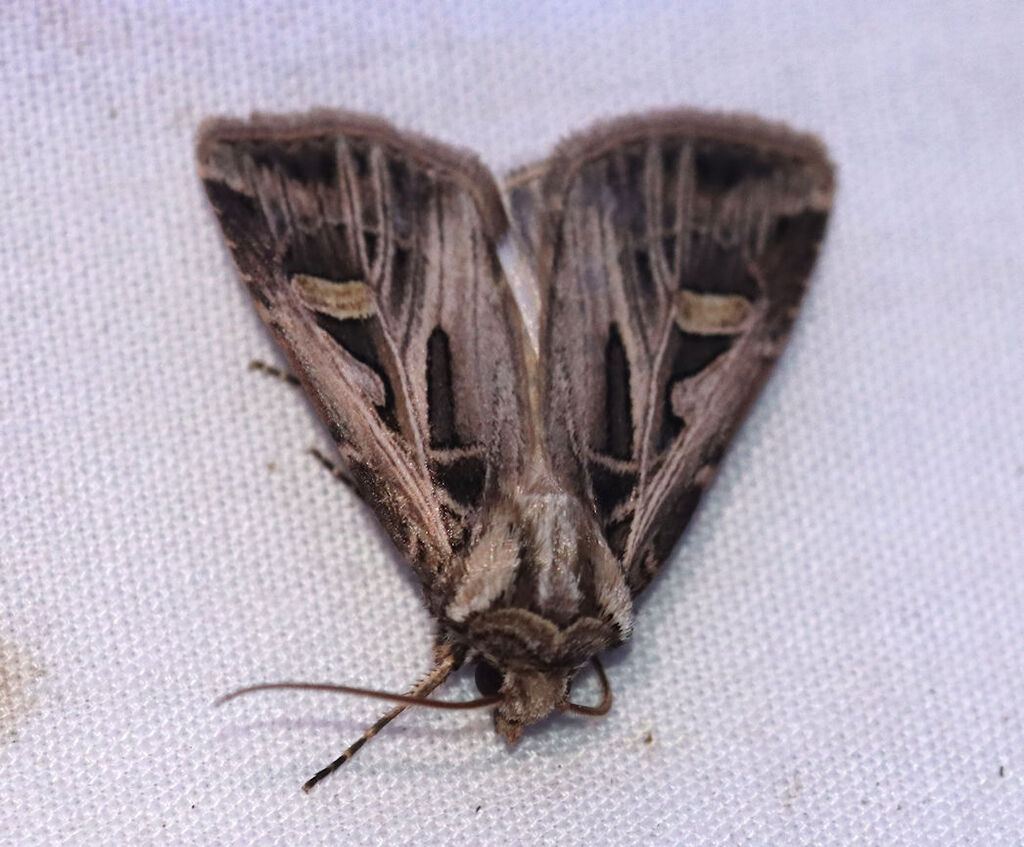
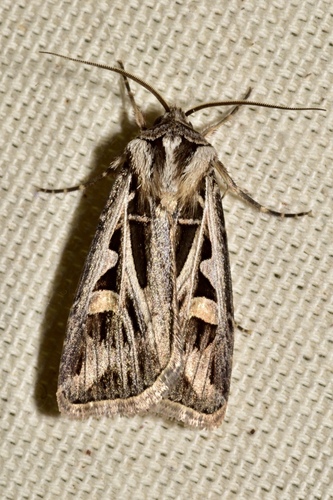
Adult dingy cutworm moths have a wingspan of about 30-40 mm and are active from July through November. They are dark gray to black with distinctive white-lined veins on the forewings. The caterpillars eat more than forty plant species, including many garden vegetables and field crops.
Source: Wikipedia
How to recognize it
White lines run along the M3 and CU1 veins from the lower corner to the outer edge of the wing.
Source: Wikipedia
Size
Adults have a wingspan of 30 to 40 mm.
Source: Wikipedia
Where it lives
They fly in fields, gardens and waste areas, especially at night near lights.
Source: Wikipedia
What it eats
Caterpillars feed on many plants such as alfalfa, corn, wheat, blueberries, clover, garden vegetables and grasses.
Source: Wikipedia
Life cycle
Adults are seen from July to November; the larvae overwinter and emerge in spring. Females lay eggs in flower heads, especially those of the aster family.
Source: Wikipedia
When you see it
Adults are active from July through November.
Source: Wikipedia
Where it comes from
The species is common throughout North America.
Source: Wikipedia
Lookalikes
It can be confused with three other Feltia species: F. herilis, F. subgothica and F. tricosa.
Source: Wikipedia
Where it is found in the US
Recorded in 48 of 51 states and DC. Most records: Michigan, Colorado, Massachusetts, Kansas, Wisconsin, Montana, Illinois, Washington.
Darker = more records. Counts are museum and citizen-science records, not population size.
Source: GBIF
Status: native in North America; native in Canada; native in United States. Source: iNaturalist
Months it is reported in the US
Source: GBIF
More photos
Questions people ask
Do dingy cutworm moths damage crops?
Yes, their larvae eat a wide variety of crops and garden plants.
Source: Wikipedia
When are adult dingy cutworms active?
Adults fly from July to November and are attracted to lights at night.
Source: Wikipedia
How can I tell a dingy cutworm moth apart from similar species?
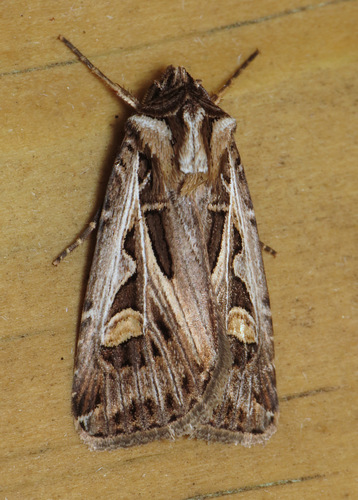
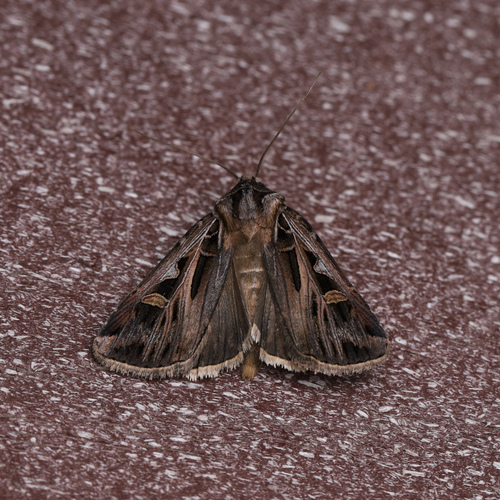
Look for dark gray-black forewings with white-lined M3 and CU1 veins and a streaked pattern.
Source: Wikipedia
Same family (Noctuidae)
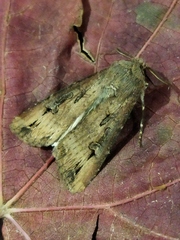 Ipsilon Dart MothAgrotis ipsilonDamages trees, gardens or crops
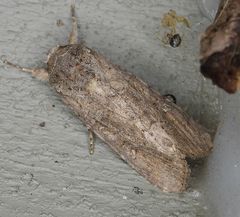 Fall Armyworm MothSpodoptera frugiperdaDamages trees, gardens or crops
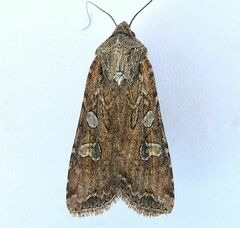 Army Cutworm MothEuxoa auxiliarisDamages trees, gardens or crops
 Large Yellow UnderwingNoctua pronubaDamages trees, gardens or crops
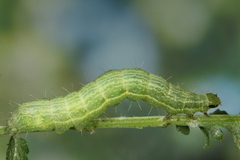 Silver ΥAutographa gamma
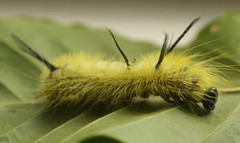 American DaggerAcronicta americanaCan irritate skin
Sources
- Wikipedia: https://en.wikipedia.org/wiki/Feltia_jaculifera
Look it up elsewhere: GBIF · iNaturalist · BugGuide · ITIS · Wikipedia
Text written 2026-10-22 from the sources above and checked sentence by sentence against them. Data fetched 2026-10-22.