 Bug FAQ
Difficult White-footed Ant
Technomyrmex difficilis · Order: Hymenoptera · Family: Formicidae
Also called: Ant, White-Footed Ant
Source: UF/IFAS
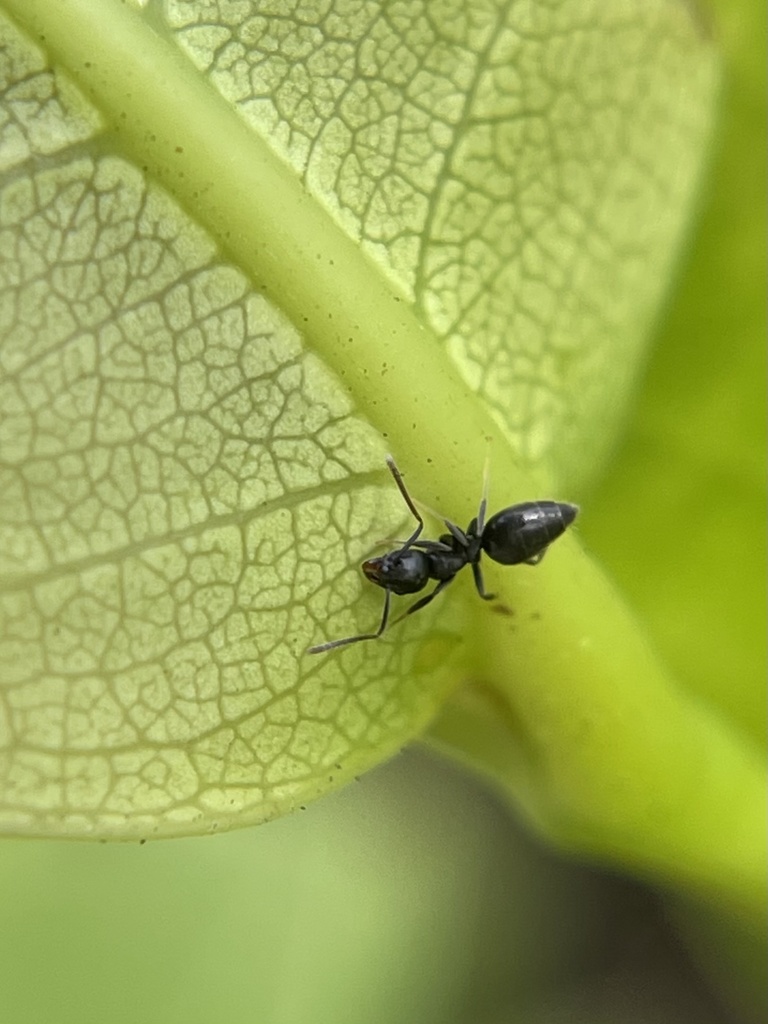
Homeowners see them foraging in kitchens, bathrooms and around buildings, and they are considered a nuisance pest. They do not bite, sting, cause structural damage, or spread disease.
Source: UF/IFAS
Is it a pest in the house?
They are frequently seen foraging in kitchens, bathrooms and on building exteriors, making them a nuisance to homeowners.
Source: UF/IFAS
Does it bite or sting?
They do not bite or sting, and no structural damage has been reported.
Source: UF/IFAS
How to get rid of it
Pest-control professionals, media and homeowners regularly seek advice from universities and government agencies for control methods. Recent publications (as of August 2002) provide updated information on their distribution in Florida and research on better control practices.
Source: UF/IFAS
Where it comes from
They are native to the Old World.
Source: Wikipedia
Lookalikes
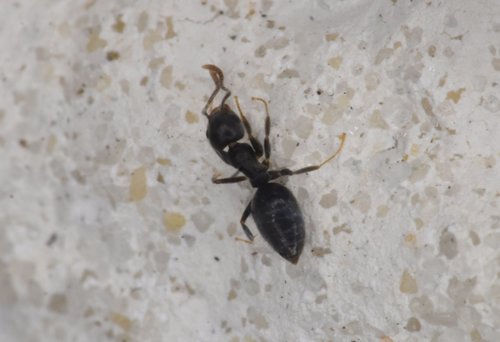
They resemble Argentine ants, but lack the vertical petiole projection of that species. In South Florida they are often confused with Paratrechina bourbonica, which is larger, faster, hairier and gives off a fruity odor when crushed.
Source: UF/IFAS
Where it is found in the US
Recorded in 5 of 51 states and DC. Most records: Florida, Hawaii, Oklahoma, District of Columbia, Washington.
Darker = more records. Counts are museum and citizen-science records, not population size.
Source: GBIF
Status: introduced in United States. Source: iNaturalist
Months it is reported in the US
Source: GBIF
More photos
Questions people ask
Do difficult white-footed ants bite or sting?
No, they do not bite or sting, and they have not been reported to cause structural damage.
Source: UF/IFAS
Why are they considered a pest in homes?
Because they are often seen foraging in kitchens, bathrooms and around buildings, which many homeowners find annoying.
Source: UF/IFAS
How can I tell them apart from Argentine ants?
White-footed ants lack the vertical petiole projection that Argentine ants have.
Source: UF/IFAS
Same family (Formicidae)
 Eastern Black Carpenter AntCamponotus pennsylvanicusCan damage your home
 Red Imported Fire AntSolenopsis invictaCan sting
 American Winter AntPrenolepis imparis
 Argentine AntLinepithema humileNuisance, not dangerous
 Immigrant Pavement AntTetramorium immigransCan sting
 Odorous House AntTapinoma sessileCan damage your home
Sources
- UF/IFAS: https://edis.ifas.ufl.edu/publication/IN551
- Wikipedia: https://en.wikipedia.org/wiki/Technomyrmex_difficilis
Look it up elsewhere: GBIF · iNaturalist · BugGuide · Wikipedia
Text written 2026-10-22 from the sources above and checked sentence by sentence against them. Data fetched 2026-10-22.