 Bug FAQ
Dicranomyia aegrotans
Dicranomyia aegrotans · Order: Diptera · Family: Limoniidae
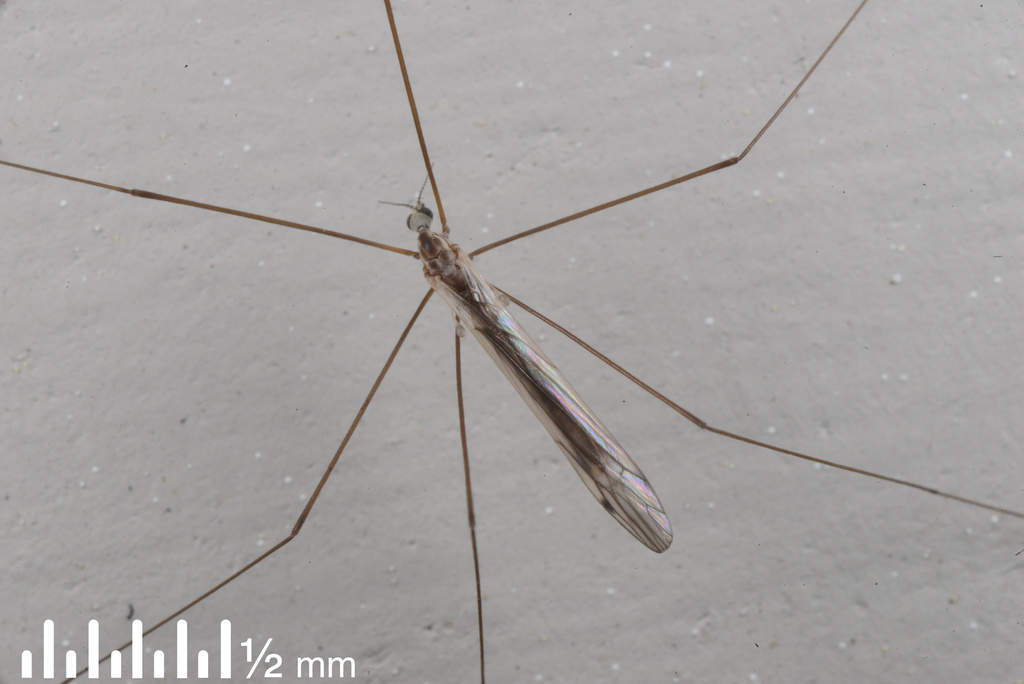
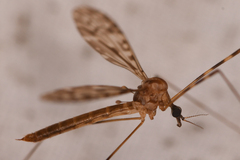
The insect is about five millimetres long with wings a little longer than its body. Its head is dusted with a light ash-grey colour and the front of the head is relatively narrow; the wings are narrow, slightly milky-tinted and have distinct dark and white vein patterns. It occurs widely across New Zealand and the Kermadec Islands and is endemic to New Zealand.
Source: Wikipedia
How to recognize it
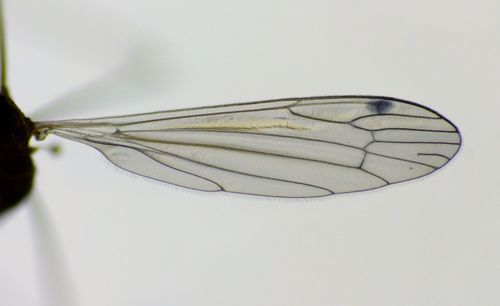
The head is heavily dusted with light ash-grey and the front is about one-fifth as broad as the rest of the head. Wings are narrow with a slight milky tint; the base and the Sc and R veins are white, the rest of the wing is dark, the Cu vein is a bit clouded, and the stigma is a small dark brown spot split by the cross-vein.
Source: Wikipedia
Size
Body length is roughly five millimetres and wing length about six millimetres.
Source: Wikipedia
Where it lives
It is found widely throughout New Zealand and on the Kermadec Islands.
Source: Wikipedia
Where it comes from
The species is endemic to New Zealand.
Source: Wikipedia
More photos
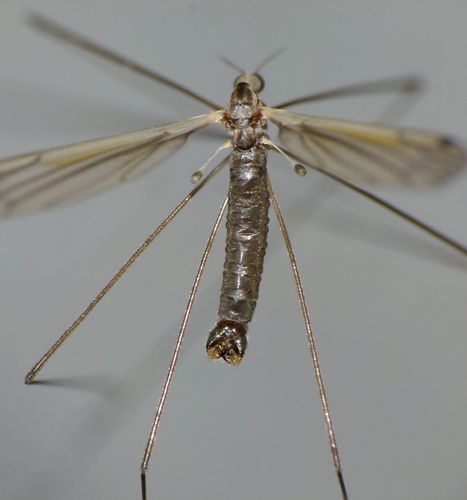
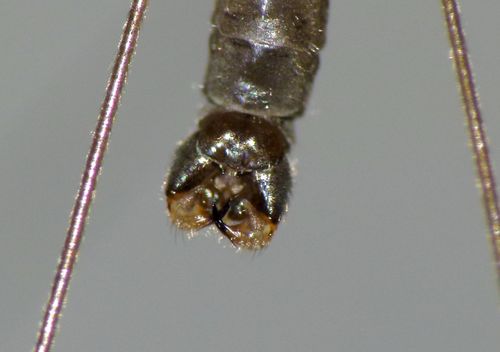
Questions people ask
Where is Dicranomyia aegrotans found?
It occurs widely across New Zealand and the Kermadec Islands and is endemic to New Zealand.
Source: Wikipedia
How big is this bug?
The body is about five millimetres long and the wings are roughly six millimetres long.
Source: Wikipedia
What does it look like?
It has a head dusted with light ash-grey, a relatively narrow front, and narrow wings with a slight milky tint, white base veins, dark remaining veins, a clouded Cu vein, and a small dark brown stigma split by a cross-vein.
Source: Wikipedia
Same family (Limoniidae)


Sources
- Wikipedia: https://en.wikipedia.org/wiki/Dicranomyia_aegrotans
Look it up elsewhere: GBIF · iNaturalist · BugGuide · Wikipedia
Text written 2026-10-23 from the sources above and checked sentence by sentence against them. Data fetched 2026-10-23.