 Bug FAQ
Delightful Donacaula Moth
Donacaula melinellus · Order: Lepidoptera · Family: Crambidae
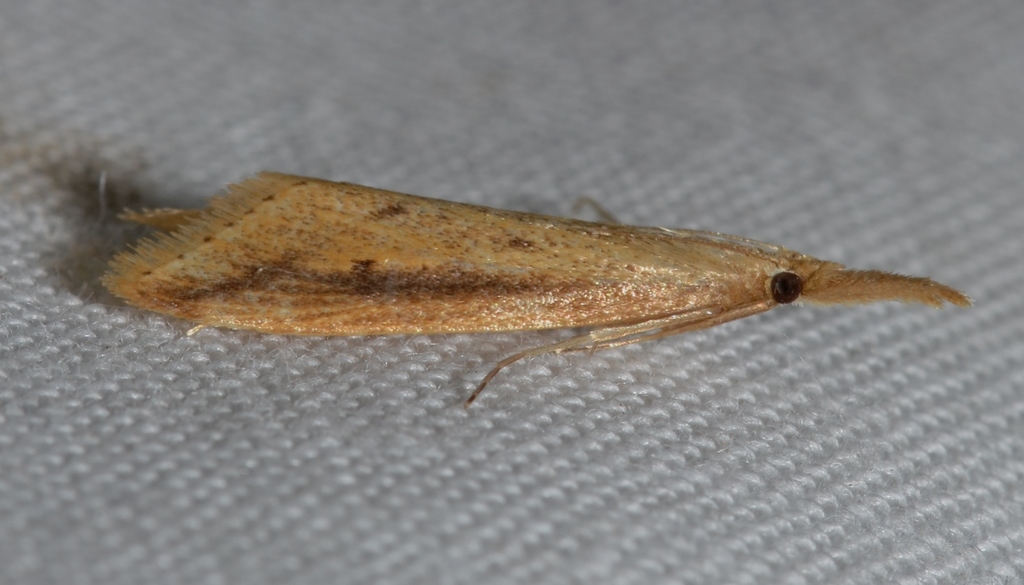
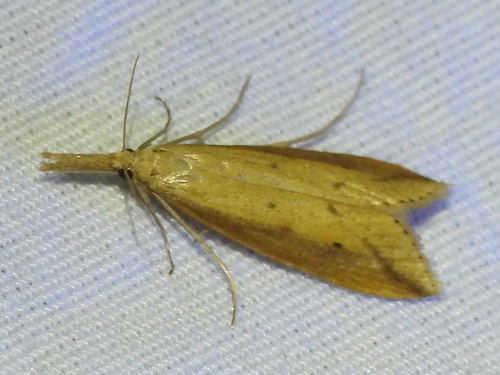
The Delightful Donacaula moth has forewings that measure about 2 to 3.4 centimeters in length. It occurs across many parts of North America, including many U.S. states and Ontario, Canada. Adults are most commonly on the wing from March through August, but they can be seen in most months.
Source: Wikipedia
Size
Forewing length ranges from 21 to 34 mm.
Source: Wikipedia
When you see it
Main flight period is March to August, though adults have been recorded in most months.
Source: Wikipedia
Where it comes from
Found in North America, recorded from Ontario and many U.S. states such as Alabama, Arizona, and New York.
Source: Wikipedia
Where it is found in the US
Recorded in 43 of 51 states and DC. Most records: Michigan, Texas, New Jersey, New York, Louisiana, North Carolina, Ohio, Mississippi.
Darker = more records. Counts are museum and citizen-science records, not population size.
Source: GBIF
Status: native in North America; native in United States; native in Canada. Source: iNaturalist
Months it is reported in the US
Source: GBIF
More photos
Questions people ask
When are these moths active?
Adults are most often seen from March through August, but they can appear in many other months as well.
Source: Wikipedia
Where can I find this moth?
It has been recorded throughout North America, including Ontario and a long list of U.S. states such as Florida, Texas, and Michigan.
Source: Wikipedia
How big is the Delightful Donacaula moth?
Its forewings measure between 21 and 34 mm in length.
Source: Wikipedia
Same family (Crambidae)
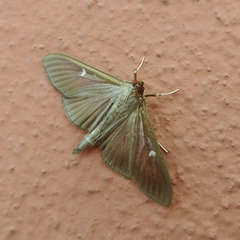 Box Tree MothCydalima perspectalisDamages trees, gardens or crops
 Celery Leaftier MothUdea rubigalis
 Elegant Grass-veneerMicrocrambus elegans
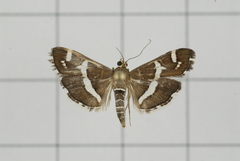 Hawaiian Beet Webworm MothSpoladea recurvalisDamages trees, gardens or crops
 Garden Grass-veneerChrysoteuchia culmellaDamages trees, gardens or crops
 Bluegrass Webworm MothParapediasia teterrellusDamages trees, gardens or crops
Sources
- Wikipedia: https://en.wikipedia.org/wiki/Donacaula_melinella
Look it up elsewhere: GBIF · iNaturalist · BugGuide · Wikipedia
Text written 2026-10-25 from the sources above and checked sentence by sentence against them. Data fetched 2026-10-25.