 Bug FAQ
Deceptive Carpenter Ant
Camponotus decipiens · Order: Hymenoptera · Family: Formicidae

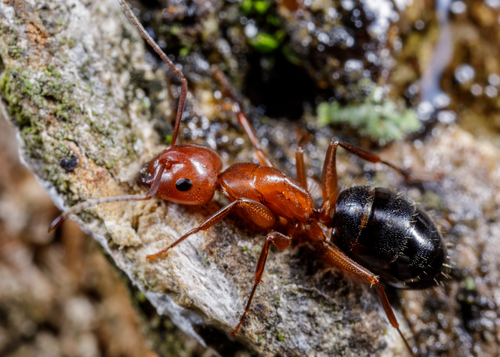
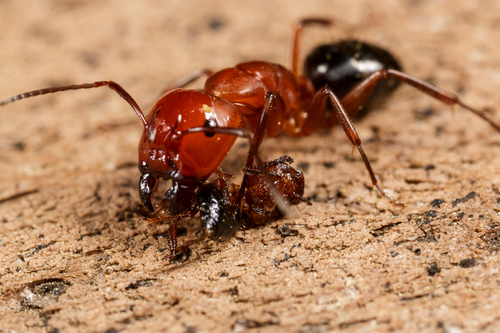
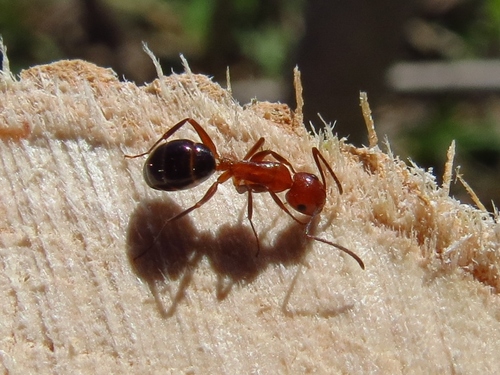
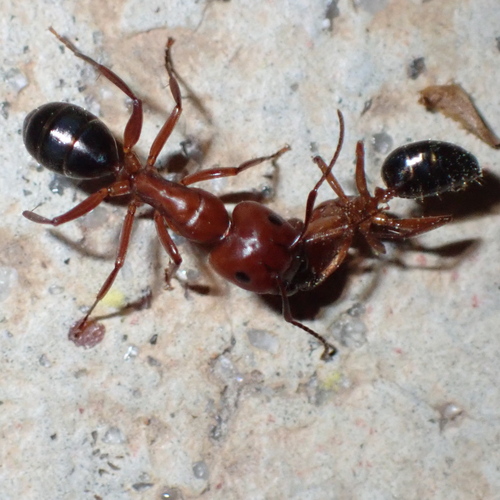
Workers are small, ranging from about 3 to 7.5 mm, and the species is black-gastered. They live in the eastern United States and several western states, as well as parts of northern Mexico. Nests are found in wood such as tree branches, logs, stumps, bark, and even house structures, especially in spring and fall.
Source: Wikipedia
How to recognize it
Camponotus decipiens is a carpenter ant species native to the eastern United States and parts of the central and western states, plus northern Mexico.
Source: Wikipedia
Size
Workers measure between 3 and 7.5 mm, well under the 15 mm length limit for the genus.
Source: Wikipedia
Where it lives
They nest in tree branches, logs, stumps, bark, twigs, wooden posts, and houses.
Source: Wikipedia
When you see it
They are most commonly seen in spring and fall.
Source: Wikipedia
Where it comes from
The species is native to the eastern United States and also occurs in North Dakota, Nebraska, Kansas, Colorado, Texas, and parts of Mexico.
Source: Wikipedia
Where it is found in the US
Recorded in 24 of 51 states and DC. Most records: Texas, Mississippi, Florida, North Carolina, Tennessee, Alabama, Georgia, South Carolina.
Darker = more records. Counts are museum and citizen-science records, not population size.
Source: GBIF
Status: native in North America; native in United States. Source: iNaturalist
Months it is reported in the US
Source: GBIF
More photos
Same family (Formicidae)
 Eastern Black Carpenter AntCamponotus pennsylvanicusCan damage your home
 Red Imported Fire AntSolenopsis invictaCan sting
 American Winter AntPrenolepis imparis
 Argentine AntLinepithema humileNuisance, not dangerous
 Immigrant Pavement AntTetramorium immigransCan sting
 Odorous House AntTapinoma sessileCan damage your home
Sources
- Wikipedia: https://en.wikipedia.org/wiki/Camponotus_decipiens
Look it up elsewhere: GBIF · iNaturalist · BugGuide · ITIS · Wikipedia
Text written 2026-10-23 from the sources above and checked sentence by sentence against them. Data fetched 2026-10-23.