 Bug FAQ
Deathwatch Beetle
Xestobium rufovillosum · Order: Coleoptera · Family: Anobiidae
Also called: Death Watch Beetle, knock beetle
Source: Wikipedia
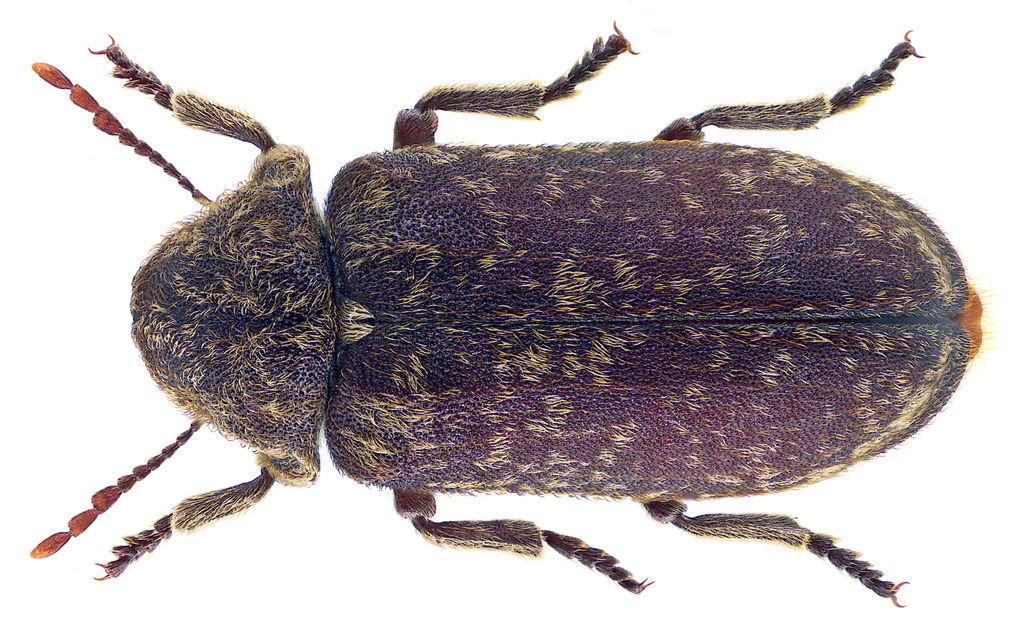
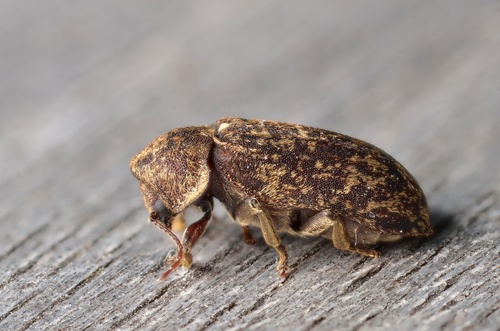
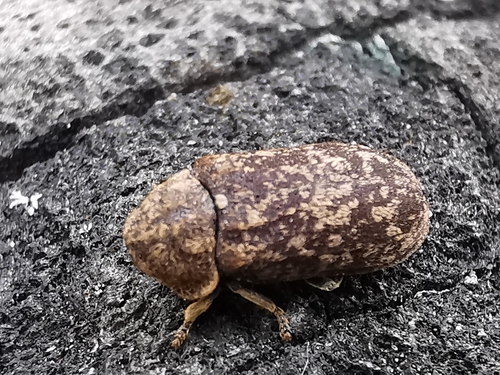
Adults are brown, cylindrical beetles about 6 to 7.5 mm long. They live in dead or decaying hardwood, especially old oak that has been softened by fungal decay. Larvae bore into timber and can feed there for up to ten years before emerging as adults.
Source: Wikipedia
How to recognize it
The beetle is brown and about 7 mm long.
Source: Wikipedia
Size
Adults measure roughly 6 to 7.5 mm (0.24 to 0.30 in) in length.
Source: Wikipedia
Is it a pest in the house?
The beetle can infest structural timbers of old buildings, especially decayed oak.
Source: Wikipedia
How to get rid of it
Insecticide sprays are largely ineffective against larvae; targeting adults in spring/early summer works better. Gas fumigation is the only reliably effective method, though it is hard to seal historic properties.
Source: Wikipedia
Where it lives
It inhabits dead or decaying hardwood and sometimes coniferous wood softened by fungi.
Source: Wikipedia
What it eats
The beetle digests cellulose and hemicellulose in wood using gut enzymes.
Source: Wikipedia
Life cycle
Larvae bore into timber and feed for up to ten years before pupating and emerging as adults. Generations can remain on the same piece of wood until it is exhausted.
Source: Wikipedia
Where it comes from
It occurs in Europe, the United Kingdom, North America, Corsica, Algeria, and New Caledonia.
Source: Wikipedia
Where it is found in the US
Recorded in 4 of 51 states and DC. Most records: Arizona, Pennsylvania, Texas, Rhode Island.
Darker = more records. Counts are museum and citizen-science records, not population size.
Source: GBIF
Months it is reported in the US
Source: GBIF
More photos
Questions people ask
How do I get rid of deathwatch beetles?
Treating larvae with insecticides rarely works; it is better to kill the emerging adults in spring or early summer, and gas fumigation is the only proven method for full control.
Source: Wikipedia
When are adult deathwatch beetles most active?
Adults emerge in spring and early summer, which is the best time to target them.
Source: Wikipedia
Same family (Anobiidae)


Sources
- Wikipedia: https://en.wikipedia.org/wiki/Deathwatch_beetle
Look it up elsewhere: GBIF · iNaturalist · BugGuide · ITIS · Wikipedia
Text written 2026-10-23 from the sources above and checked sentence by sentence against them. Data fetched 2026-10-22.