 Bug FAQ
Dark-winged Chrysogaster
Chrysogaster solstitialis · Order: Diptera · Family: Syrphidae
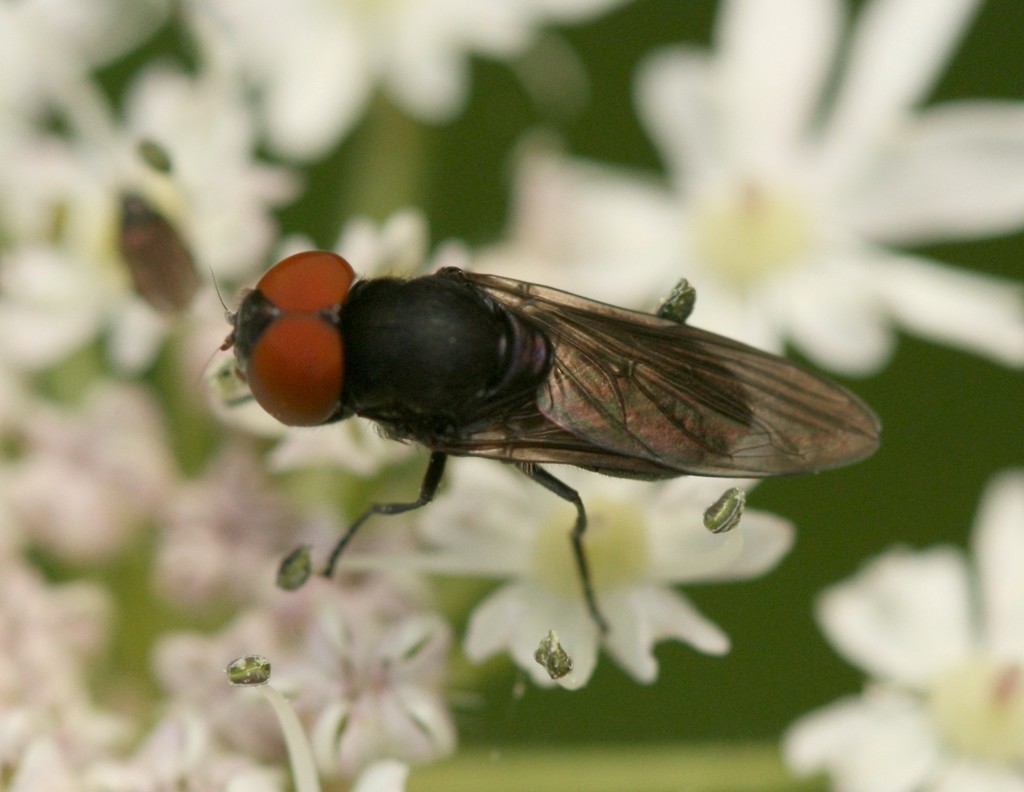
The dark-winged Chrysogaster has wings 6 to 7.25 mm long and the antennae are reddish, while the wings have a blackish tint and females show purplish reflections on the thorax. It lives near wetlands, woodland streams and ponds, especially in willow carr, and its larvae develop in pond mud with decaying twigs and branches. Adults visit a variety of flowers such as white umbellifers, Cornus, Filipendula, Galium, Sambucus and Senecio jacobaea, while the larvae live in pond mud. They fly from June to September, starting in May in southern Europe.
Source: Wikipedia
How to recognize it
Antennae are reddish; wings have a blackish tint; females show purplish reflections on the thorax.
Source: Wikipedia
Size
Wing length ranges from 6 to 7.25 mm.
Source: Wikipedia
Where it lives
Found in wetlands, deciduous forest, woodland streams and ponds, especially in willow carr.
Source: Wikipedia
What it eats
Adults visit flowers including white umbellifers, Cornus, Filipendula, Galium, Sambucus and Senecio jacobaea. Larvae develop in pond mud with decaying wood debris.
Source: Wikipedia
Life cycle
The larva is illustrated by Rotheray (1993).
Source: Wikipedia
When you see it
Flight period is June to September, starting in May in southern Europe.
Source: Wikipedia
Where it comes from
Palaearctic distribution from Fennoscandia south to Iberia, the Mediterranean basin and North Africa. Also from Ireland eastwards through Europe into European Russia, Ukraine and the Caucasus mountains.
Source: Wikipedia
Lookalikes
Chrysogaster solstitialis is a European hoverfly species.
Source: Wikipedia
Questions people ask
When can I see dark-winged Chrysogaster?
Adults are on the wing from June through September, and from May in southern Europe.
Source: Wikipedia
What flowers do they visit?
They visit white umbellifers, Cornus, Filipendula, Galium, Sambucus and Senecio jacobaea.
Source: Wikipedia
Where do the larvae live?
The larvae develop in pond mud that contains debris of fallen twigs and branches.
Source: Wikipedia
Same family (Syrphidae)






Sources
- Wikipedia: https://en.wikipedia.org/wiki/Chrysogaster_solstitialis
Look it up elsewhere: GBIF · iNaturalist · BugGuide · Wikipedia
Text written 2026-10-23 from the sources above and checked sentence by sentence against them. Data fetched 2026-10-22.