 Bug FAQ
Dark Arches
Apamea monoglypha · Order: Lepidoptera · Family: Noctuidae
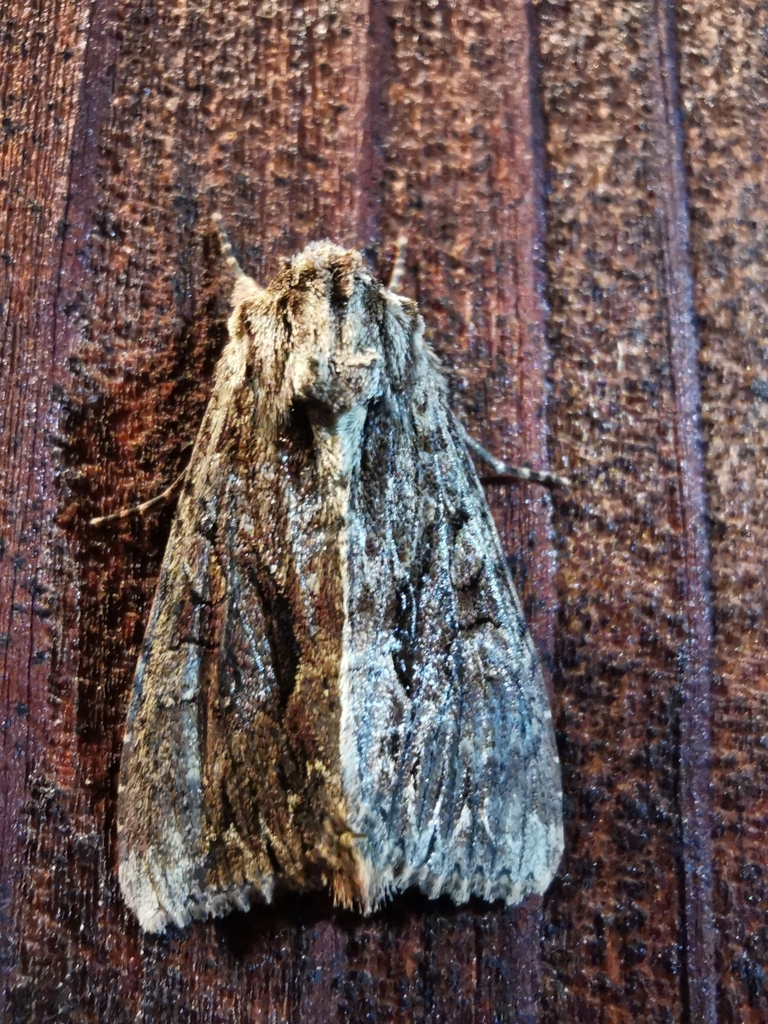
The Dark Arches moth has a wingspan of about 46-54 mm and forewings that range from pale grey-brown to almost black with a cryptic pattern; most individuals show a black mark near the wing edge and a pale zigzag line near the margin. It is a common European species, also found in parts of Asia, whose larvae live on grass roots and overwinter as larvae; adults fly at night from June to August, sometimes with a second brood later in the year.
Source: Wikipedia
How to recognize it
Forewings vary from pale grey-brown to almost black and have a cryptic pattern. Most individuals have a distinct black spot near the wing dorsum and a pale, zigzag subterminal line.
Source: Wikipedia
Size
Wingspan ranges from 46 to 54 mm.
Source: Wikipedia
Where it lives
It is a common, sometimes abundant species throughout most of Europe.
Source: Wikipedia
What it eats
Larvae feed on the roots of various grasses such as tussock, orchard, ryegrass, reed grasses and fescues like sheep's fescue.
Source: Wikipedia
Life cycle
The species overwinters as a larva. In the British Isles adults are on the wing from June to August, with a possible second brood in September and October.
Source: Wikipedia
When you see it
Adults are nocturnal flyers.
Source: Wikipedia
Where it comes from
Beyond Europe it occurs in Anatolia, Turkestan, Western and Central Asia, Siberia and Mongolia.
Source: Wikipedia
Lookalikes
The form ab. pallida is wholly whitish-ochreous with plain black streaks and black-edged stigmata. The form ab. obscura is a suffused brown or grey-brown variant.
Source: Wikipedia
More photos

Same family (Noctuidae)
 Ipsilon Dart MothAgrotis ipsilonDamages trees, gardens or crops
 Fall Armyworm MothSpodoptera frugiperdaDamages trees, gardens or crops
 Army Cutworm MothEuxoa auxiliarisDamages trees, gardens or crops
 Large Yellow UnderwingNoctua pronubaDamages trees, gardens or crops
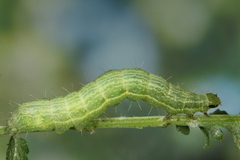 Silver ΥAutographa gamma
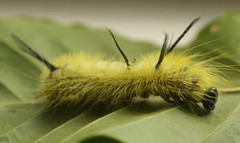 American DaggerAcronicta americanaCan irritate skin
Sources
- Wikipedia: https://en.wikipedia.org/wiki/Apamea_monoglypha
Look it up elsewhere: GBIF · iNaturalist · BugGuide · Wikipedia
Text written 2026-10-22 from the sources above and checked sentence by sentence against them. Data fetched 2026-10-22.