 Bug FAQ
Blue Fungus Beetle
Cypherotylus californicus · Order: Coleoptera · Family: Erotylidae
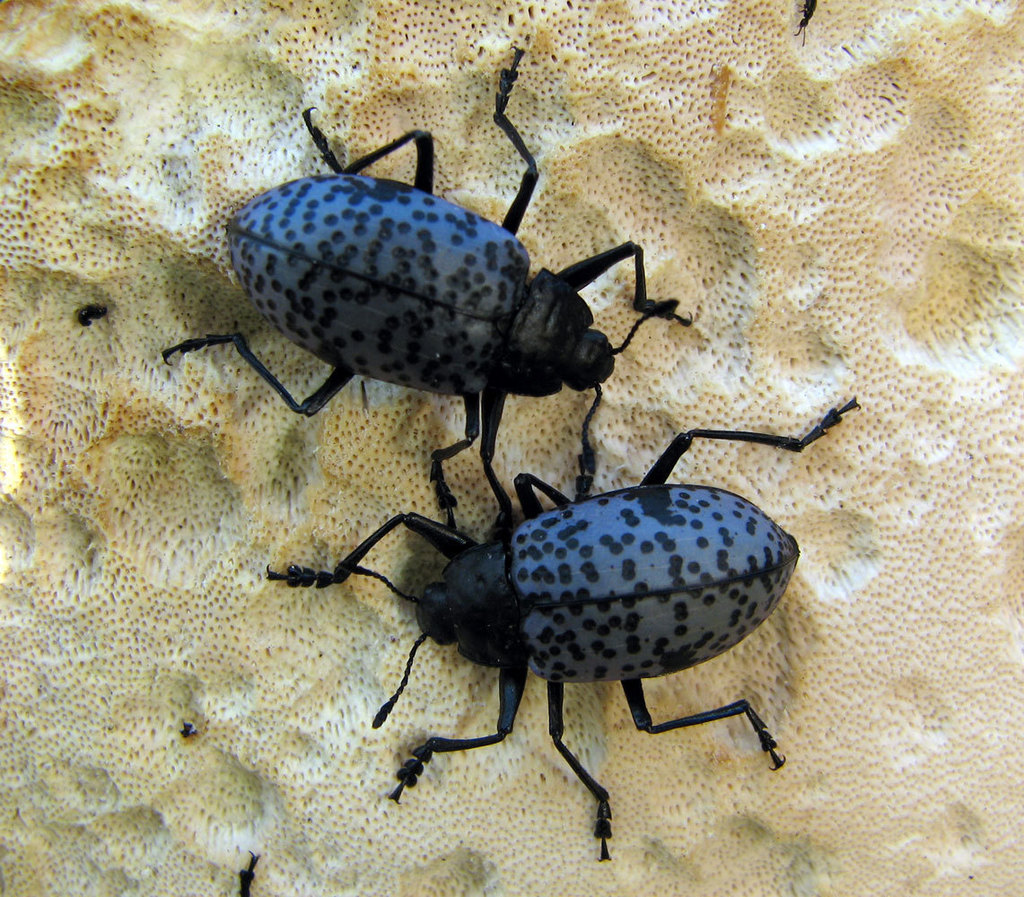
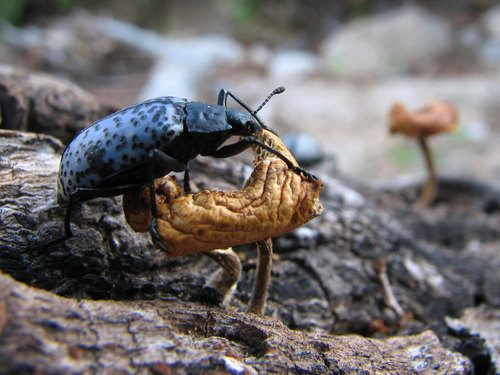
Adult blue fungus beetles are about 1.4 to 1.8 cm long and have blue wing covers dotted with black spots that turn gray as they age. They live in the western United States and northern Mexico, where they eat fungi growing on logs and trees.
Source: Wikipedia
How to recognize it
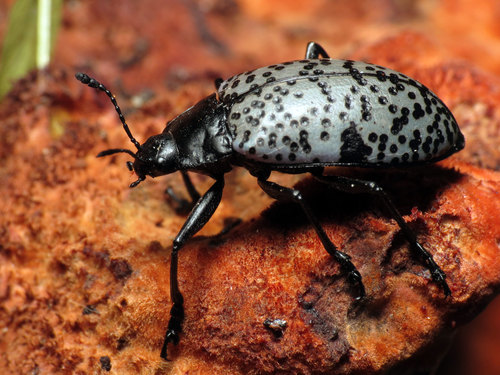
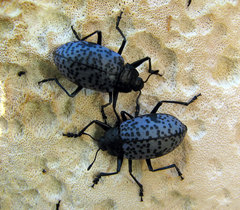
The beetle’s elytra are blue with black dots, fading to gray in older individuals.
Source: Wikipedia
Where it lives
It is found in Wyoming, Colorado, New Mexico, Arizona, California, Kansas, and Sonora, Mexico.
Source: Wikipedia
What it eats
It feeds on fungi that grow on logs and trees.
Source: Wikipedia
Life cycle
The beetle hatches in spring, pupates in summer, and reproduces in late summer to early fall.
Source: Wikipedia
When you see it
Its active seasons are spring through early fall, with egg-laying in late summer and early fall.
Source: Wikipedia
Where it comes from
Recorded in Wyoming, Colorado, New Mexico, Arizona, California and Kansas, and in Sonora, Mexico.
Source: Wikipedia
Lookalikes
It is also called the blue pleasing fungus beetle and belongs to the family Erotylidae.
Source: Wikipedia
Where it is found in the US
Recorded in 4 of 51 states and DC. Most records: Colorado, Arizona, New Mexico, Wyoming.
Darker = more records. Counts are museum and citizen-science records, not population size.
Source: GBIF
Status: native in North America; native in United States. Source: iNaturalist
Months it is reported in the US
Source: GBIF
More photos
Same family (Erotylidae)


Sources
- Wikipedia: https://en.wikipedia.org/wiki/Cypherotylus_californicus
Look it up elsewhere: GBIF · iNaturalist · BugGuide · ITIS · Wikipedia
Text written 2026-10-22 from the sources above and checked sentence by sentence against them. Data fetched 2026-10-22.