 Bug FAQ
Culladia cuneiferellus
Culladia cuneiferellus · Order: Lepidoptera · Family: Crambidae
Source: Wikipedia

The adult moth has a wingspan of about 10 mm. It occurs in parts of Australia, New Caledonia, Norfolk Island, the New Hebrides, the Loyalty Islands and New Zealand.
Source: Wikipedia
Size
Wingspan about 10 mm.
Source: Wikipedia
Is it a pest in the house?
Larvae are regarded as pests on lawns and pastures.
Source: Wikipedia
Where it lives
Found in Queensland, New South Wales and Tasmania in Australia, as well as New Caledonia, Norfolk Island, the New Hebrides, the Loyalty Islands and New Zealand.
Source: Wikipedia
Questions people ask
What grasses does Culladia cuneiferellus damage?
The larvae feed on several grasses such as Cynodon dactylon, harming lawns and pastures.
Source: Wikipedia
Where might I find this moth?
It is found in parts of Australia, New Caledonia, Norfolk Island, the New Hebrides, the Loyalty Islands and New Zealand.
Source: Wikipedia
Same family (Crambidae)
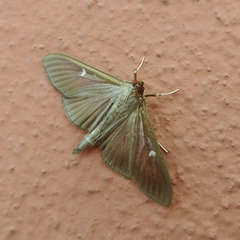 Box Tree MothCydalima perspectalisDamages trees, gardens or crops
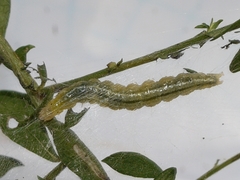 Celery Leaftier MothUdea rubigalisDamages trees, gardens or crops
 Elegant Grass-veneerMicrocrambus elegans
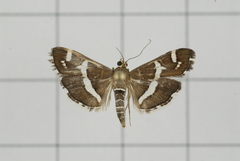 Hawaiian Beet Webworm MothSpoladea recurvalisDamages trees, gardens or crops
 Garden Grass-veneerChrysoteuchia culmellaDamages trees, gardens or crops
 Bluegrass Webworm MothParapediasia teterrellusDamages trees, gardens or crops
Sources
- Wikipedia: https://en.wikipedia.org/wiki/Culladia_cuneiferellus
Look it up elsewhere: GBIF · iNaturalist · BugGuide · Wikipedia
Text written 2026-10-22 from the sources above and checked sentence by sentence against them. Data fetched 2026-10-22.