 Bug FAQ
Crocus Geometer
Xanthotype sospeta · Order: Lepidoptera · Family: Geometridae
Also called: Crocus Geometer Moth
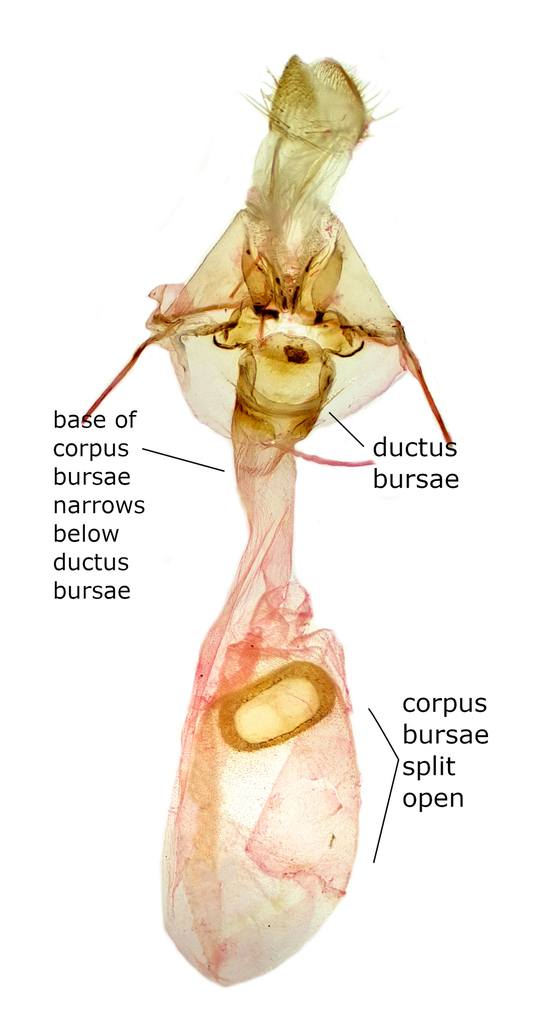
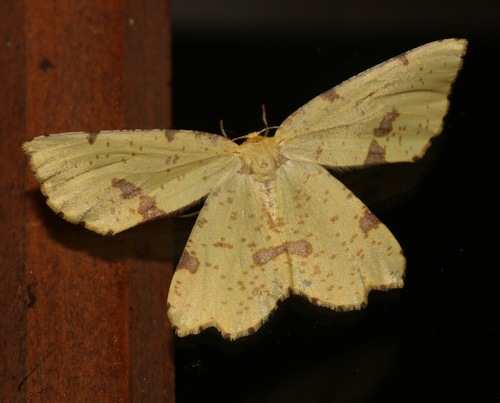
The Crocus Geometer has a wingspan of about 62 mm (2½ inches). It lives in deciduous and mixed-wood forests across North America from Nova Scotia to British Columbia and south to Colorado and Georgia, and it was first described from Jamaica. Its caterpillars feed on low-growing shrubs such as willow, dogwood and viburnum and mimic twigs.
Source: Wikipedia
How to recognize it
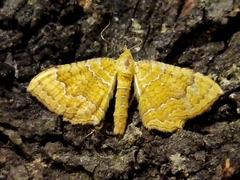
The forewings have two faint brown streaks near the shoulders and lower corners, plus a tiny one near the tip. The hindwings show two faint spots, one toward the front edge and one near the abdominal edge.
Source: Wikipedia
Size
Wingspan is nearly 2½ inches (62 mm).
Source: Wikipedia
Where it lives
Found in deciduous and mixed-wood forest habitats.
Source: Wikipedia
Life cycle
The caterpillars are twig mimics, helping them avoid predators.
Source: Wikipedia
Where it comes from
First described from Jamaica in 1773.
Source: Wikipedia
Where it is found in the US
Recorded in 31 of 51 states and DC. Most records: Minnesota, Michigan, Montana, Massachusetts, Pennsylvania, South Dakota, Maryland, Vermont.
Darker = more records. Counts are museum and citizen-science records, not population size.
Source: GBIF
Status: native in North America; native in Canada. Source: iNaturalist
Months it is reported in the US
Source: GBIF
More photos
Questions people ask
What plants do the larvae eat?
The caterpillars feed on low-growing shrubs such as willow, dogwood and viburnum.
Source: Wikipedia
Where is the Crocus Geometer found?
It occurs in deciduous and mixed-wood forests across North America and was first described from Jamaica.
Source: Wikipedia
Same family (Geometridae)




Sources
- Wikipedia: https://en.wikipedia.org/wiki/Xanthotype_sospeta
Look it up elsewhere: GBIF · iNaturalist · BugGuide · ITIS · Wikipedia
Text written 2026-10-25 from the sources above and checked sentence by sentence against them. Data fetched 2026-10-25.