 Bug FAQ
Crazy Pyramid Ant
Dorymyrmex insanus · Order: Hymenoptera · Family: Formicidae
Also called: Pyramid Ant

Crazy Pyramid Ants move quickly and swarm in large numbers. They build small cone-shaped mounds about 10 cm across in hot, dry, open areas. Workers collect honeydew, other liquids and insect carcasses, and they will also hunt insects.
Source: Wikipedia
How to recognize it
Dorymyrmex insanus is a pyramid ant, one of the species called crazy ants.
Source: Wikipedia
Where it lives
They live in hot, very dry, open environments and make small cone-shaped nests about 10 cm wide.
Source: Wikipedia
What it eats
Workers feed on honeydew or other nutritious liquids and on insect carcasses they find while foraging. They will also hunt insects on occasion.
Source: Wikipedia
Where it is found in the US
Recorded in 18 of 51 states and DC. Most records: California, Texas, Arizona, New Mexico, Utah, Colorado, North Carolina, Nevada.
Darker = more records. Counts are museum and citizen-science records, not population size.
Source: GBIF
Status: native in North America; native in Canada; native in United States. Source: iNaturalist
Months it is reported in the US
Source: GBIF
More photos
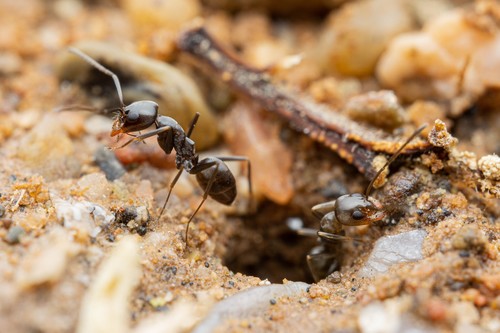
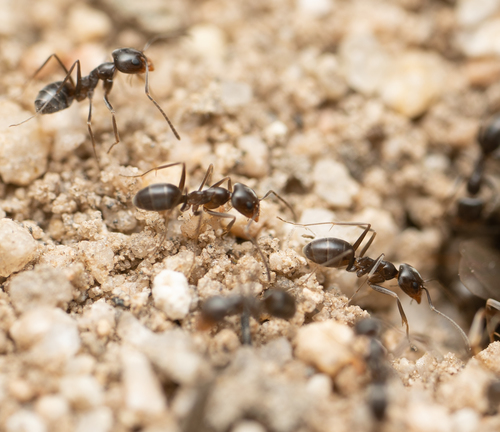
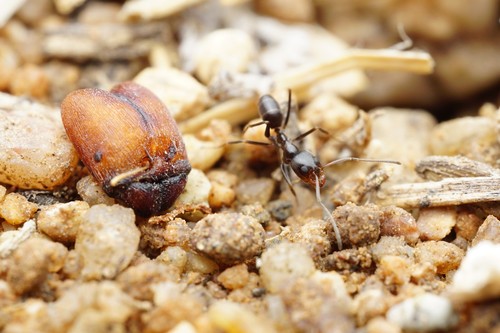
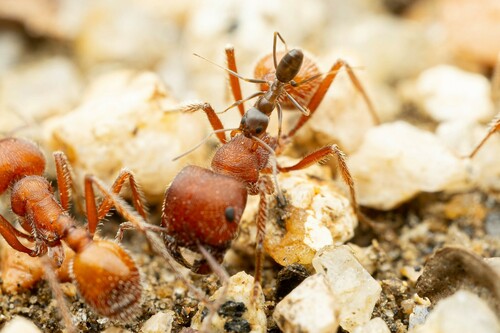
Questions people ask
What do Crazy Pyramid Ants look like?
They are pyramid-shaped ants that move frenetically and often swarm.
Source: Wikipedia
Where do Crazy Pyramid Ants live?
They nest in hot, dry, open areas and build small cone-shaped mounds about 10 cm across.
Source: Wikipedia
What do they eat?
They collect honeydew and other liquids, eat insect carcasses, and sometimes hunt live insects.
Source: Wikipedia
What region are they native to?
They occur in the southern United States, Central America and tropical South America.
Source: Wikipedia
Same family (Formicidae)
 Eastern Black Carpenter AntCamponotus pennsylvanicusCan damage your home
 Red Imported Fire AntSolenopsis invictaCan sting
 American Winter AntPrenolepis imparis
 Argentine AntLinepithema humileNuisance, not dangerous
 Immigrant Pavement AntTetramorium immigransCan sting
 Odorous House AntTapinoma sessileCan damage your home
Sources
- Wikipedia: https://en.wikipedia.org/wiki/Dorymyrmex_insanus
Look it up elsewhere: GBIF · iNaturalist · BugGuide · ITIS · Wikipedia
Text written 2026-10-23 from the sources above and checked sentence by sentence against them. Data fetched 2026-10-23.