 Bug FAQ
Cotton Web Spinner
Achyra affinitalis · Order: Lepidoptera · Family: Crambidae
Source: Wikipedia
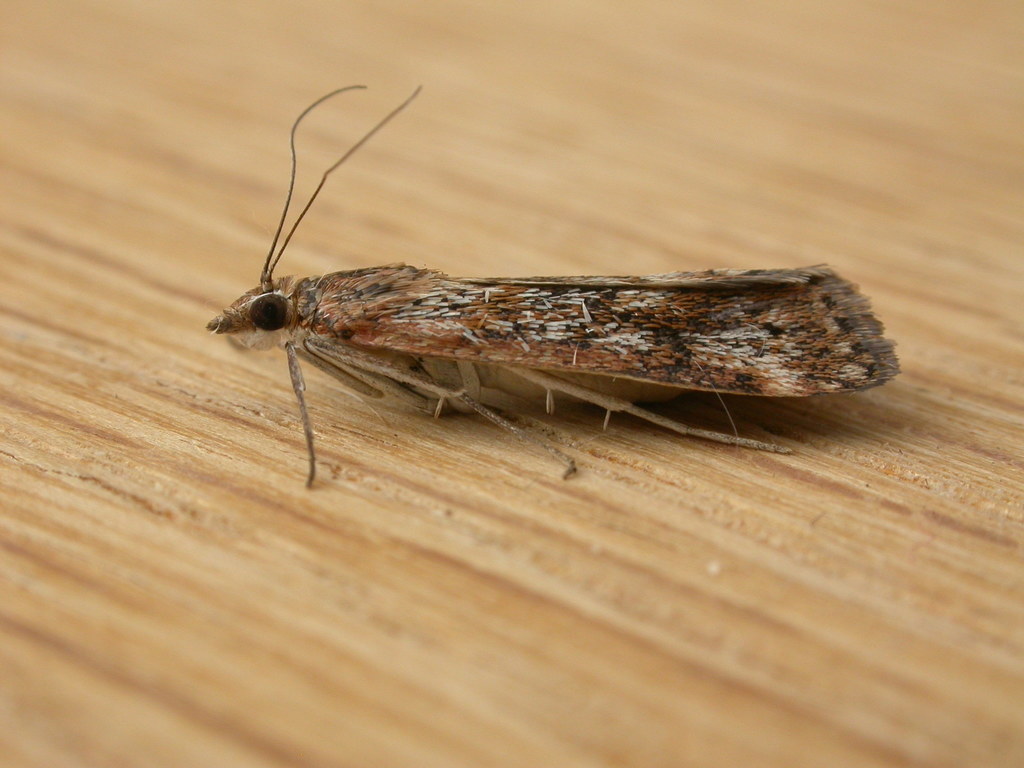
The cotton web spinner is a moth in the Crambidae family. It has a wingspan of about 20 mm and lives in Australia and New Zealand. Its caterpillars eat crops like cotton, sorghum, alfalfa, sunflower and other garden plants.
Source: Wikipedia
How to recognize it
Achyra affinitalis, known as the cotton web spinner, belongs to the moth family Crambidae.
Source: Wikipedia
Size
The adult moth’s wingspan is roughly 20 mm.
Source: Wikipedia
Where it lives
It is found in Australia and New Zealand.
Source: Wikipedia
What it eats
The larvae feed on plants such as sunflower, alfalfa, flax, cotton, sorghum and Atriplex species.
Source: Wikipedia
Where it comes from
Its natural range includes Australia and New Zealand.
Source: Wikipedia
Questions people ask
What crops do cotton web spinner larvae eat?
The caterpillars feed on sunflower, alfalfa, flax, cotton, sorghum and Atriplex species.
Source: Wikipedia
Same family (Crambidae)
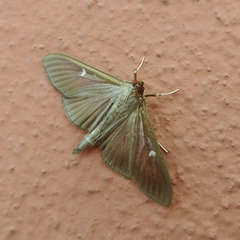 Box Tree MothCydalima perspectalisDamages trees, gardens or crops
 Celery Leaftier MothUdea rubigalisDamages trees, gardens or crops
 Elegant Grass-veneerMicrocrambus elegans
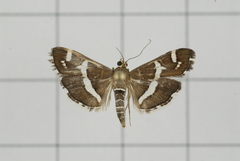 Hawaiian Beet Webworm MothSpoladea recurvalisDamages trees, gardens or crops
 Garden Grass-veneerChrysoteuchia culmellaDamages trees, gardens or crops
 Bluegrass Webworm MothParapediasia teterrellusDamages trees, gardens or crops
Sources
- Wikipedia: https://en.wikipedia.org/wiki/Achyra_affinitalis
Look it up elsewhere: GBIF · iNaturalist · BugGuide · Wikipedia
Text written 2026-10-22 from the sources above and checked sentence by sentence against them. Data fetched 2026-10-22.