 Bug FAQ
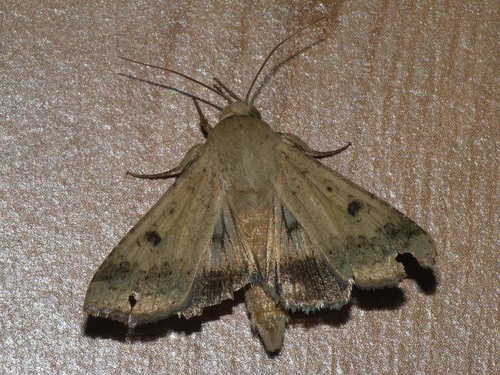
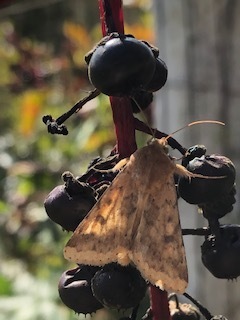
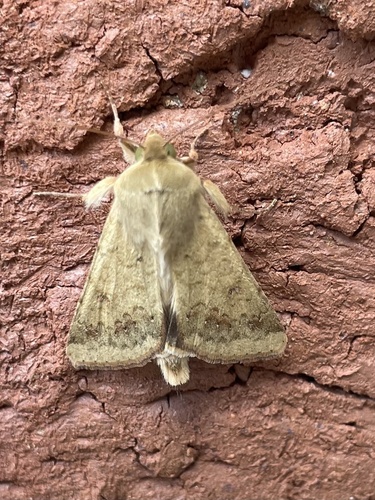
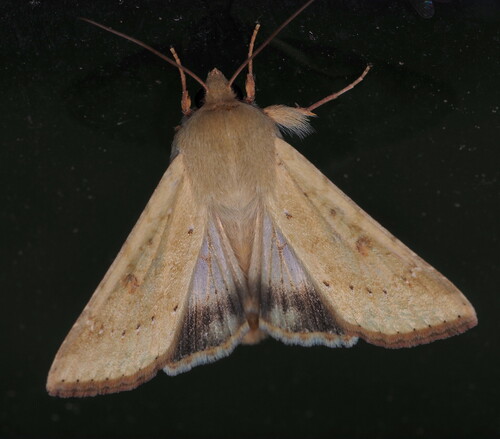
Corn Earworm Moth
Helicoverpa zea · Order: Lepidoptera · Family: Noctuidae
Also called: Corn Earworm, Tomato Fruitworm
Source: Wikipedia

It is found throughout the Americas except the far north of Canada and Alaska. The moth lays many eggs, its larvae eat many kinds of crops, and it can travel up to 400 km at night.
Source: Wikipedia
How to get rid of it
It has become resistant to many pesticides, so integrated pest management is recommended. Control methods include deep ploughing, trap crops, mineral-oil sprays and biological agents.
Source: Wikipedia
What it eats
Larvae feed on many plants, earning names like cotton bollworm and tomato fruitworm. They also consume a wide variety of other crops.
Source: Wikipedia
Life cycle
Pupae can enter diapause to survive harsh conditions, especially in colder or dry areas. Females lay 500-3,000 eggs; the species is highly mobile and can migrate long distances.
Source: Wikipedia
Where it comes from
Widely distributed across the Americas, but not in northern Canada or Alaska.
Source: Wikipedia
Where it is found in the US
Recorded in 51 of 51 states and DC. Most records: Texas, Colorado, Illinois, Oklahoma, Kansas, Missouri, Ohio, California.
Darker = more records. Counts are museum and citizen-science records, not population size.
Source: GBIF
Status: native in North America; native in United States; native in Canada. Source: iNaturalist
Months it is reported in the US
Source: GBIF
More photos
Questions people ask
How can I control corn earworm moths?
Use integrated pest management: deep ploughing, trap crops, mineral-oil sprays and biological controls, because they are often pesticide-resistant.
Source: Wikipedia
What crops does the corn earworm damage?
Its larvae feed on many crops, notably cotton, tomatoes and a wide range of other plants.
Source: Wikipedia
Same family (Noctuidae)
 Ipsilon Dart MothAgrotis ipsilonDamages trees, gardens or crops
 Fall Armyworm MothSpodoptera frugiperdaDamages trees, gardens or crops
 Army Cutworm MothEuxoa auxiliarisDamages trees, gardens or crops
 Large Yellow UnderwingNoctua pronubaDamages trees, gardens or crops
 Silver ΥAutographa gamma
 American DaggerAcronicta americanaCan irritate skin
Sources
- Wikipedia: https://en.wikipedia.org/wiki/Helicoverpa_zea
Look it up elsewhere: GBIF · iNaturalist · BugGuide · ITIS · Wikipedia
Text written 2026-10-22 from the sources above and checked sentence by sentence against them. Data fetched 2026-10-22.