 Bug FAQ
Copper-bellied Ant
Ochetellus glaber · Order: Hymenoptera · Family: Formicidae
Also called: Ant, Black House Ant
Source: Wikipedia
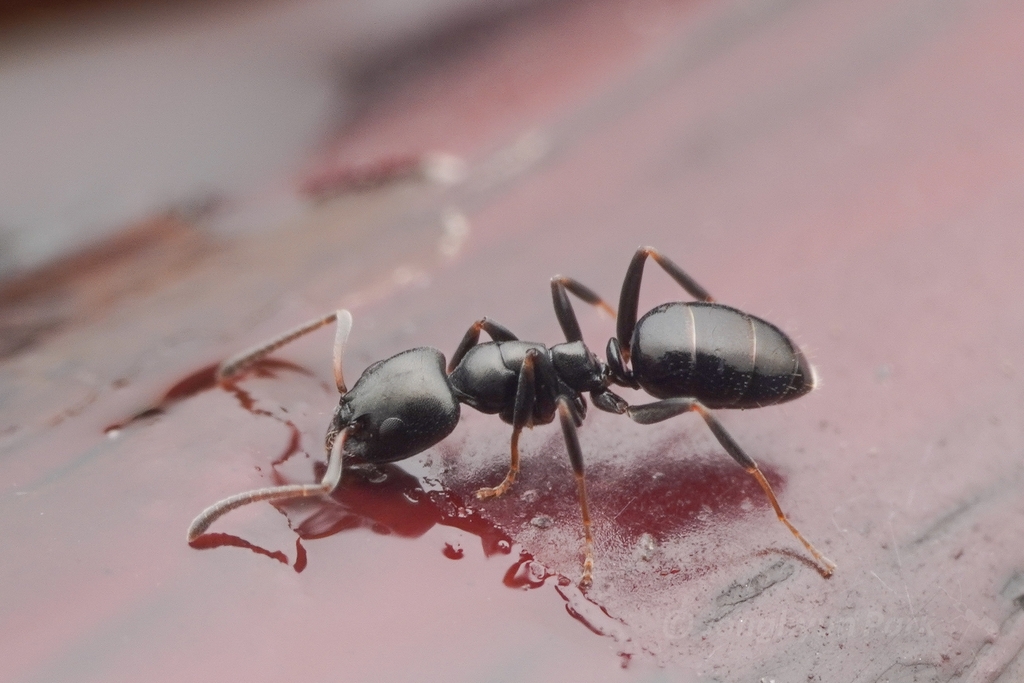
Workers are 2 to 3 mm long, males are about 1.6 mm, and the ants range in colour from brown to black with a wrinkled head and thorax. They nest in trees, hollow stems, logs, stones and also inside buildings such as ceilings, walls and pavings. Native to Australia, they have spread to several islands and are now a common household pest that forages for honeydew, insects and household foods.
Source: Wikipedia
How to recognize it
Their colour varies from brown to black and the head and thorax look noticeably wrinkled.
Source: Wikipedia
Size
Workers measure 2 to 3 mm and males are smaller at about 1.6 mm.
Source: Wikipedia
Is it a pest in the house?
They invade homes, travel across ceilings, beams and joists, and drop debris onto surfaces below.
Source: Wikipedia
Does it bite or sting?
They do not sting but can bite, and when crushed they emit a strong odor.
Source: Wikipedia
Where it lives
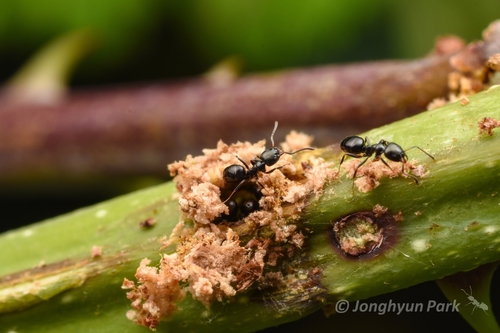
They nest in open woodland, under stones, in rotten wood, hollow trees and plant stems. They also build nests inside buildings, including pavings, ceilings and walls.
Source: Wikipedia
What it eats
They forage day and night, forming trails from trees to collect honeydew, insects and other foods. They associate with flowers and tend to protect honey-dew-producing insects such as mealybugs and aphids.
Source: Wikipedia
Life cycle
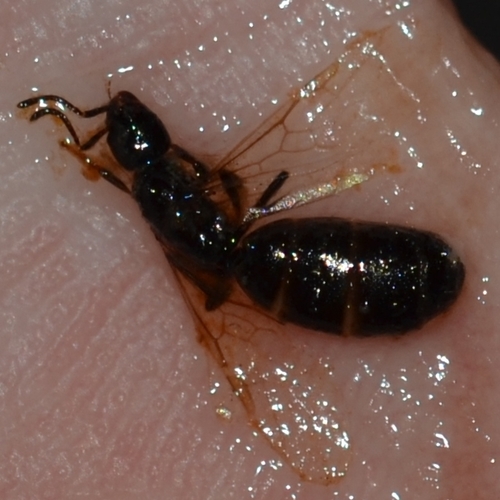
During nuptial flights queens mate with one or many males, while each male mates only once. Sometimes a part of a colony moves to a new nest site as a form of dispersal.
Source: Wikipedia
When you see it
They are active both day and night, forming long foraging trails. They often enter homes to feed on stored foods, making them a household pest.
Source: Wikipedia
Lookalikes
Ochetellus glaber, also called the black household ant, belongs to the Dolichoderinae subfamily and was described by Gustav Mayr in 1862.
Source: Wikipedia
Where it is found in the US
Recorded in 2 of 51 states and DC. Most records: Hawaii, Florida.
Darker = more records. Counts are museum and citizen-science records, not population size.
Source: GBIF
Status: introduced in United States. Source: iNaturalist
Months it is reported in the US
Source: GBIF
More photos


Questions people ask
Do copper-bellied ants bite?
Yes, they can bite people, and crushing them releases a strong smell.
Source: Wikipedia
Where do these ants normally nest?
They nest in trees, hollow stems, logs, stones and also inside buildings such as ceilings and walls.
Source: Wikipedia
Are they native to my area?
They are native to Australia but have spread to several islands and can be found in many other regions.
Source: Wikipedia
Same family (Formicidae)
 Eastern Black Carpenter AntCamponotus pennsylvanicusCan damage your home
 Red Imported Fire AntSolenopsis invictaCan sting
 American Winter AntPrenolepis imparis
 Argentine AntLinepithema humileNuisance, not dangerous
 Immigrant Pavement AntTetramorium immigransCan sting
 Odorous House AntTapinoma sessileCan damage your home
Sources
- Wikipedia: https://en.wikipedia.org/wiki/Ochetellus_glaber
Look it up elsewhere: GBIF · iNaturalist · BugGuide · ITIS · Wikipedia
Text written 2026-10-23 from the sources above and checked sentence by sentence against them. Data fetched 2026-10-22.