 Bug FAQ
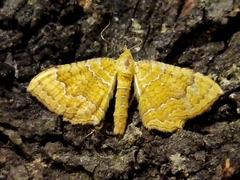
Conifer Pug
Eupithecia annulata · Order: Lepidoptera · Family: Geometridae
Also called: Larch Pug Moth
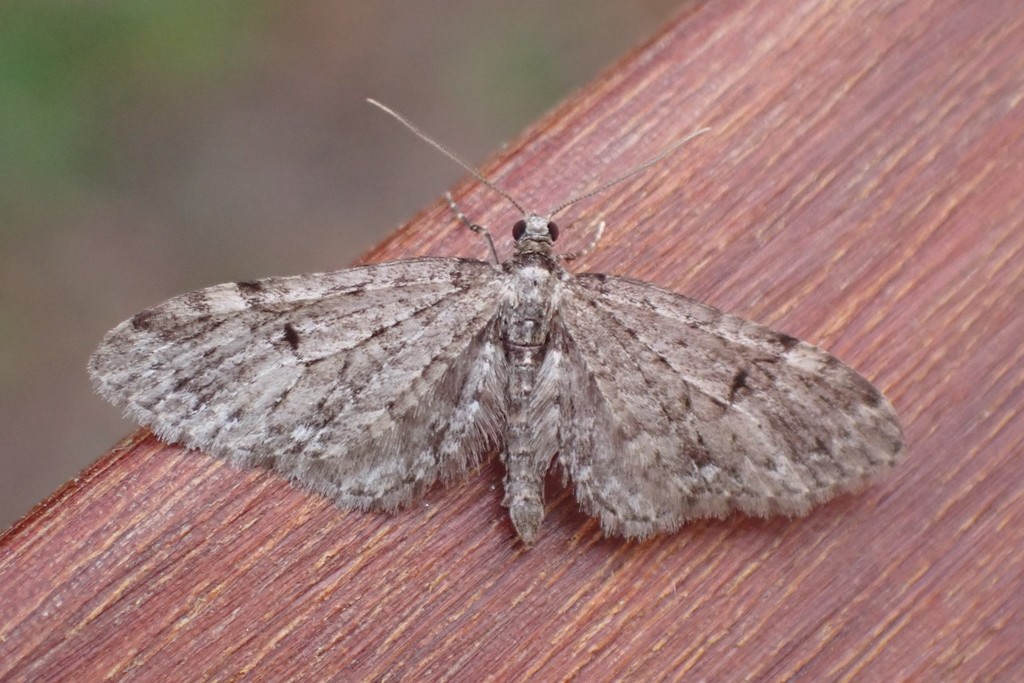
The moth has a wingspan of about 19 mm and its full-grown caterpillars are roughly 22 mm long. Caterpillars feed on a variety of conifers and on Oregon white oak.
Source: Wikipedia
Size
The adult’s wingspan is about 19 mm. Full-grown larvae reach about 22 mm in length.
Source: Wikipedia
What it eats
The larvae feed on many conifers such as Douglas-fir, spruces, hemlocks, firs, western larch and western red cedar, as well as on Oregon white oak.
Source: Wikipedia
Life cycle
Caterpillars grow to about 22 mm before pupating, and the adult moths emerge and fly from April to June.
Source: Wikipedia
When you see it
Adults are on the wing from April through June.
Source: Wikipedia
Where it comes from
Its range includes much of Canada and the United States, from the Pacific Northwest to the Atlantic provinces and down to the western states.
Source: Wikipedia
Where it is found in the US
Recorded in 17 of 51 states and DC. Most records: Colorado, California, Michigan, Washington, Oregon, Vermont, New Mexico, Minnesota.
Darker = more records. Counts are museum and citizen-science records, not population size.
Source: GBIF
Months it is reported in the US
Source: GBIF
More photos
Questions people ask
What do the caterpillars eat?
They feed on a range of conifer trees and on Oregon white oak.
Source: Wikipedia
Same family (Geometridae)




Sources
- Wikipedia: https://en.wikipedia.org/wiki/Eupithecia_annulata
Look it up elsewhere: GBIF · iNaturalist · BugGuide · Wikipedia
Text written 2026-10-28 from the sources above and checked sentence by sentence against them. Data fetched 2026-10-28.