 Bug FAQ
Confusing Conifer Fly
Dasysyrphus intrudens · Order: Diptera · Family: Syrphidae
Also called: Confusing Flower Fly
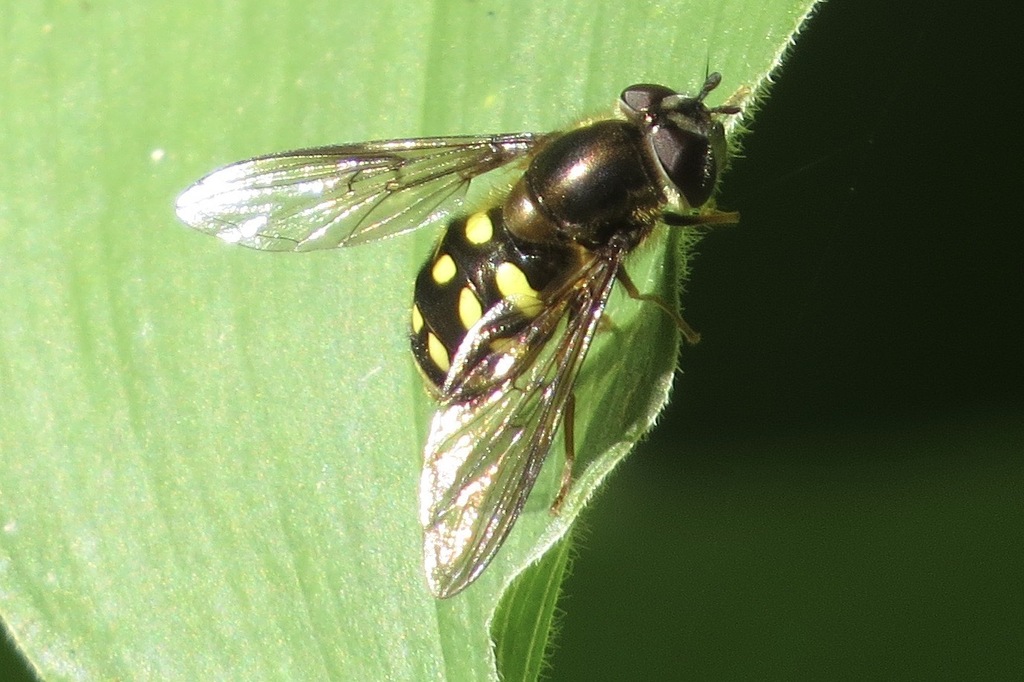
How to recognize it
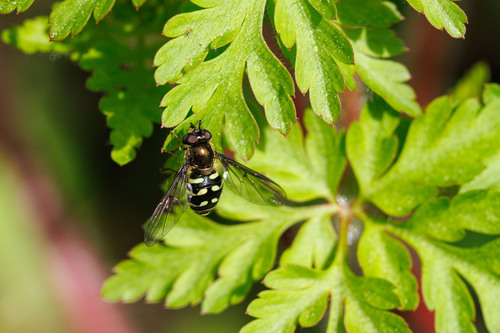
In males the forehead (frons) is dark with a light pollen-like band along the lower edge near the eyes. The face is generally light-colored with a dark longitudinal line that occupies about a quarter to half the face width and ends near the antennal socket.
Source: Wikipedia
Where it lives
The species occurs across the Holarctic region.
Source: Wikipedia
Life cycle
The larval stage remains unknown to science as of 2012.
Source: Wikipedia
Where it comes from
It is widespread in the United States and Canada. Its range also includes Europe and a few locations in Asia.
Source: Wikipedia
Where it is found in the US
Recorded in 10 of 51 states and DC. Most records: Alaska, Washington, California, Colorado, Illinois, New Mexico, Oregon, Tennessee.
Darker = more records. Counts are museum and citizen-science records, not population size.
Source: GBIF
Status: native in North America. Source: iNaturalist
Months it is reported in the US
Source: GBIF
More photos
Questions people ask
How can I recognize Dasysyrphus intrudens?
Males have a dark forehead with a light band near the eyes, and the face is light with a dark line that runs about a quarter to half the width of the face.
Source: Wikipedia
Where is Dasysyrphus intrudens found?
It occurs throughout the United States and Canada and also in Europe and parts of Asia.
Source: Wikipedia
Same family (Syrphidae)






Sources
- Wikipedia: https://en.wikipedia.org/wiki/Dasysyrphus_intrudens
Look it up elsewhere: GBIF · iNaturalist · BugGuide · ITIS · Wikipedia
Text written 2026-10-28 from the sources above and checked sentence by sentence against them. Data fetched 2026-10-28.