 Bug FAQ
Common White Wave
Cabera pusaria · Order: Lepidoptera · Family: Geometridae
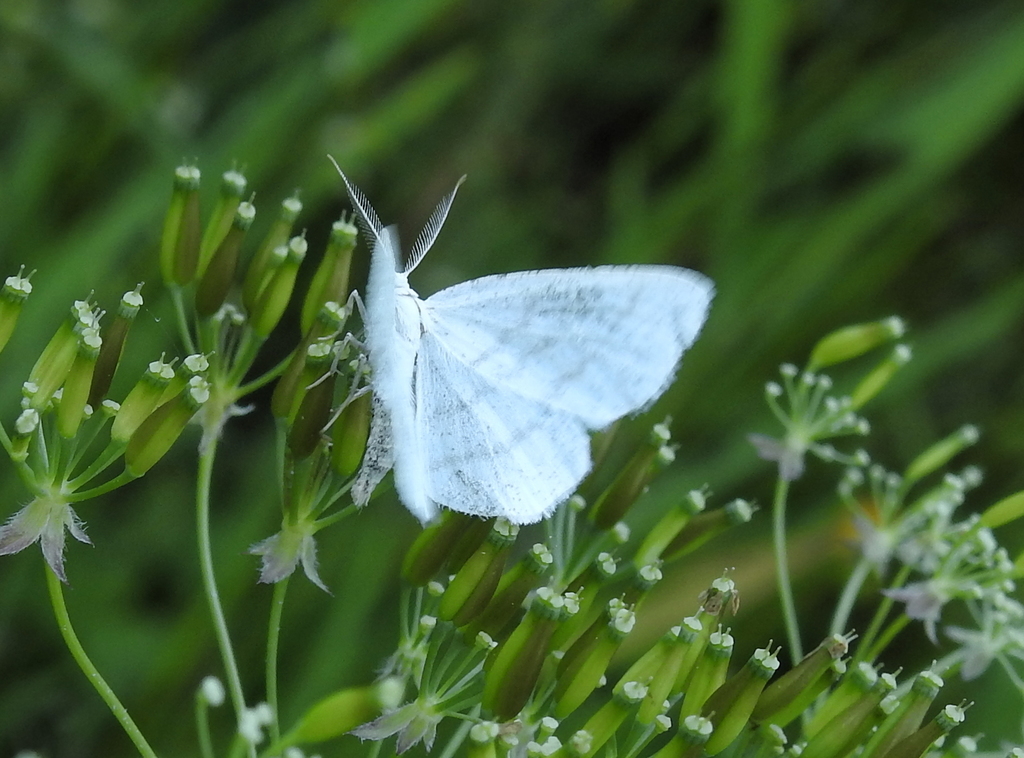
The Common White Wave (Cabera pusaria) has a wingspan of about 32 to 35 mm and white wings that may show pink tinges and faint grey markings. It lives in deciduous forests across the Palearctic region, flies at night, is attracted to light, and adults appear from May to August in one or two generations.
Source: Wikipedia
How to recognize it
The moth’s wings are white, sometimes pink-tinged, with a light dusting of grey and fine grey bands on both fore- and hind-wings. A rare form, ab. heveraria, has the grey dusting covering almost the whole wing surface.
Source: Wikipedia
Size
Wingspan ranges from 32 to 35 mm.
Source: Wikipedia
Where it lives
Found in deciduous forests and nearby areas.
Source: Wikipedia
Life cycle
Produces one or two broods each year; adults are on wing from May to August. Overwinters as a compact brown pupa with olive-green wings.
Source: Wikipedia
When you see it
Adults fly at night, are attracted to light, and can be seen from May through August.
Source: Wikipedia
Where it comes from
Distributed throughout the Palearctic region.
Source: Wikipedia
Lookalikes
Similar species include the Common wave (Cabera exanthemata) and Cabera leptographa.
Source: Wikipedia
Same family (Geometridae)
 Willow BeautyPeribatodes rhomboidaria
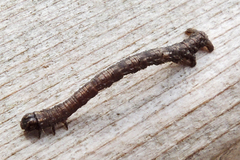 Pale BeautyCampaea perlataDamages trees, gardens or crops
 Large Lace-border MothScopula limboundataDamages trees, gardens or crops
 Riband WaveIdaea aversata
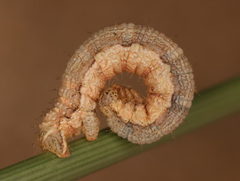 Yellow Shell MothCamptogramma bilineata
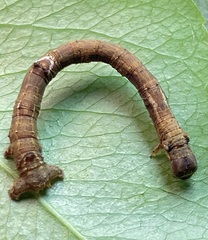 Large Maple Spanworm MothProchoerodes lineolaDamages trees, gardens or crops
Sources
- Wikipedia: https://en.wikipedia.org/wiki/Common_white_wave
Look it up elsewhere: GBIF · iNaturalist · BugGuide · Wikipedia
Text written 2026-10-22 from the sources above and checked sentence by sentence against them. Data fetched 2026-10-22.