 Bug FAQ
Common Quaker
Orthosia cerasi · Order: Lepidoptera · Family: Noctuidae
Source: Wikipedia
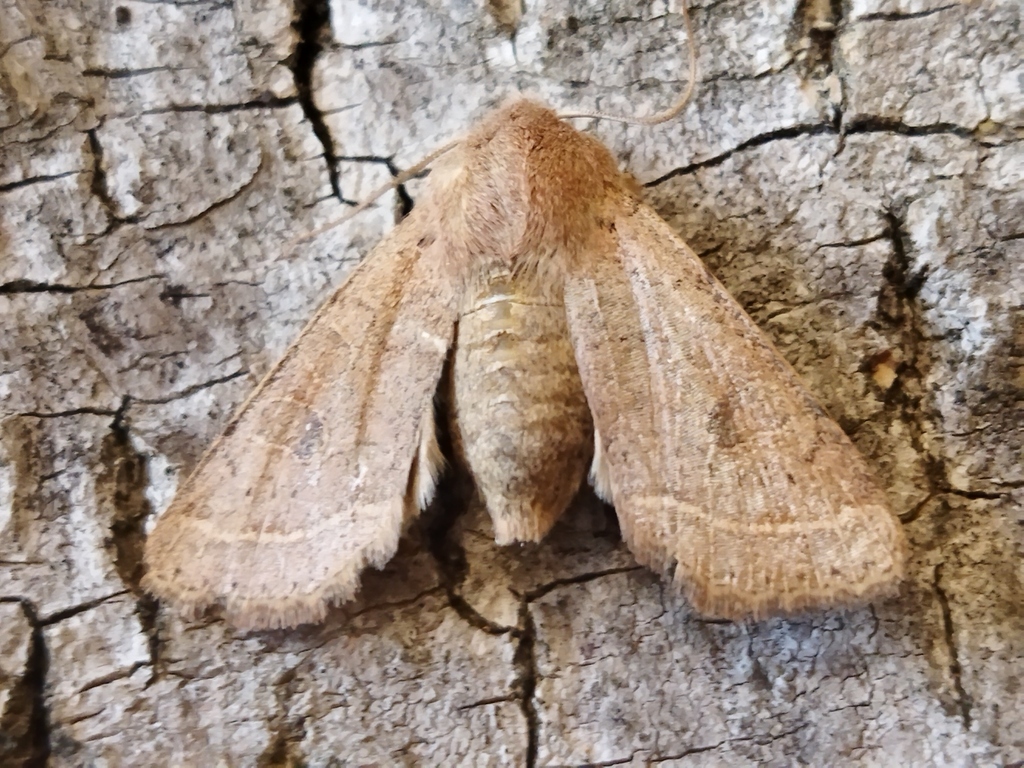
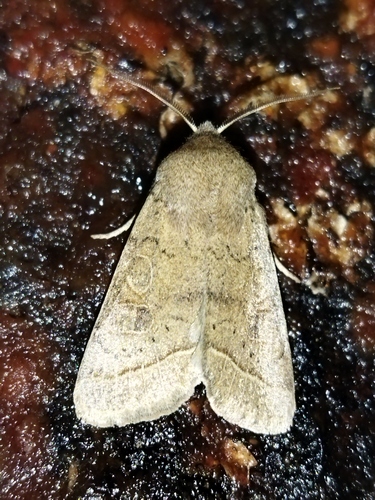
The Common Quaker moth has a wingspan of about 34 to 40 mm and can be recognised by its reddish-grey forewings with two large, pale-edged stigmata and a similarly coloured subterminal line. Adults fly at night in March and April, while the larvae feed on many trees and shrubs such as apple, oak, pear and various Prunus species.
Source: Wikipedia
How to recognize it
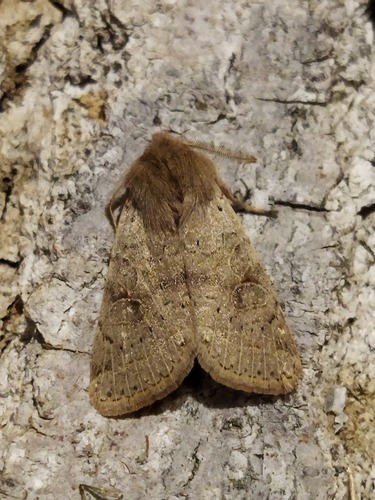
Forewings are reddish-grey with dark dusting, blackish inner and outer lines, and two prominent stigmata edged with ochreous, plus an ochreous submarginal line. The most distinctive marks are the two large stigmata each bordered by a narrow pale line and a similarly coloured subterminal line; hindwings are drab grey or brown.
Source: Wikipedia
Size
The wingspan ranges from 34 to 40 mm.
Source: Wikipedia
Where it lives
The species overwinters in the pupal stage.
Source: Wikipedia
What it eats
Adult moths sip nectar from flowers such as sallow catkins and blackthorn blossoms.
Source: Wikipedia
Life cycle
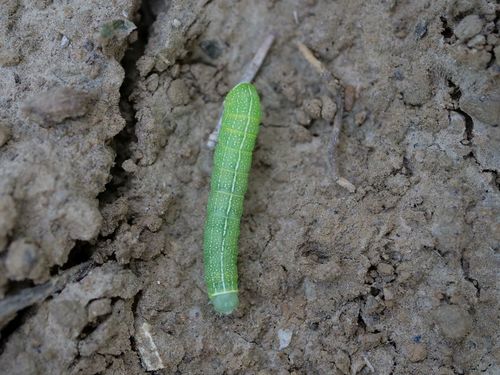
The species overwinters as a pupa. Larvae are green with yellowish-white markings and a head bearing black spots.
Source: Wikipedia
When you see it
Adults are nocturnal flyers in March and April in the British Isles, though timing may vary elsewhere.
Source: Wikipedia
Where it comes from
It occurs throughout Europe and also in Turkey, Palestine, the Transcaucasian region, Russia and eastern Siberia.
Source: Wikipedia
Lookalikes
Some authors treat Orthosia stabilis as a synonym for this species.
Source: Wikipedia
More photos
Questions people ask
When can I expect to see Common Quaker moths?
They are active at night during March and April, at least in the British Isles.
Source: Wikipedia
What do the caterpillars eat?
The larvae feed on many trees and shrubs such as apple, oak, pear, poplar, willow and various Prunus species.
Source: Wikipedia
How can I identify this moth?
Look for a 34 to 40 mm wingspan, reddish-grey forewings with two large pale-edged stigmata and an ochreous subterminal line; hindwings are drab grey or brown.
Source: Wikipedia
Does this moth cause any damage?
Its larvae can damage fruit trees and garden shrubs by feeding on their leaves and shoots.
Source: Wikipedia
Same family (Noctuidae)
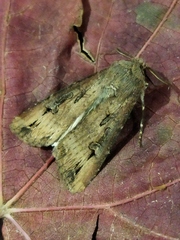 Ipsilon Dart MothAgrotis ipsilonDamages trees, gardens or crops
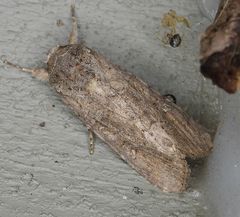 Fall Armyworm MothSpodoptera frugiperdaDamages trees, gardens or crops
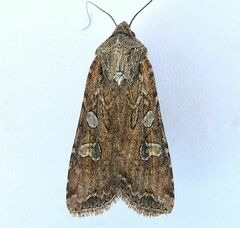 Army Cutworm MothEuxoa auxiliarisDamages trees, gardens or crops
 Large Yellow UnderwingNoctua pronubaDamages trees, gardens or crops
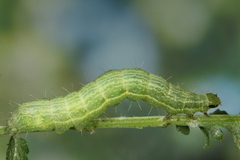 Silver ΥAutographa gamma
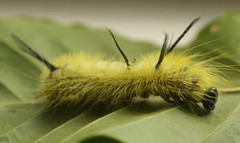 American DaggerAcronicta americanaCan irritate skin
Sources
- Wikipedia: https://en.wikipedia.org/wiki/Common_Quaker
Look it up elsewhere: GBIF · iNaturalist · BugGuide · Wikipedia
Text written 2026-10-22 from the sources above and checked sentence by sentence against them. Data fetched 2026-10-22.