 Bug FAQ
Common Looper Moth
Autographa precationis · Order: Lepidoptera · Family: Noctuidae
Also called: Common Looper
Source: Wikipedia
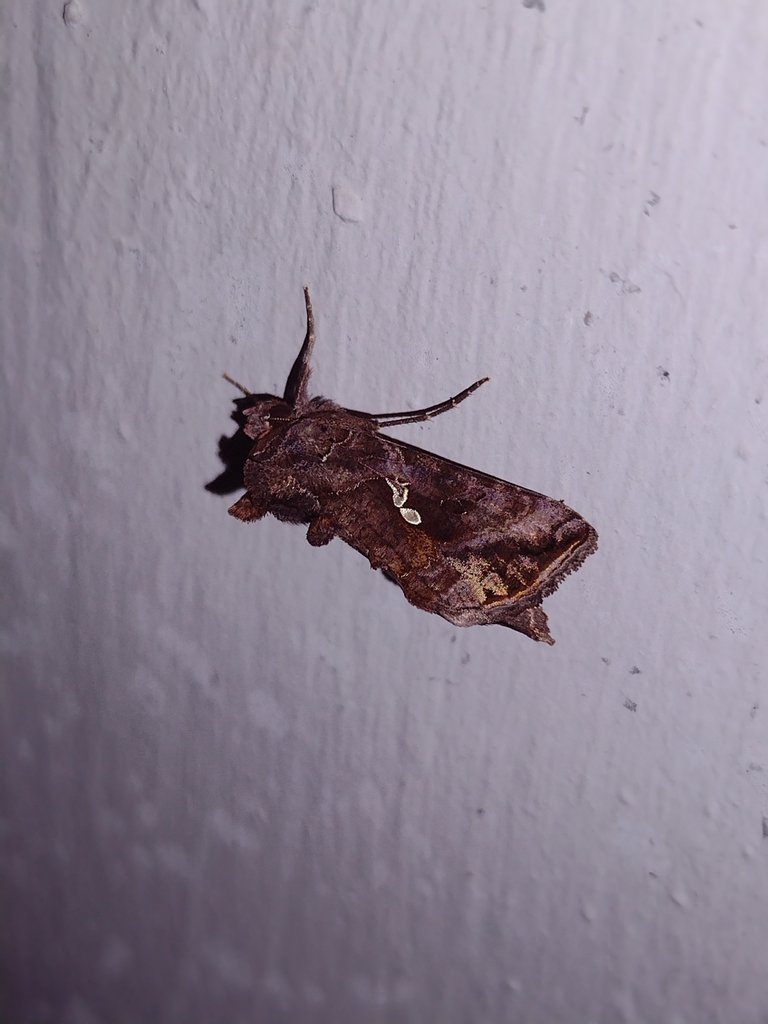
Adults have a wingspan of about 3 to 3.8 cm and are active from spring through fall. The green larvae have 21 to 23 tiny hooks per leg and a pair of black eye-like spots on the head. They are found across eastern and central North America and feed on many herb families.
Source: Wikipedia
How to recognize it
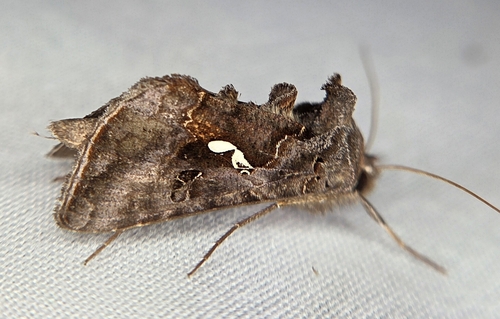
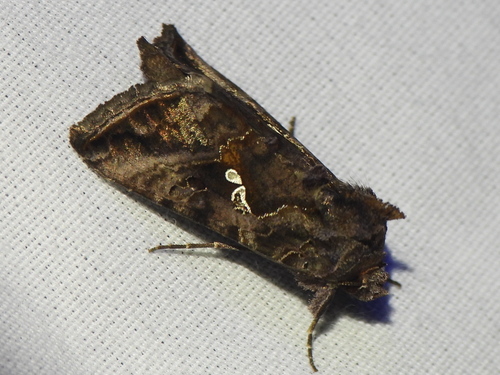
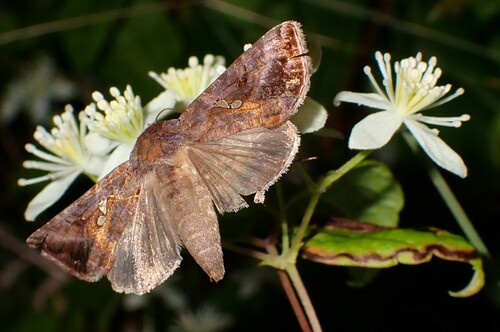
The caterpillars are bright green, carry 21 to 23 crochets on each proleg, and show small black false-eye marks on each side of the head. The adult’s silver wing spots are usually joined together, unlike the separated spots of the similar species, and its wings are less glossy.
Source: Wikipedia
Size
The moth’s wingspan ranges from 30 to 38 mm.
Source: Wikipedia
Where it lives
It lives in eastern and central parts of North America.
Source: Wikipedia
What it eats
Larvae feed on many herbaceous plants, including members of the carrot, daisy, mustard, goosefoot, morning-glory, legume, mallow, plantain and verbena families.
Source: Wikipedia
Life cycle
Adults are on the wing from April to October, and the species can produce three or more generations each year.
Source: Wikipedia
When you see it
Moths can be seen flying between April and October, depending on location.
Source: Wikipedia
Where it comes from
Its native range is eastern and central North America.
Source: Wikipedia
Lookalikes
It looks very similar to another looper moth, but its wing spots are usually fused and its wings are less shiny.
Source: Wikipedia
Where it is found in the US
Recorded in 40 of 51 states and DC. Most records: Pennsylvania, Ohio, Vermont, New York, Michigan, Illinois, Massachusetts, Maryland.
Darker = more records. Counts are museum and citizen-science records, not population size.
Source: GBIF
Status: native in North America; native in Canada. Source: iNaturalist
Months it is reported in the US
Source: GBIF
More photos
Questions people ask
Do the caterpillars damage garden plants?
Yes, the larvae eat a wide variety of garden herbs and can chew foliage of many crops.
Source: Wikipedia
When can I see adult Common Looper moths?
Adults are active from spring through fall, roughly April to October, depending on where you live.
Source: Wikipedia
How can I tell this moth apart from similar species?
Look for the joined silver spots on the wings and a less glossy wing surface; similar species have separate spots and shinier wings.
Source: Wikipedia
Same family (Noctuidae)
 Ipsilon Dart MothAgrotis ipsilonDamages trees, gardens or crops
 Fall Armyworm MothSpodoptera frugiperdaDamages trees, gardens or crops
 Army Cutworm MothEuxoa auxiliarisDamages trees, gardens or crops
 Large Yellow UnderwingNoctua pronubaDamages trees, gardens or crops
 Silver ΥAutographa gamma
 American DaggerAcronicta americanaCan irritate skin
Sources
- Wikipedia: https://en.wikipedia.org/wiki/Autographa_precationis
Look it up elsewhere: GBIF · iNaturalist · BugGuide · ITIS · Wikipedia
Text written 2026-10-22 from the sources above and checked sentence by sentence against them. Data fetched 2026-10-22.