 Bug FAQ
Common Lagoon Fly
Eristalinus aeneus · Order: Diptera · Family: Syrphidae
Also called: Large Spotty-eyed Drone Fly, Syrphid Fly
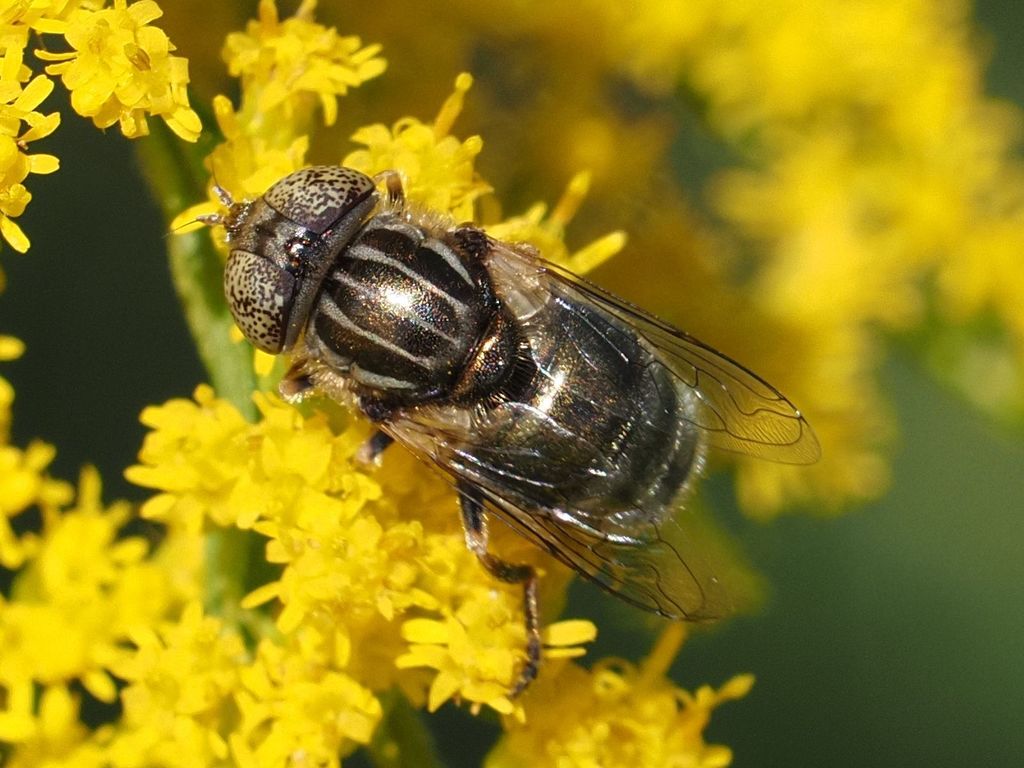
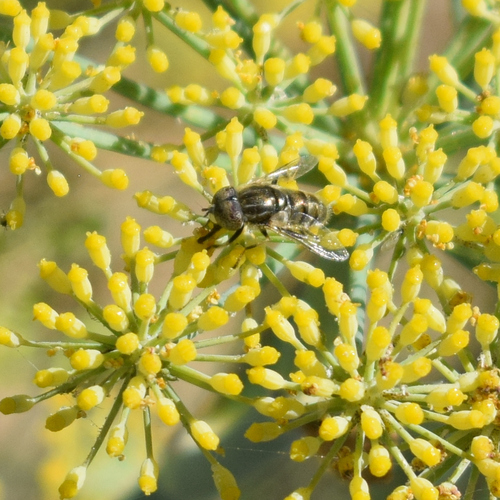
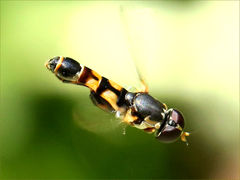
It can be recognized by spotted eyes, shiny second and third abdominal segments, faint grey stripes on the thorax, and distinctive leg markings (-). It lives around freshwater habitats such as lagoons, ponds, slow rivers and irrigation ditches, and is found worldwide (-).
Source: Wikipedia
How to recognize it
Eyes have obvious black spots. Abdominal segments 2 and 3 are completely shiny. Thorax dorsum shows faint greyish stripes. Males have eyes that meet on the frons; females have bare lower eye halves (-). Hind tibiae have a black ring past the middle and tarsi segments 2-4 are darkened.
Source: Wikipedia
Size
Wing length ranges from 6.5 to 9.25 mm.
Source: Wikipedia
Where it lives
In northern areas larvae live in seapages and brackish rock pools, elsewhere they use various freshwater habitats.
Source: Wikipedia
What it eats
Larvae develop in rock pools with decaying seaweed.
Source: Wikipedia
Life cycle
Adults are active from April to October and overwinter as adults. Larvae occupy freshwater seapages, brackish pools, animal dung and sewage farms depending on region.
Source: Wikipedia
When you see it
Flight period spans April through October.
Source: Wikipedia
Where it comes from
The species has a cosmopolitan distribution.
Source: Wikipedia
Where it is found in the US
Recorded in 45 of 51 states and DC. Most records: California, Maine, Texas, Washington, Massachusetts, Nebraska, New York, New Hampshire.
Darker = more records. Counts are museum and citizen-science records, not population size.
Source: GBIF
Status: introduced in Canada. Source: iNaturalist
Months it is reported in the US
Source: GBIF
More photos
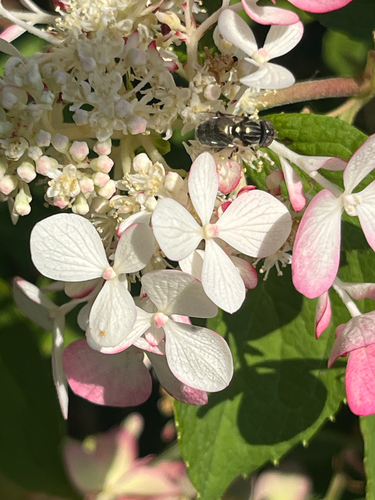
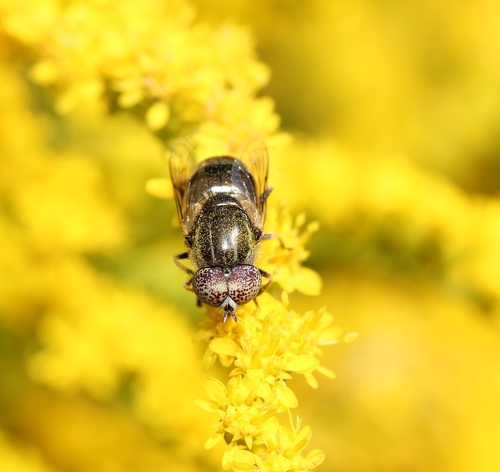
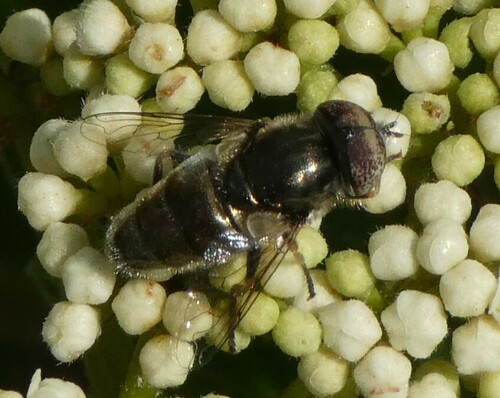
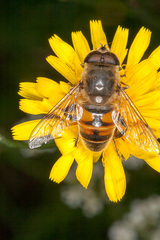
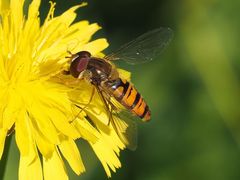
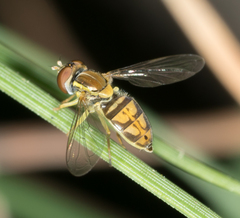
Same family (Syrphidae)


Sources
- Wikipedia: https://en.wikipedia.org/wiki/Eristalinus_aeneus
Look it up elsewhere: GBIF · iNaturalist · BugGuide · ITIS · Wikipedia
Text written 2026-10-22 from the sources above and checked sentence by sentence against them. Data fetched 2026-10-22.