 Bug FAQ
Common Halfband
Melangyna viridiceps · Order: Diptera · Family: Syrphidae
Also called: Common Hoverfly
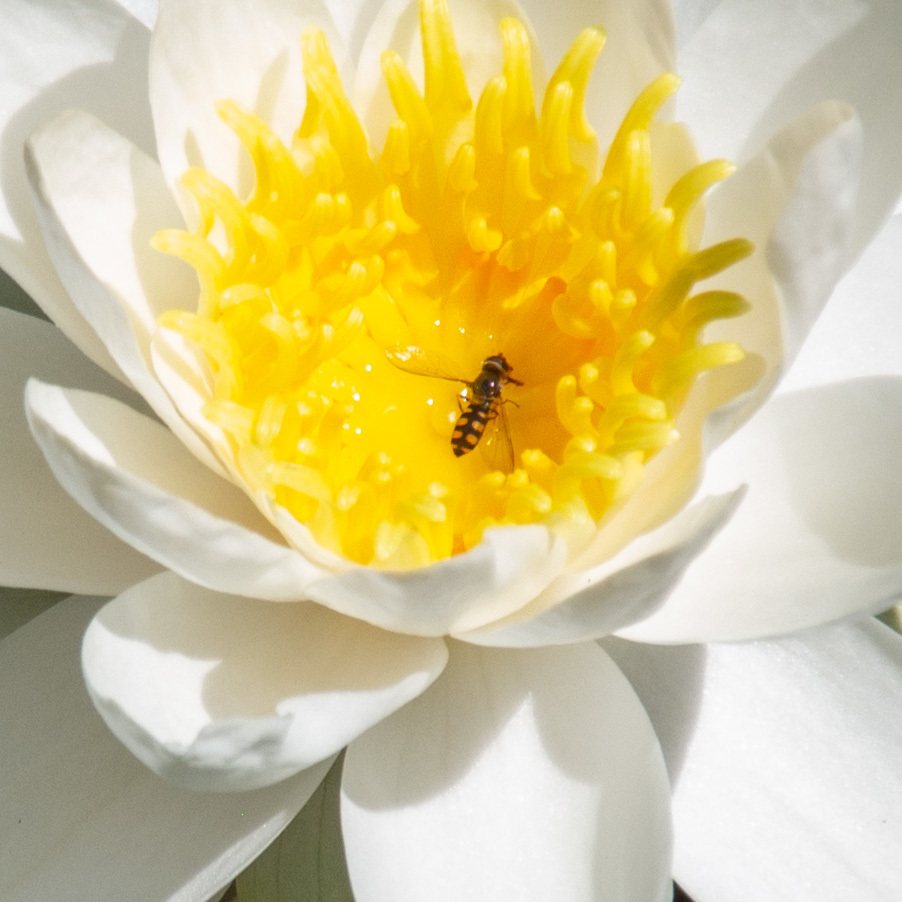
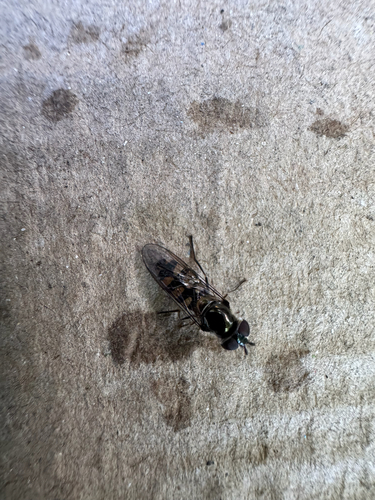
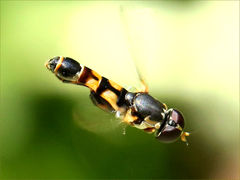
The common halfband is a hoverfly about 1 cm long and is found widely across eastern Australia. Adults feed on flower pollen and nectar, while the larvae prey on aphids.
Source: Wikipedia
How to recognize it
It can be recognized by its completely black thorax, which separates it from the similar Simosyrphus grandicornis.
Source: Wikipedia
Size
The body can grow up to about 1 cm in length.
Source: Wikipedia
Where it lives
It occurs widely throughout eastern Australia.
Source: Wikipedia
What it eats
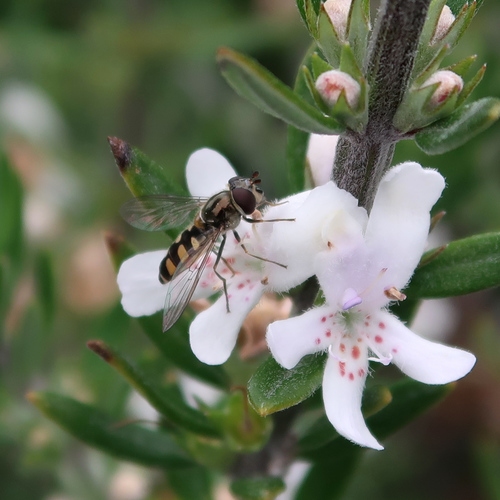
Adults gather pollen and nectar from flowers; larvae feed on aphids.
Source: Wikipedia
Where it comes from
Its distribution is across eastern Australia.
Source: Wikipedia
More photos
Questions people ask
Where can I find the common halfband?
It is widely distributed across eastern Australia.
Source: Wikipedia
What does the common halfband eat?
Adults feed on pollen and nectar from flowers, and the larvae eat aphids.
Source: Wikipedia
How can I tell the common halfband apart from similar hoverflies?
It has an all-black thorax, unlike the similar Simosyrphus grandicornis.
Source: Wikipedia
Same family (Syrphidae)


Sources
- Wikipedia: https://en.wikipedia.org/wiki/Melangyna_viridiceps
Look it up elsewhere: GBIF · iNaturalist · BugGuide · Wikipedia
Text written 2026-10-22 from the sources above and checked sentence by sentence against them. Data fetched 2026-10-22.