 Bug FAQ
Common Grass Yellow
Eurema hecabe · Order: Lepidoptera · Family: Pieridae
Also called: Grass Yellow, Large Grass Yellow, Pale Grass Yellow
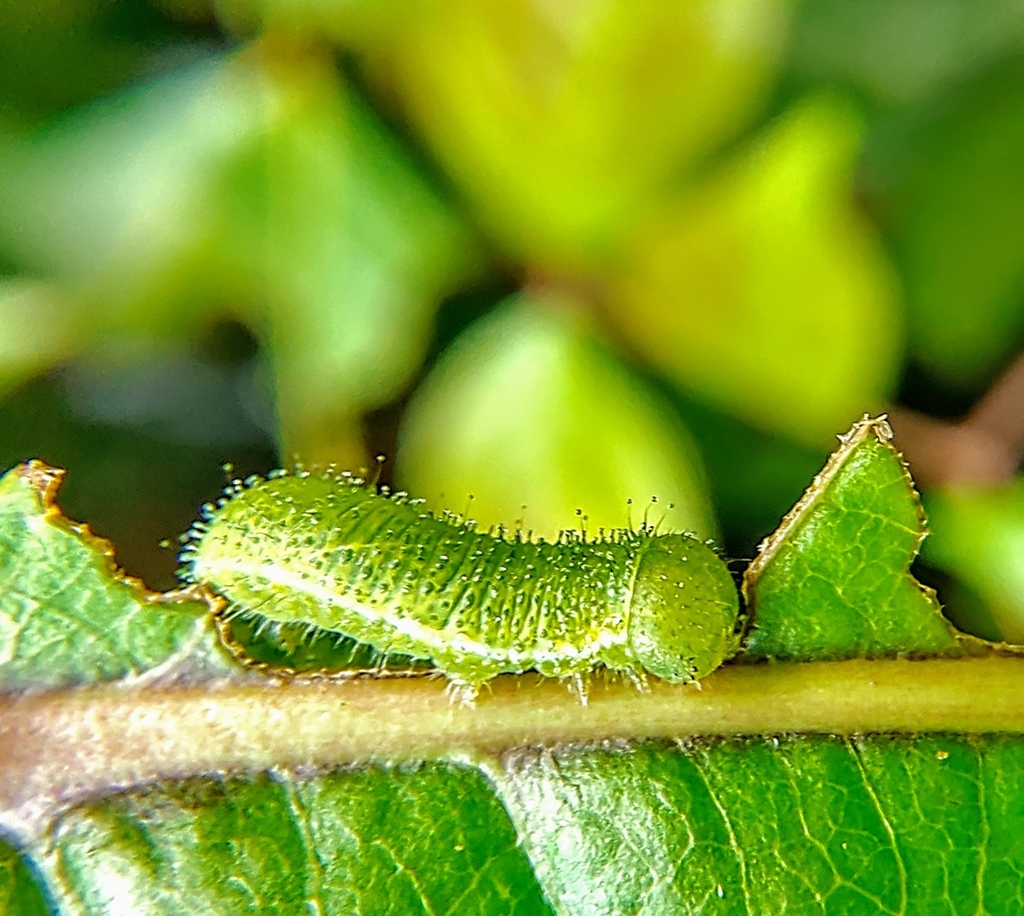
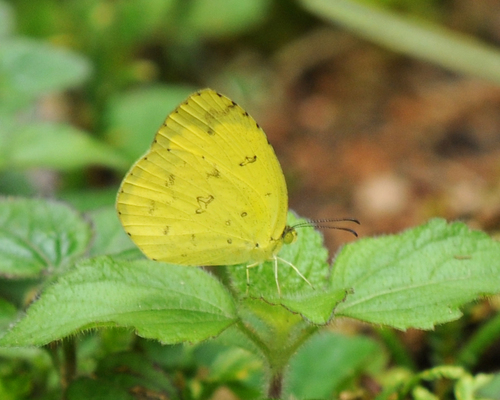
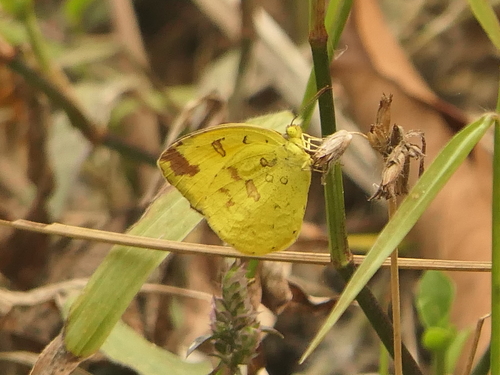
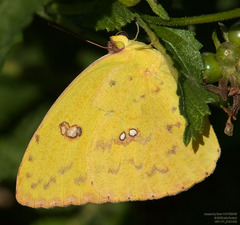
The common grass yellow is a small yellow butterfly with black wing edges and a distinctive square spot near the tornus. It lives in open grass and scrub, flying close to the ground across Asia, Africa and Australia.
Source: Wikipedia
How to recognize it
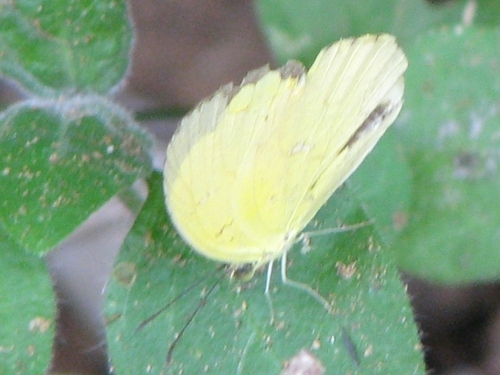
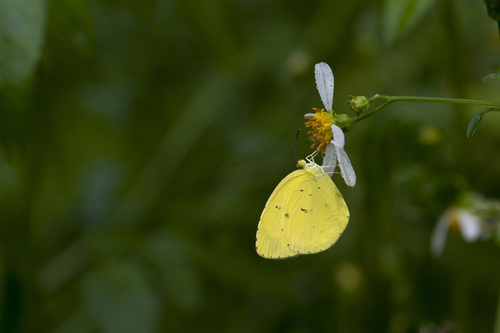
The upper side of the wings is yellow, ranging from sulphur to rich lemon shades. The forewing tip and outer edge are deep black, extending narrowly along the leading edge and forming a square spot at the tornal angle.
Source: Wikipedia
Where it lives
It is found flying low over open grass and scrub habitats.
Source: Wikipedia
Life cycle
Eggs are laid on a variety of legume, euphorbia and cucumber-family plants. The caterpillars are long, green, rough and slightly flattened with a large head.
Source: Wikipedia
When you see it
Long summer days (over 13 hours) produce a darker form, while shorter days (12 hours or less) after the monsoon give a lighter form.
Source: Wikipedia
Where it comes from
Its range includes Asia, Africa and Australia.
Source: Wikipedia
More photos
Same family (Pieridae)


Sources
- Wikipedia: https://en.wikipedia.org/wiki/Eurema_hecabe
Look it up elsewhere: GBIF · iNaturalist · BugGuide · Wikipedia
Text written 2026-10-22 from the sources above and checked sentence by sentence against them. Data fetched 2026-10-22.