 Bug FAQ
Common Grass-veneer
Agriphila tristella · Order: Lepidoptera · Family: Crambidae
Also called: European Common Grass-veneer
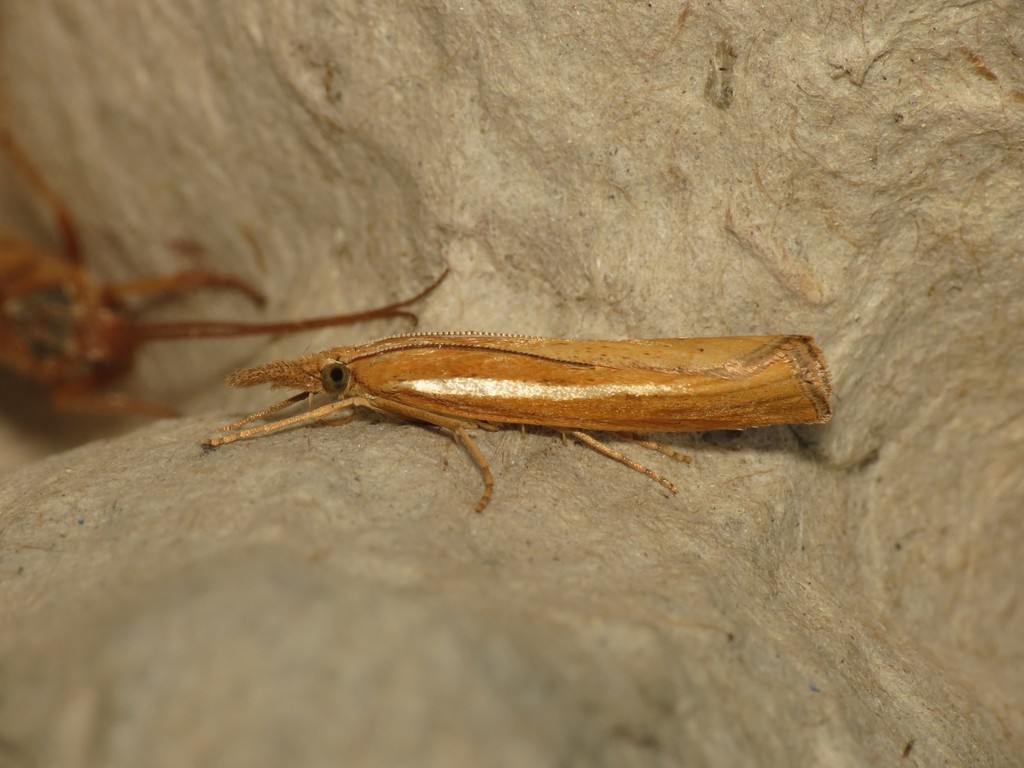
The common grass-veneer has a wingspan of about 22 to 30 mm and its forewings are yellow-ochre, sometimes mixed with dark brown and marked with faint lines and occasional black dots; the hindwings are grey. It lives in grassy areas, the larvae feed on grasses such as Poa and Deschampsia, and in the UK the adults fly from June to September, are active at night and come to light.
Source: Wikipedia
How to recognize it
Forewings are pale to deep yellow-ochre, often with dark brown mixing, a pale median vein, a faint brownish second line, occasional black terminal dots, and whitish-ochre to dark cilia; hindwings are grey.
Source: Wikipedia
Size
The wingspan ranges from 22 to 30 mm.
Source: Wikipedia
Where it lives
It is found in grassy habitats.
Source: Wikipedia
What it eats
Larvae feed on various grasses, including Poa and Deschampsia species.
Source: Wikipedia
Life cycle
In the UK the moth is on the wing from June to September. It is nocturnal and is attracted to light sources.
Source: Wikipedia
When you see it
Adult flight period in the UK is June through September.
Source: Wikipedia
Where it comes from
The type locality of this species is Austria.
Source: Wikipedia
Same family (Crambidae)
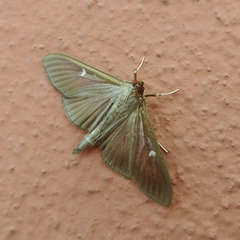 Box Tree MothCydalima perspectalisDamages trees, gardens or crops
 Celery Leaftier MothUdea rubigalisDamages trees, gardens or crops
 Elegant Grass-veneerMicrocrambus elegans
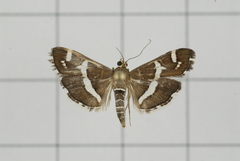 Hawaiian Beet Webworm MothSpoladea recurvalisDamages trees, gardens or crops
 Garden Grass-veneerChrysoteuchia culmellaDamages trees, gardens or crops
 Bluegrass Webworm MothParapediasia teterrellusDamages trees, gardens or crops
Sources
- Wikipedia: https://en.wikipedia.org/wiki/Agriphila_tristella
Look it up elsewhere: GBIF · iNaturalist · BugGuide · Wikipedia
Text written 2026-10-22 from the sources above and checked sentence by sentence against them. Data fetched 2026-10-22.