 Bug FAQ
Common Forest Looper
Pseudocoremia suavis · Order: Lepidoptera · Family: Geometridae
Source: Wikipedia
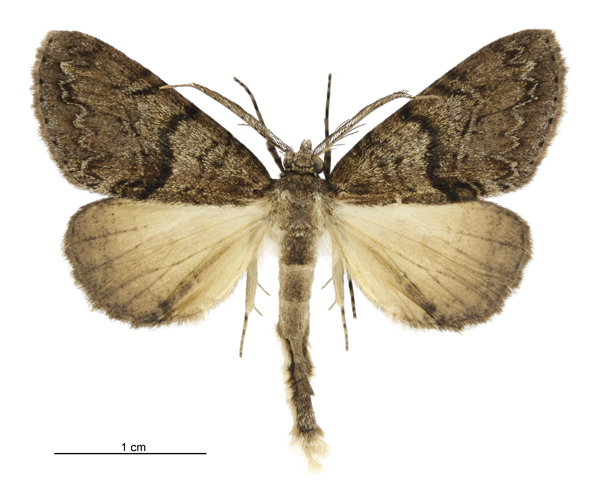
The adult moth has a wingspan of about 30 mm. Larvae feed on many native and exotic trees and shrubs and can cause serious defoliation in plantations. Pupae are 10 to 12 mm long, start green and turn mahogany-brown within two days.
Source: Wikipedia
How to recognize it
Pupae measure 10 to 12 mm, are green at first and become mahogany-brown after two days.
Source: Wikipedia
Size
The adult’s wingspan is roughly 30 mm.
Source: Wikipedia
Where it lives
It is common throughout New Zealand, living on many trees and shrubs. The garden where it was found is next to a plant nursery, so it may have arrived on nursery stock.
Source: Wikipedia
What it eats
In Cornwall, some larvae first fed on Leyland cypress before being moved to Scots pine when they became unhealthy.
Source: Wikipedia
Life cycle
Pupation lasts two to three days.
Source: Wikipedia
When you see it
A female laid about sixty eggs, mostly in groups of fourteen to twenty on tissue paper. Additional specimens were caught in October, but identification took a year.
Source: Wikipedia
Where it comes from
The species is endemic to New Zealand.
Source: Wikipedia
More photos

Questions people ask
What do the larvae eat?
They feed on many trees and shrubs, including Leyland cypress and Scots pine, and can heavily defoliate exotic plantations.
Source: Wikipedia
Where does this species come from?
It is endemic to New Zealand and common throughout the country.
Source: Wikipedia
Same family (Geometridae)
 Willow BeautyPeribatodes rhomboidaria
 Pale BeautyCampaea perlataDamages trees, gardens or crops
 Large Lace-border MothScopula limboundataDamages trees, gardens or crops
 Riband WaveIdaea aversata
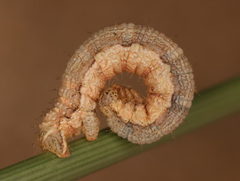 Yellow Shell MothCamptogramma bilineata
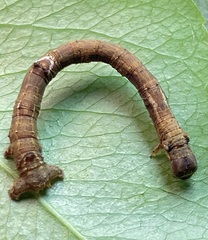 Large Maple Spanworm MothProchoerodes lineolaDamages trees, gardens or crops
Sources
- Wikipedia: https://en.wikipedia.org/wiki/Pseudocoremia_suavis
Look it up elsewhere: GBIF · iNaturalist · BugGuide · Wikipedia
Text written 2026-10-22 from the sources above and checked sentence by sentence against them. Data fetched 2026-10-22.