 Bug FAQ
Common Flower Fly
Syrphus ribesii · Order: Diptera · Family: Syrphidae
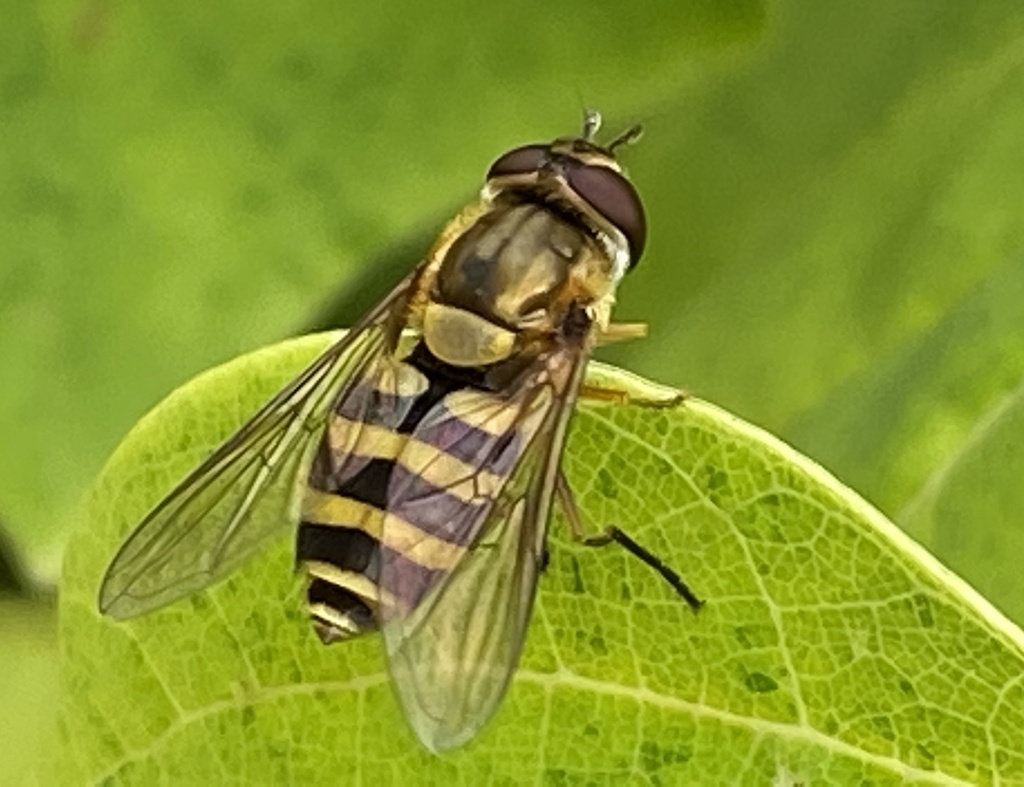
The common flower fly lives in farms, gardens, parks and also in both deciduous and coniferous forests. Its larvae eat aphids on herbaceous plants while adults sip nectar and pollen. It is found from March through mid-November across the Palearctic and Nearctic regions.
Source: Wikipedia
How to recognize it
The top of the head (frons) is shiny black just behind the lunulae. The underside plates (sternites) show black spots at the sides and middle. In males the third pair of thigh segments is black on the basal two-thirds, with the rest yellow. The side edges of the abdominal segments are black except where the yellow bands end.
Source: Wikipedia
Where it lives
It occurs in farmland, orchards, horticultural land, suburban gardens, parks, and also in deciduous and coniferous forest.
Source: Wikipedia
What it eats
The larvae feed on aphids on various herbaceous plants, and adults feed on nectar and pollen.
Source: Wikipedia
When you see it
Adults are active from March to mid-November.
Source: Wikipedia
Where it comes from
Its range covers the Palearctic from Fennoscandia south to the Mediterranean and east through Europe into Turkey, Russia and Afghanistan, and the Nearctic from Alaska to the central United States.
Source: Wikipedia
Lookalikes
It looks very similar to the other Syrphus species Syrphus vitripennis and Syrphus torvus.
Source: Wikipedia
Where it is found in the US
Recorded in 39 of 51 states and DC. Most records: Alaska, Pennsylvania, Illinois, Georgia, Maine, Washington, Vermont, Ohio.
Darker = more records. Counts are museum and citizen-science records, not population size.
Source: GBIF
Status: native in North America; native in Canada. Source: iNaturalist
Months it is reported in the US
Source: GBIF
More photos
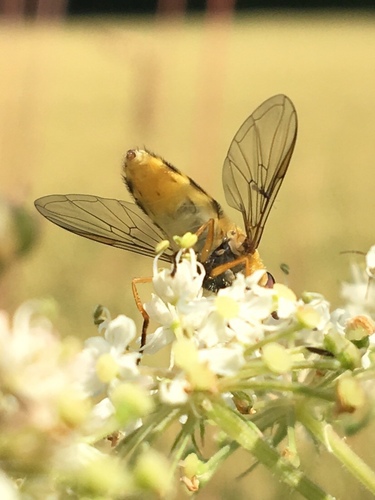
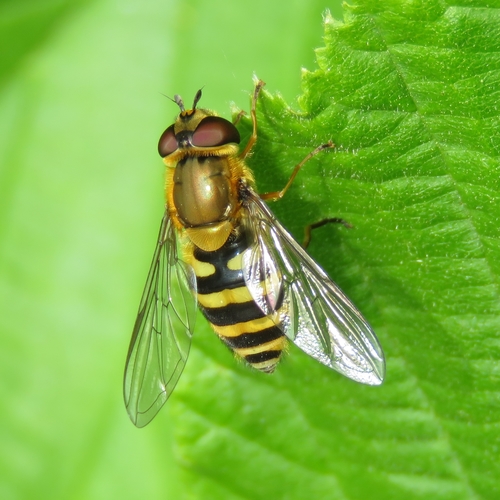
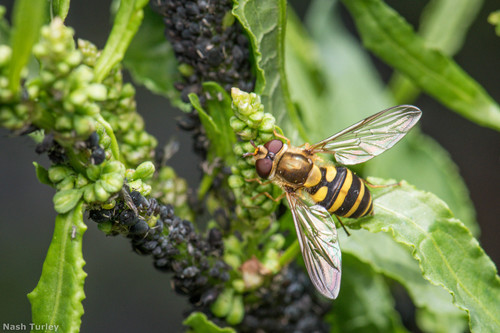
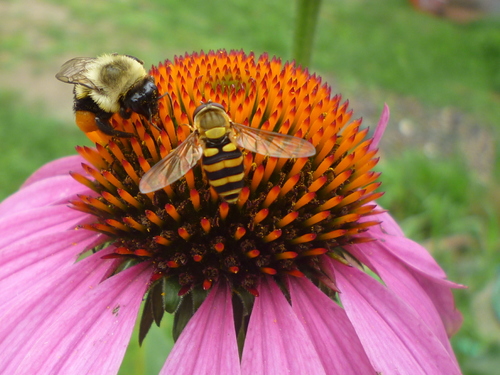
Same family (Syrphidae)






Sources
- Wikipedia: https://en.wikipedia.org/wiki/Syrphus_ribesii
Look it up elsewhere: GBIF · iNaturalist · BugGuide · ITIS · Wikipedia
Text written 2026-10-22 from the sources above and checked sentence by sentence against them. Data fetched 2026-10-22.