 Bug FAQ
Common eastern physocephala
Physocephala tibialis · Order: Diptera · Family: Conopidae
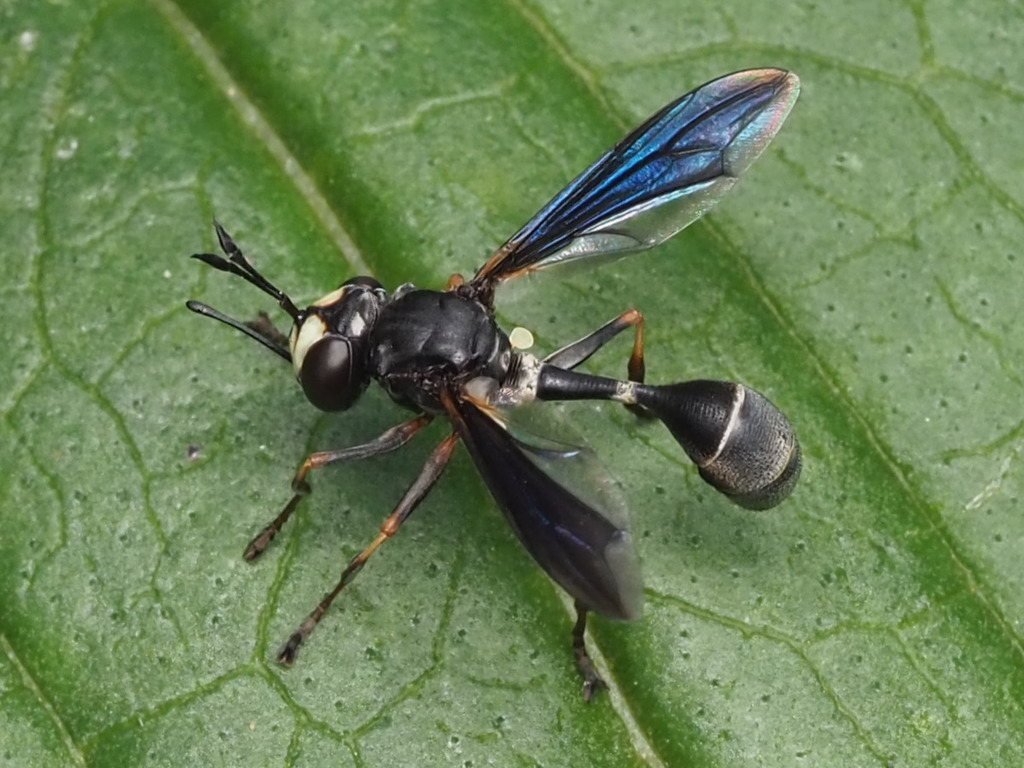
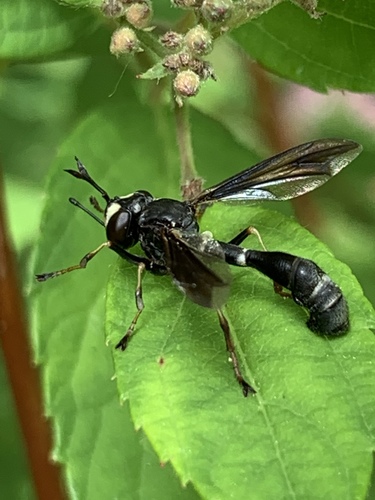
Physocephala tibialis is a parasitoid fly whose larvae develop inside Hymenopteran hosts, feeding first on their blood and later on intestinal tissue. Adults are mostly black with pale leg segments and thin white stripes on the abdomen, measuring about 30 to 60 mm as larvae and 30 to 50 mm as pupae. They are found on flowering plants across the eastern United States, from Massachusetts to Florida and as far west as Wisconsin and Texas.
Source: Wikipedia
How to recognize it
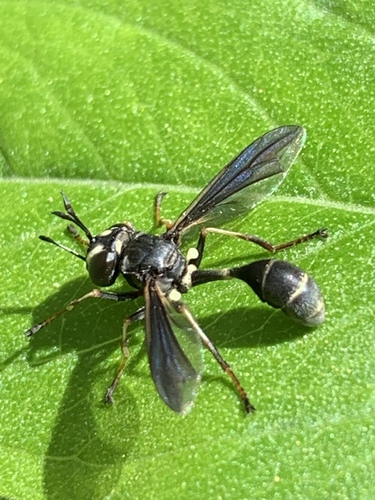
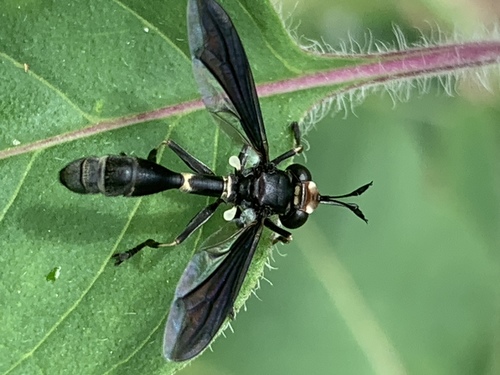
The adult has an almost completely black abdomen with pale tarsal segments on the legs. Thin white stripes run across the abdominal segments.
Source: Wikipedia
Size
Larvae hatch white and swollen, growing to 30 to 60 mm after three molts. Pupae are brown, oval-shaped, and 30 to 50 mm long.
Source: Wikipedia
Where it lives
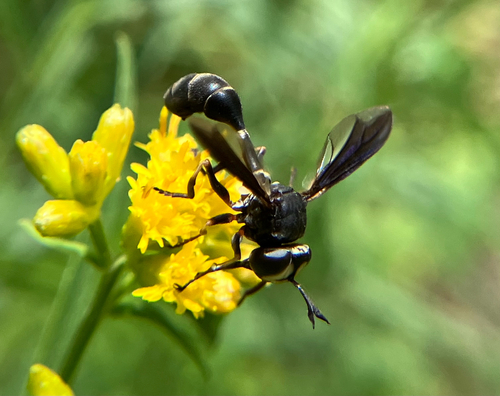
Adults are often seen near flowering plants where their host insects pollinate. They do not prefer any particular plant species and attack hosts on various flowers.
Source: Wikipedia
What it eats
First- and second-instar larvae feed on the host’s hemolymph. In the third instar they begin consuming the host’s intestinal tissue.
Source: Wikipedia
Life cycle
A single egg is laid inside a Hymenopteran host. After hatching, the larva parasitizes the host, passing through three instar stages.
Source: Wikipedia
Where it comes from
Their range covers the eastern United States, from Massachusetts down to Florida. They have also been recorded as far west as Wisconsin and Texas.
Source: Wikipedia
Where it is found in the US
Recorded in 35 of 51 states and DC. Most records: Massachusetts, New York, Pennsylvania, Ohio, Virginia, North Carolina, Maryland, Minnesota.
Darker = more records. Counts are museum and citizen-science records, not population size.
Source: GBIF
Status: native in North America; native in Canada. Source: iNaturalist
Months it is reported in the US
Source: GBIF
More photos
Questions people ask
Is this fly a garden pest?
It attacks insect hosts on flowering plants but does not feed on plants themselves.
Source: Wikipedia
Same family (Conopidae)
Sources
- Wikipedia: https://en.wikipedia.org/wiki/Physocephala_tibialis
Look it up elsewhere: GBIF · iNaturalist · BugGuide · ITIS · Wikipedia
Text written 2026-10-22 from the sources above and checked sentence by sentence against them. Data fetched 2026-10-22.