 Bug FAQ
Common Dainty
Baccha elongata · Order: Diptera · Family: Syrphidae
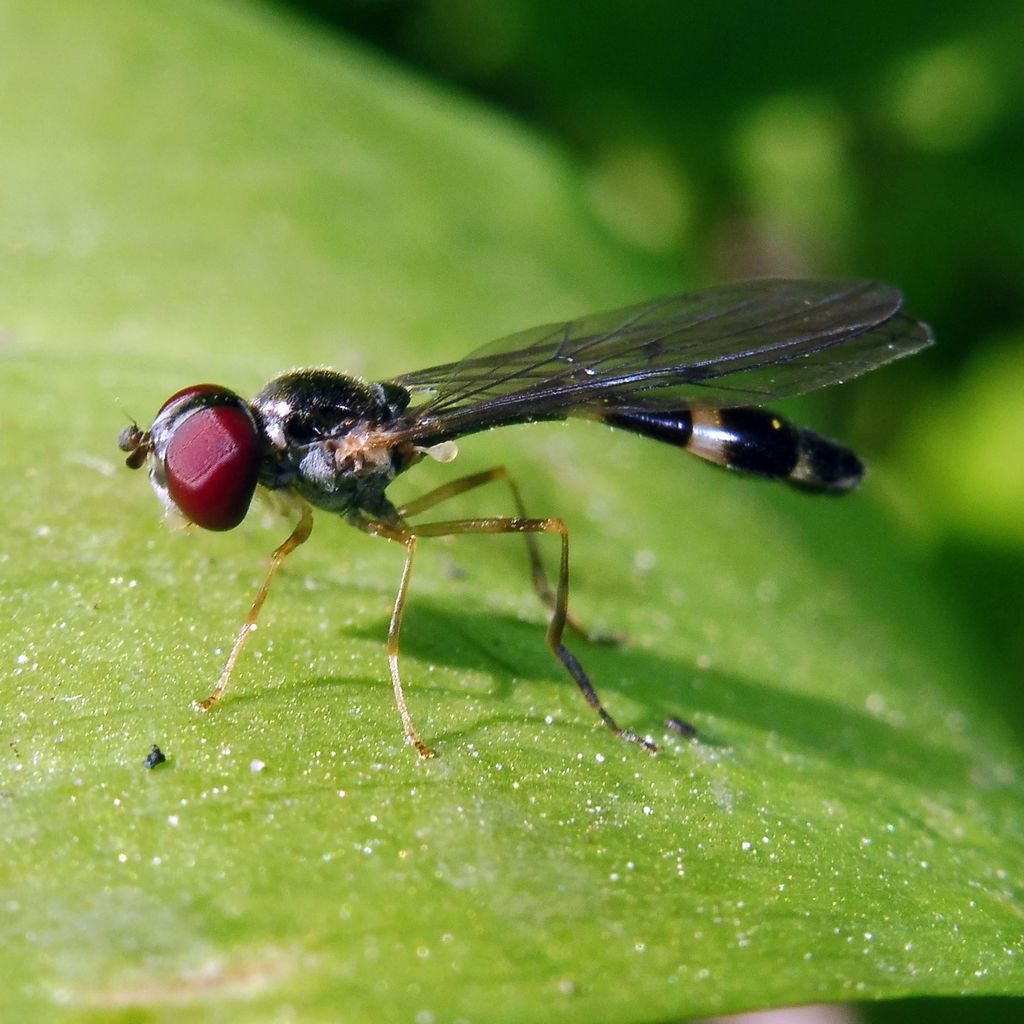
Common Dainty hoverflies are very slender, 7 to 11 mm long with a club-shaped abdomen that is black with yellow spots on the third and fourth segments, brown-yellow legs and a brightly hairy forehead. They live in shady, low-lying spots in forests, hedgerows, scrub and gardens across most of Europe and North America, and adults fly from spring to autumn in two generations. Adults feed on pollen and nectar of various plants, while the larvae prey on ground-layer aphids.
Source: Wikipedia
How to recognize it
The body is long and very slender, with a club-shaped abdomen that is black with yellow spots on segments three and four, brown-yellow legs and a brightly hairy forehead.
Source: Wikipedia
Size
Adults measure 7 to 11 mm in length, and their wings are about 4.5 to 8 mm long.
Source: Wikipedia
Where it lives
They are found in coniferous and deciduous forests, woodlands, hedgerows, scrub and gardens, preferring shady low-ground areas.
Source: Wikipedia
What it eats
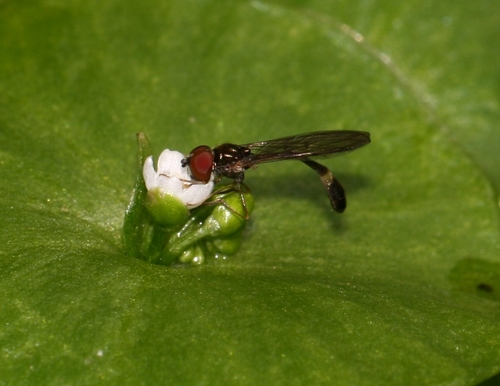
Adults feed on pollen and nectar from plants such as daisies, sorrels, Angelica, hogweed and ivy. Larvae are predatory, mainly eating various ground-layer aphids.
Source: Wikipedia
Life cycle
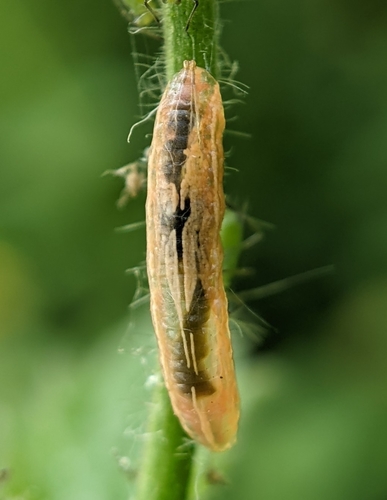
The species overwinters as a larva.
Source: Wikipedia
Where it comes from
The species occurs throughout most of Europe, including Britain and Ireland, and is also present in North America.
Source: Wikipedia
Lookalikes
It looks very similar to Baccha obscuripennis and to slender members of the genus Sphegina, which differ by having an enlarged hind femur.
Source: Wikipedia
Where it is found in the US
Recorded in 6 of 51 states and DC. Most records: Alaska, Virginia, California, Oregon, Vermont, New Mexico.
Darker = more records. Counts are museum and citizen-science records, not population size.
Source: GBIF
Status: native in North America; native in Canada. Source: iNaturalist
Months it is reported in the US
Source: GBIF
More photos
Questions people ask
How can I tell Common Dainty hoverflies apart from similar species?
Look for the very slender body, club-shaped abdomen with yellow spots on the third and fourth segments, and note that Sphegina species have a thickened hind femur while Baccha does not.
Source: Wikipedia
When are Common Dainty hoverflies active?
Adults fly from spring through autumn, usually in two generations during April-June and July-September/October.
Source: Wikipedia
What do the larvae of Common Dainty hoverflies eat?
The larvae are predatory and mainly feed on various ground-layer aphids.
Source: Wikipedia
Same family (Syrphidae)






Sources
- Wikipedia: https://en.wikipedia.org/wiki/Baccha_elongata
Look it up elsewhere: GBIF · iNaturalist · BugGuide · ITIS · Wikipedia
Text written 2026-10-23 from the sources above and checked sentence by sentence against them. Data fetched 2026-10-22.