 Bug FAQ
Common Crimson-and-gold Moth
Pyrausta purpuralis · Order: Lepidoptera · Family: Crambidae
Also called: Common Purple & Gold
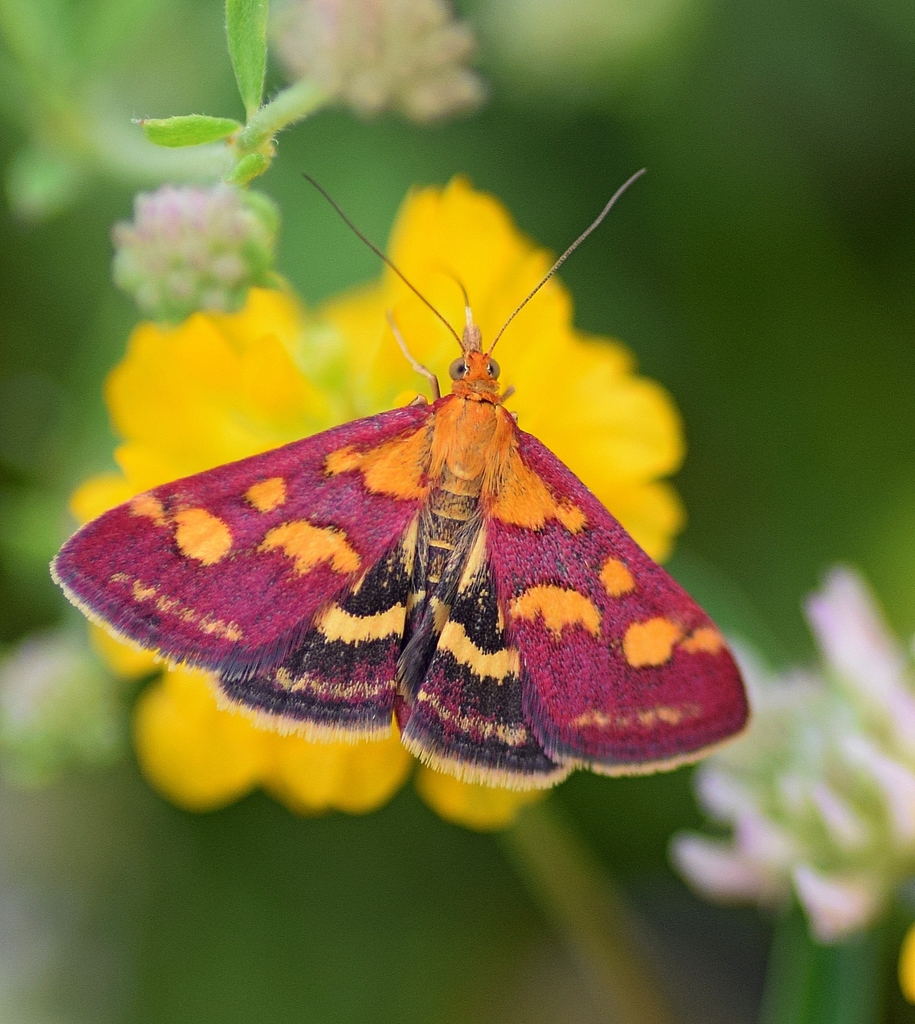
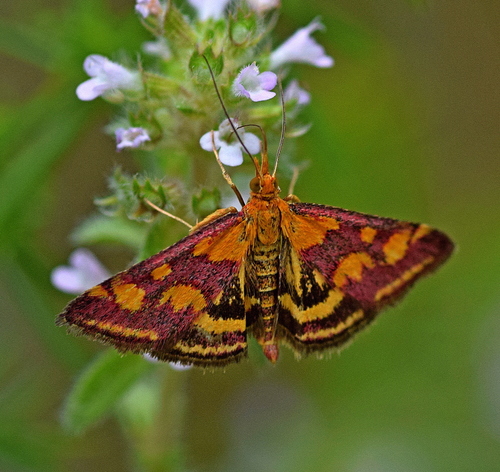
The common crimson-and-gold moth has a wingspan of about 20 mm and flies during the day from May to September. Its forewings are purple mixed with dark grey and have ochreous-yellow markings edged in black; hindwings are black with whitish-ochreous spots and streaks. It is found across Europe, its larvae feed on mint, and it looks similar to Pyrausta aurata and Pyrausta ostrinalis.
Source: Wikipedia
How to recognize it
Forewings are purple with dark grey, showing ochreous-yellow markings edged in black, including an oblique basal fascia, a central spot, and an irregular post-median fascia that may break into three spots. Hindwings are black, sometimes with a whitish-ochreous base, a discal spot, a curved post-median fascia, and occasional subterminal streaks that can be whitish-ochreous or purple.
Source: Wikipedia
Size
The wingspan is about 20 mm.
Source: Wikipedia
Where it lives
The moth is active during daylight hours.
Source: Wikipedia
What it eats
Larvae feed on mint plants.
Source: Wikipedia
Life cycle
Adults are on the wing from May to September, varying with location.
Source: Wikipedia
When you see it
Flight period spans May through September, depending on where it is found.
Source: Wikipedia
Where it comes from
It occurs throughout Europe.
Source: Wikipedia
Lookalikes
It closely resembles Pyrausta aurata and Pyrausta ostrinalis.
Source: Wikipedia
More photos
Same family (Crambidae)
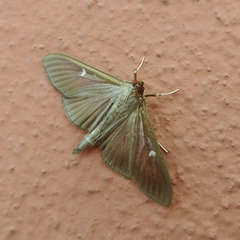 Box Tree MothCydalima perspectalisDamages trees, gardens or crops
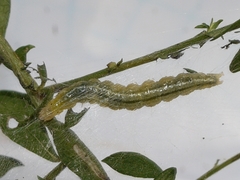 Celery Leaftier MothUdea rubigalisDamages trees, gardens or crops
 Elegant Grass-veneerMicrocrambus elegans
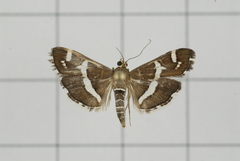 Hawaiian Beet Webworm MothSpoladea recurvalisDamages trees, gardens or crops
 Garden Grass-veneerChrysoteuchia culmellaDamages trees, gardens or crops
 Bluegrass Webworm MothParapediasia teterrellusDamages trees, gardens or crops
Sources
- Wikipedia: https://en.wikipedia.org/wiki/Pyrausta_purpuralis
Look it up elsewhere: GBIF · iNaturalist · BugGuide · Wikipedia
Text written 2026-10-22 from the sources above and checked sentence by sentence against them. Data fetched 2026-10-22.