 Bug FAQ
Common Citronella Ant
Lasius claviger · Order: Hymenoptera · Family: Formicidae
Also called: Smaller Citronella Ant, Smaller Yellow Ant
Source: Penn State Extension
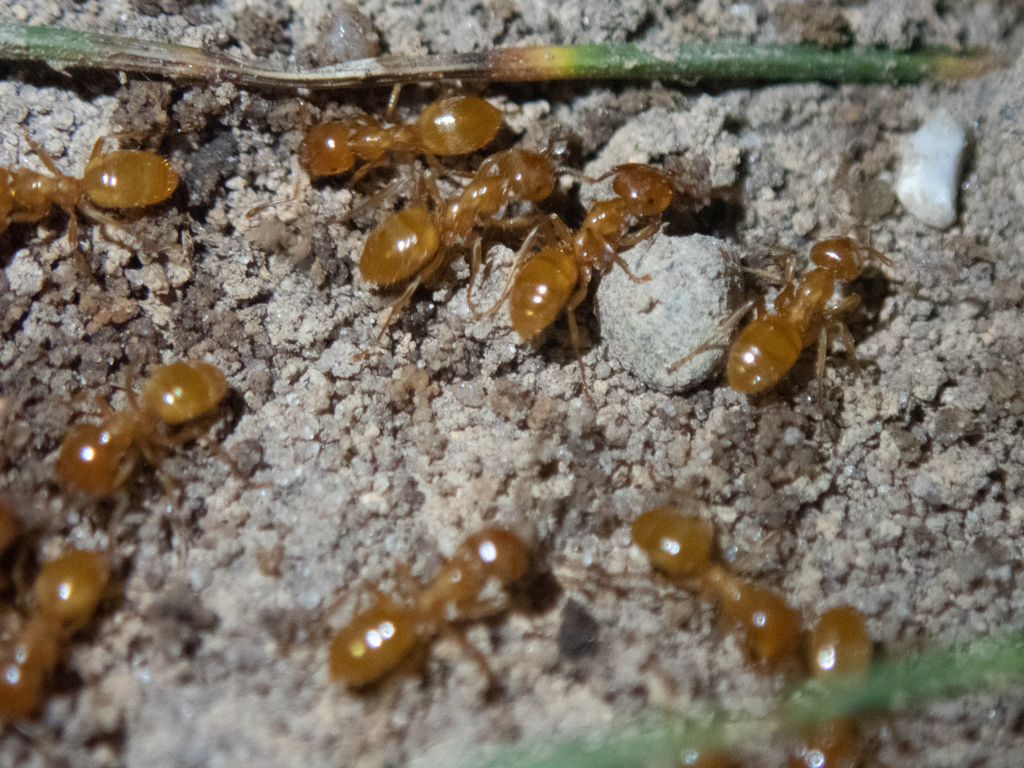
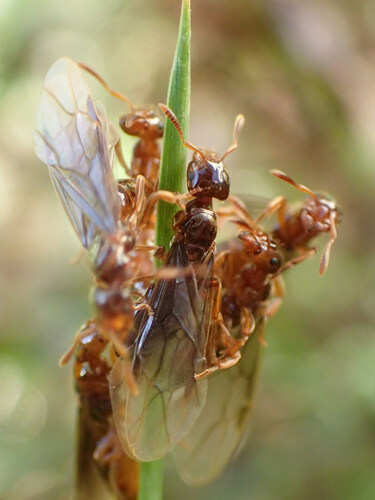
The common citronella ant is native to the United States and workers are small yellow ants about 3 to 4 mm long. Swarmers are roughly twice the size of workers and have dark, smoke-colored wings; they may appear repeatedly, so locating the colony is advised.
Source: Wikipedia, Penn State Extension
How to recognize it
Workers are typically yellow with little color variation. Swarmers are about twice as large as workers and have dark, smoke-colored wings.
Source: Penn State Extension
Size
Workers measure about 3 to 4 mm in length.
Source: Penn State Extension
Is it a pest in the house?
Citronella ants are considered only a nuisance pest.
Source: Penn State Extension
How to get rid of it
Repeated swarms may require locating the colony or colonies. Professional pest control should be used because many effective insecticides are restricted to licensed applicators.
Source: Penn State Extension
Lookalikes
Both larger and smaller yellow ants occur across much of the continental United States. The smaller yellow ant looks like the larger one except for its size.
Source: Penn State Extension
Where it is found in the US
Recorded in 39 of 51 states and DC. Most records: New York, North Carolina, Virginia, Pennsylvania, Illinois, Massachusetts, Maryland, Ohio.
Darker = more records. Counts are museum and citizen-science records, not population size.
Source: GBIF
Status: native in North America; native in Canada; native in United States. Source: iNaturalist
Months it is reported in the US
Source: GBIF
More photos

Questions people ask
How can I get rid of a citronella ant swarm?
Locate the colony and contact a licensed pest-control professional who can apply restricted insecticides.
Source: Penn State Extension
Same family (Formicidae)
 Eastern Black Carpenter AntCamponotus pennsylvanicusCan damage your home
 Red Imported Fire AntSolenopsis invictaCan sting
 American Winter AntPrenolepis imparis
 Argentine AntLinepithema humileNuisance, not dangerous
 Immigrant Pavement AntTetramorium immigransCan sting
 Odorous House AntTapinoma sessileCan damage your home
Sources
- Penn State Extension: https://extension.psu.edu/citronella-ants
- Wikipedia: https://en.wikipedia.org/wiki/Lasius_claviger
Look it up elsewhere: GBIF · iNaturalist · BugGuide · Wikipedia
Text written 2026-10-22 from the sources above and checked sentence by sentence against them. Data fetched 2026-10-22.